Blueberries prevent cancer. Sugar feeds tumors. Turmeric is a cure. Soy is dangerous. If you’ve spent any time online, you’ve probably seen all of these, often in the same scroll. Here’s the truth: no single food cures or prevents cancer, and you don’t have to eat in fear to lower your risk.
Cancer is scary, and it’s natural to want something you can control. Food feels like an easy answer. But the real science on diet and cancer is both calmer and more empowering than the headlines suggest. This guide explains what research actually shows, which habits matter most and how to approach nutrition with confidence instead of anxiety.
We’re health coaches, not doctors or dietitians, and this is general information about lowering cancer risk. If you have cancer, no food or diet replaces treatment. Talk to your oncology team and an oncology dietitian before making big changes or taking supplements.
The headlines vs. the science
Nutrition headlines often come from a single study, sometimes in mice or cells in a dish, that found a compound in a food might affect cancer cells. That’s interesting research, but it’s a long way from “this food prevents cancer in people.” The amounts used in labs are often far higher than anyone could eat, and the effects don’t always show up in real life.
Major cancer research organizations look at the whole body of evidence, across thousands of studies in people, before making recommendations. That’s why their advice sounds less exciting: eat mostly plants, limit alcohol and processed meat, stay active. It’s not flashy, but it’s solid.
- Single foods proven to prevent cancerIt’s the overall pattern that countsTruth
- Of cancers linked to lifestyleEstimated by AICRHope
- Of your plate from plantsAICR’s New American PlateSimple
- Popular cancer articlesContained misinformation in one studyCaution
Why no single food works alone
The American Institute for Cancer Research (AICR) says it plainly: no single food can protect you against cancer by itself. But research shows that a diet filled with a variety of vegetables, fruits, whole grains, beans and other plant foods can help lower your risk for many cancers.
There are a few reasons for that:
- Foods work together. The fiber, vitamins, minerals and plant compounds in different foods seem to work best in combination.
- Patterns add up. What you eat most days, over years, matters far more than any one meal or ingredient.
- Cancer is many diseases. There are hundreds of types of cancer, with different causes. No one food could affect them all.
- Risk is shaped by many things. Genetics, age, environment, smoking, alcohol and luck all play a role alongside diet.
That’s actually freeing. You don’t need to find the perfect superfood or avoid every “bad” ingredient. You just need a generally healthy pattern.
The big picture on cancer risk
AICR estimates that around 40% of cancer cases are preventable through healthy lifestyle choices, including eating well, being active and maintaining a healthy weight. That’s a big number, and it’s a hopeful one. But it also means many cancers aren’t preventable, and anyone can get cancer, even with perfect habits.
The World Cancer Research Fund and AICR’s Cancer Prevention Recommendations focus on a handful of habits:
- 🌱BodyBe a healthy weight
Extra body fat is linked to many cancers. Small, sustainable changes help.
- 🚶MoveBe physically active
Move more and sit less. Every bit counts.
- 🥦PlateEat mostly plants
Whole grains, vegetables, fruit and beans, rich in fiber.
- 🍟LessLimit fast and processed foods
Foods high in fat, starches or sugars make it easier to overeat.
- 🥩MeatLimit red and processed meat
Eat little, if any, processed meat.
- 🥤SipLimit sugary drinks
Choose water, unsweetened tea and coffee instead.
- 🍷Drink lessLimit alcohol
For cancer prevention, it’s best not to drink.
- 💊Food firstSkip supplements for prevention
Get your nutrients from food, unless your doctor recommends otherwise.
They also recommend breastfeeding when possible and following these recommendations after a cancer diagnosis, if you can. And of course, not smoking is the single biggest thing anyone can do to lower cancer risk.
One more thing food can’t do: replace screening. Mammograms, colorectal cancer screening, cervical cancer screening and skin checks find cancers early, when they’re most treatable. Eating well and getting screened work together. If you’re not sure which screenings you’re due for, our post on health checks at every age has a quick overview, and your doctor can tailor it to your family history.
Evidence scorecard
Here’s how some popular cancer-and-food ideas stack up against the evidence. More dots mean stronger evidence that it lowers cancer risk.
- Not smokingStrong evidence
Tobacco is the leading preventable cause of cancer. Nothing on your plate comes close.
- Limiting alcoholStrong evidence
The Surgeon General calls alcohol the third leading preventable cause of cancer in the U.S.
- A mostly plant-based dietStrong evidence
Whole grains, vegetables, fruit and beans, high in fiber, are linked to lower risk of several cancers.
- Limiting processed meatStrong evidence
WHO’s cancer agency classifies processed meat as a known cause of colorectal cancer.
- Healthy weight and activityStrong evidence
Excess body fat is linked to many cancers, and activity lowers risk of several.
- Single “superfoods”Part of a pattern
Blueberries, turmeric and green tea are healthy, but no single food prevents cancer on its own.
- Supplements for preventionNot recommended
WCRF and AICR advise against using supplements to prevent cancer. Get nutrients from food.
- Alkaline dietsMyth
Your body tightly controls its own pH. Food can’t change your blood’s acidity.
- Cutting all sugar to “starve” cancerMyth
All cells use glucose. Sugar doesn’t directly cause or feed cancer, though too much affects weight.
The New American Plate
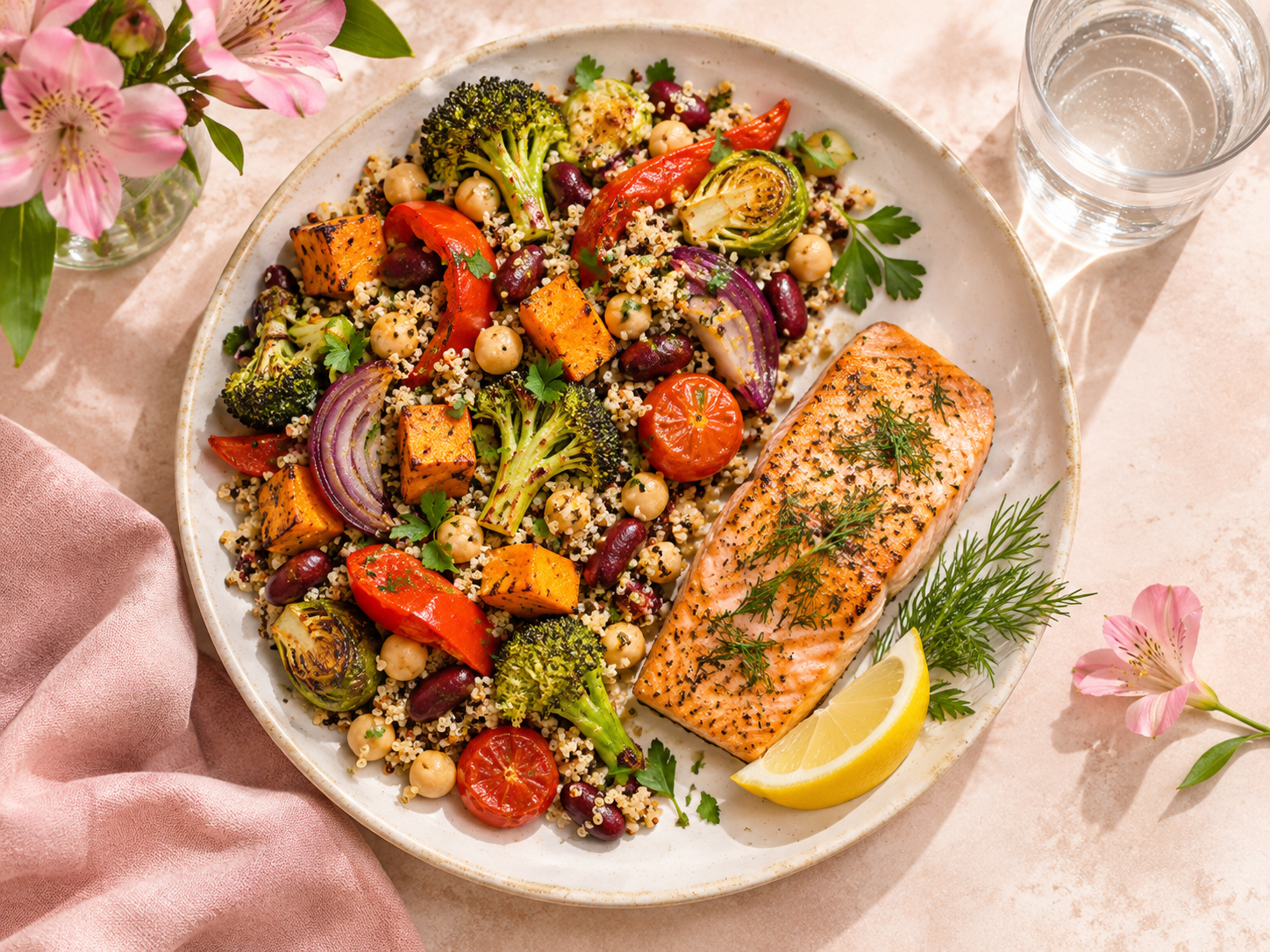
AICR’s simplest tool is the New American Plate. It suggests filling at least two-thirds of your plate with plant foods, like vegetables, fruits, whole grains and beans, and no more than one-third with protein-rich foods like fish, poultry, dairy or tofu.
- Vegetables: half the plant side, in lots of colors
- Whole grains: brown rice, oats, whole-wheat bread, quinoa
- Beans, fruit, nuts and seeds: the rest of your two-thirds
- Protein: fish, poultry, eggs, tofu, dairy or occasional lean red meat
Two-thirds (or more) plants. One-third (or less) protein.
Notice what’s not on this plate: rules about superfoods, forbidden ingredients or perfect meals. It’s a flexible guide you can use for any cuisine, budget or culture, and AICR notes it can still include moderate amounts of animal foods.
Plants, fiber and whole grains
Plant foods are rich in fiber, vitamins, minerals and natural plant compounds called phytochemicals. Fiber in particular has good evidence for lowering colorectal cancer risk. AICR advises eating at least 30 grams of fiber a day from food. Most Americans get far less.
- Go for color. Different colors of produce have different phytochemicals.
- Choose whole grains like oats, brown rice and whole-wheat bread over refined grains.
- Eat more beans and lentils. They’re cheap, filling and full of fiber and protein.
- Frozen and canned count. Choose low-sodium and no-sugar-added versions.
Our fiber gap guide has easy ways to close the gap without overthinking it.
Red and processed meat
In 2015, the World Health Organization’s International Agency for Research on Cancer (IARC) classified processed meat as carcinogenic to humans, based on sufficient evidence that it causes colorectal cancer. It classified red meat as probably carcinogenic. IARC estimated that each 50-gram portion of processed meat eaten daily, about one hot dog or a few slices of deli meat, increases colorectal cancer risk by 18%.
That sounds alarming, but it’s worth putting in context. IARC itself notes that for an individual, the risk from processed meat remains small, but it increases with the amount eaten. Being in the same category as tobacco doesn’t mean being equally dangerous. It means the evidence that it causes cancer is equally strong.
AICR’s practical advice:
- Limit red meat like beef, pork and lamb to about three portions a week, or 12 to 18 ounces cooked.
- Eat little, if any, processed meat, like bacon, sausage, hot dogs, ham and deli meats.
- Think of meat as a side, not the center of the plate.
- Try swaps like chicken, fish, beans, tofu or eggs.
A holiday ham or a hot dog at a ballgame isn’t a crisis. It’s what you eat regularly that matters.
Alcohol: the one we underestimate
If there’s one diet-related cancer risk most people underestimate, it’s alcohol. In January 2025, the U.S. Surgeon General issued an advisory calling alcohol the third leading preventable cause of cancer in the United States, after tobacco and obesity. Alcohol contributes to nearly 100,000 cancer cases and about 20,000 cancer deaths a year in the U.S.
The advisory says alcohol increases the risk of at least seven types of cancer, including breast, colorectal, liver, mouth and throat cancers. For breast cancer, risk may start rising at one drink a day or less. The type of alcohol doesn’t matter: wine, beer and liquor all carry risk.
This doesn’t mean you can never have a drink. It means less is better, and that it’s worth knowing the facts when deciding what feels right for you. If you’re cutting back, our posts on infused water ideas can help make alcohol-free drinks feel special.
Sugar, soy and other worries
Sugar: Every cell in your body, including cancer cells, uses glucose for energy. That’s where the “sugar feeds cancer” myth comes from. But your body makes glucose from many foods, not just sugar, and cutting out sugar doesn’t starve cancer cells. AICR says sugar isn’t a carcinogen. The real concern is that lots of added sugar, especially sugary drinks, can lead to weight gain, which does raise risk.
Soy: Soy contains plant compounds called isoflavones that look a bit like estrogen, which led to fears about breast cancer. But AICR says studies don’t link eating soy foods to increased risk of any cancer, including breast cancer. Research also suggests moderate soy is safe for breast cancer survivors.
Artificial sweeteners: Research is ongoing, and the evidence is mixed. Water is always a great choice, and an occasional diet soda isn’t something to panic about.
Charred and grilled meat: High-heat cooking can create compounds linked to cancer in lab studies. Marinating meat, cooking at lower temperatures and trimming charred bits are simple ways to reduce them.
What about superfoods?
Blueberries, broccoli, turmeric, green tea, garlic, tomatoes, flaxseed. These foods often show up on “cancer-fighting” lists, and they’re genuinely healthy. Many contain compounds that look promising in lab studies.
But no single superfood has been proven to prevent cancer in people. AICR notes that no single phytochemical or food can protect you from cancer or any other disease. The benefit comes from eating a wide variety of plant foods over time.
So enjoy your berries and broccoli. Just don’t feel like you need a special powder, juice or expensive supplement to get the benefits.
That’s good news for your budget, too. Some of the most protective foods are among the cheapest you can find in any grocery store: dried beans and lentils, oats, brown rice, cabbage, carrots, onions, bananas and frozen vegetables. A healthy, cancer-conscious diet doesn’t have to cost more than the one you eat now. It mostly means gently shifting the balance on your plate toward more plants, most of the time.
Supplements
It might seem logical that if a nutrient in food is good, more of it in a pill would be better. But that’s not how it works. The WCRF and AICR specifically recommend against using supplements for cancer prevention. Some high-dose supplements have even been linked to increased cancer risk in certain groups.
There are times when supplements make sense, like vitamin D, folic acid in pregnancy or B12 for vegans, but those are decisions to make with your doctor based on your needs, not for cancer prevention. If you have cancer, always check with your oncology team, since some supplements can interfere with treatment.
How to spot cancer misinformation
Cancer misinformation is everywhere. A 2021 study in the Journal of the National Cancer Institute found that a third of the most popular cancer articles on social media contained misinformation, and most of those contained information that could be harmful. Misinformation also got more engagement than accurate articles.
A few red flags to watch for:
- 🚨Big promises“Cure” or “miracle”
Real science rarely uses words like cure, miracle or secret.
- 💰Follow the moneySomething to buy
Be wary when the advice comes with a product, program or supplement for sale.
- 🧪Thin evidenceOne small study
Mouse or cell studies, or a single small trial, aren’t enough to change your diet.
- 😨Emotional hooksFear or shame
Content that makes you scared of a whole food group is a warning sign.
- 🚫Conspiracy“Doctors don’t want you to know”
Claims that experts are hiding the truth are a classic misinformation tactic.
- ✅Check hereTrusted sources
Look to AICR, the American Cancer Society, the National Cancer Institute and your care team.
Eating without fear
Fear-based eating can backfire. It can make food stressful, take the joy out of meals and even lead to unhealthy restriction. A calmer approach is more sustainable, and more effective.
Fear-based“I have to cut out all sugar or I’ll get cancer.”→“I’ll enjoy sweets sometimes and fill most of my plate with plants.”Fear-based“I need to buy this superfood powder.”→“I’ll add one more vegetable to dinner.”Fear-based“Everything causes cancer, so why bother?”→“A few habits make the biggest difference. I’ll start with one.”Fear-based“I ate a hot dog. I’ve ruined my health.”→“One meal doesn’t define my diet. My pattern does.”Fear-based“Organic or nothing.”→“Any fruits and vegetables are better than none, conventional or organic.”
Remember that eating is also about pleasure, culture, family and connection. A healthy diet has room for birthday cake, holiday traditions and your grandmother’s recipes.
If you have or had cancer
If you’re in treatment or have finished, nutrition needs can be very different. During treatment, the priority is often getting enough calories and protein to keep your strength up, even if that means eating foods you wouldn’t normally choose. Some people need to avoid certain foods for safety when their white blood cell counts are low.
- Ask for an oncology dietitian, ideally one with the CSO credential.
- Don’t replace treatment with diet. Research has found that people who use only alternative medicine instead of standard treatment have worse survival.
- Check supplements with your oncology team before taking them.
- After treatment, WCRF and AICR suggest following their cancer prevention recommendations, if you can.
If taste changes are making eating hard, our guide to why food tastes like metal after chemo has practical tips. And our post on finding your pink after cancer covers life after treatment.
Myths about food and cancer
- Myth #1What you might have heard
Certain foods can cure cancer.
What’s actually trueNo food cures cancer. Nutrition supports your body during and after treatment, but it isn’t a replacement for medical care.
- Myth #2What you might have heard
Sugar feeds cancer.
What’s actually trueAll cells, healthy and cancerous, use glucose for energy. AICR says sugar isn’t a carcinogen, though eating a lot of added sugar can lead to weight gain, which raises risk.
- Myth #3What you might have heard
Soy causes breast cancer.
What’s actually trueAICR says research doesn’t link eating soy foods to increased risk of breast cancer, and moderate soy is safe for survivors too.
- Myth #4What you might have heard
An alkaline diet prevents cancer.
What’s actually trueYour body keeps its blood pH in a narrow range no matter what you eat. Alkaline diets can’t change that.
- Myth #5What you might have heard
Red wine is good for you.
What’s actually trueAny type of alcohol increases cancer risk, including red wine. For cancer prevention, AICR says it’s best not to drink.
- Myth #6What you might have heard
If cancer runs in my family, diet doesn’t matter.
What’s actually trueGenes play a role, but lifestyle still matters. Healthy habits can lower risk even for people with a family history.
- Myth #7What you might have heard
Organic food prevents cancer.
What’s actually trueResearch hasn’t shown that organic food lowers cancer risk. Eating more fruits and vegetables, organic or not, is what matters.
Your turn
Instead of chasing the next superfood, try one of these small, evidence-based steps this week:
- Fill two-thirds of your dinner plate with plants, three nights this week.
- Swap one processed meat meal for beans, fish or chicken.
- Try one alcohol-free evening you’d usually have a drink.
- Add one serving of whole grains or beans to your day.
- Before sharing a cancer-and-food post, check it against a trusted source.
There’s no magic food, and that’s okay. What you eat most of the time, along with moving your body, limiting alcohol and not smoking, gives you real, meaningful power over your risk. And you can do all of it while still enjoying your food.
You don’t need to be afraid of your plate. Fill it with plants, enjoy it with people you love and leave the miracle claims behind.
Sources
- American Institute for Cancer Research: Creating plant-based meals with AICR’s New American Plate
- American Institute for Cancer Research: Limit consumption of red and processed meat
- American Institute for Cancer Research: How to prevent cancer
- American Institute for Cancer Research: Using science to separate fact from fiction
- World Cancer Research Fund: Cancer Prevention Recommendations
- International Agency for Research on Cancer (2015): IARC Monographs evaluate consumption of red meat and processed meat
- International Agency for Research on Cancer: Q&A on the carcinogenicity of red meat and processed meat
- U.S. Surgeon General (2025): Alcohol and cancer risk: the U.S. Surgeon General’s advisory
- Johnson et al., Journal of the National Cancer Institute (2021): Cancer misinformation and harmful information on Facebook and other social media
- American Cancer Society: Guideline for diet and physical activity for cancer prevention
- National Cancer Institute: Diet and cancer risk
- Piedmont Healthcare: The biggest cancer nutrition myths
This article is for general information and isn’t medical advice. Talk with your doctor or midwife about what’s right for you.
- Cancer prevention
- Nutrition
- Plant-based eating
- Myth busting
- Healthy habits
Find your strength. Find your girls.
Want help building eating habits that feel good and fit your real life? Tell us where you are and what you’re looking for. We’ll reply within two business days.
Questions
Good questions.
Is there a food that prevents cancer?
No single food prevents cancer. AICR says research shows a diet filled with a variety of vegetables, fruits, whole grains, beans and other plant foods can help lower your risk for many cancers.
What is the New American Plate?
It’s AICR’s guide for a cancer-protective diet: fill at least two-thirds of your plate with plant foods like vegetables, fruits, whole grains and beans, and no more than one-third with protein like fish, poultry, dairy or tofu.
Does sugar feed cancer?
All cells, including cancer cells, use glucose for energy, but eating sugar doesn’t directly cause or feed cancer. AICR says sugar isn’t a carcinogen. Too much added sugar can lead to weight gain, which increases risk.
Is processed meat really as bad as smoking?
No. Processed meat and tobacco are both classified by IARC as Group 1 carcinogens, which means the evidence they cause cancer is strong, not that they’re equally dangerous. IARC estimated each 50 grams of processed meat a day raises colorectal cancer risk by 18%.
How much red meat is safe?
AICR recommends limiting red meat to about three portions a week, or 12 to 18 ounces cooked, and eating little, if any, processed meat.
Does alcohol increase cancer risk?
Yes. The U.S. Surgeon General calls alcohol the third leading preventable cause of cancer in the U.S., linked to at least seven types of cancer. Any type of alcohol counts, and less is better.
Is soy safe if I’m worried about breast cancer?
Yes. AICR says studies don’t link eating soy foods to increased risk of breast cancer or any other cancer, and moderate soy appears safe for breast cancer survivors.
Should I take supplements to prevent cancer?
The World Cancer Research Fund and AICR recommend against using supplements for cancer prevention. Get nutrients from food, and talk to your doctor about any specific supplement needs.
Is organic food better for preventing cancer?
Research hasn’t shown that eating organic food lowers cancer risk. What matters most is eating plenty of fruits, vegetables, whole grains and beans, whether they’re organic or conventional.
Can diet cure cancer?
No. Diet can support your health during and after treatment, but it isn’t a replacement for medical care. Always talk to your oncology team before making changes.
 Nutrition
 Women’s health
 Nutrition