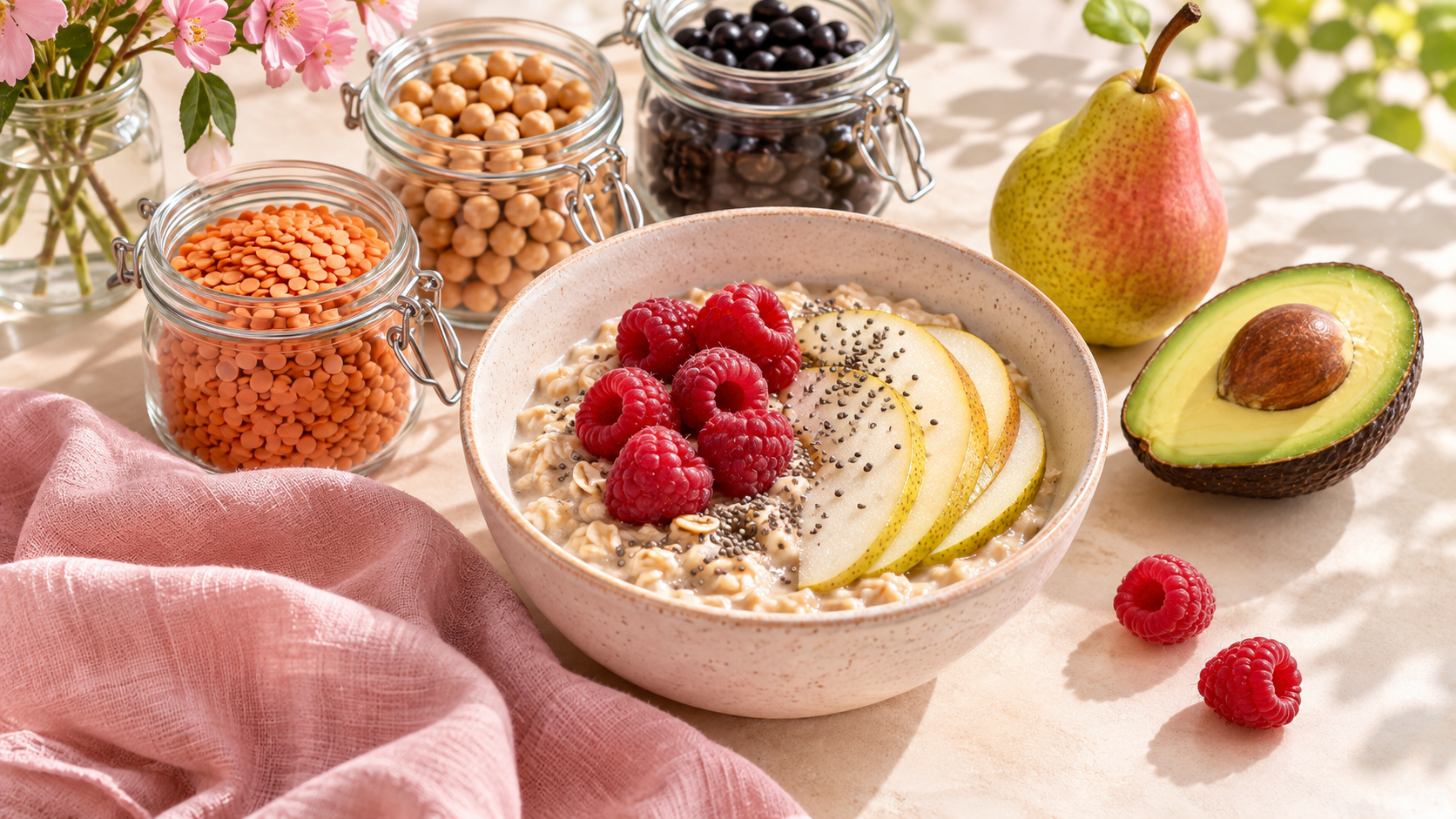
Everyone’s talking about protein. But there’s another nutrient almost all of us are missing, and it quietly affects your gut, your energy, your heart and how full you feel after meals. It’s fiber, and most women are getting only about half of what they need.
This guide covers how much fiber you actually need, why it matters so much, why it’s so easy to fall short and, most importantly, simple swaps and habits to close the gap without upsetting your stomach.
We’re health coaches, not doctors or dietitians, and this is general information. If you have IBS, inflammatory bowel disease, a history of bowel obstruction, gastroparesis or another digestive condition, or you’re on medications that affect digestion, talk to your doctor or a registered dietitian before making big changes to your fiber intake.
The fiber gap in numbers
- Daily target for most women under 50About 21–22 g after 50The goal
- What the average American eatsRoughly half to two-thirds of the goalThe reality
- Adults who meet the recommendationDepending on the studyThe gap
- Where the biggest health benefits showed upIn a major 2019 Lancet reviewThe payoff
Stanford Medicine experts put it plainly: only about 5% of American adults meet the daily fiber recommendation, and the average American eats only around 17 grams a day. Another study presented by the American Society for Nutrition found that only about 9% of women and 5% of men got enough.
Fiber has been called a “nutrient of public health concern” in U.S. dietary guidelines because so many people fall short. The good news? The gap for most women is only about 10 grams a day, which is a bowl of oatmeal with berries or a cup of beans.
How much fiber women need
Official recommendations are based on about 14 grams of fiber for every 1,000 calories you eat. For women, that works out to roughly:
- Women 19–50about 25–28 g per day
- Women 51 and olderabout 21–22 g per day
- Pregnancyabout 28 g per day
- Breastfeedingabout 29 g per day
The number drops a bit after 50 only because calorie needs usually go down, not because fiber matters less. If you’re very active and eating more, your fiber needs go up too.
Nutrition labels use a single Daily Value of 28 grams. If a food has 5 grams or more per serving, it’s considered a high-fiber food.
Why fiber matters
- ❤️CholesterolHeart health
Soluble fiber, found in oats, beans, apples and barley, can help lower blood cholesterol levels, according to Mayo Clinic.
- 🩸EnergySteadier blood sugar
Fiber slows the absorption of sugar, which can help prevent big spikes and crashes and may lower the risk of type 2 diabetes.
- 🥣AppetiteFullness
High-fiber foods take longer to eat and digest, so they help you feel full longer. That’s a big reason fiber helps with weight management.
- 🚽DigestionRegularity
Fiber adds bulk and holds water in stool, helping with constipation. It can also help firm up loose stools.
- 🦠Gut healthYour gut microbiome
Your gut bacteria feed on fiber and produce helpful compounds in return. More on this below.
- 🎗️PreventionLong-term health
In a huge review of research for the World Health Organization, people who ate the most fiber had a 15–30% lower risk of death and chronic diseases than those who ate the least.
That big review, published in The Lancet in 2019, pulled together data from nearly 135 million person-years of observation plus 58 clinical trials. Eating more fiber was linked to lower rates of heart disease, stroke, type 2 diabetes and colorectal cancer, and the biggest risk reductions were seen at 25 to 29 grams a day. That’s exactly the range most women are aiming for.
Fiber and your gut
Here’s the cool part: your body can’t digest most fiber. Instead, it travels to your large intestine, where trillions of gut bacteria break it down. In return, they produce compounds like short-chain fatty acids that help keep the lining of your gut healthy and are being studied for their effects on inflammation, immunity and metabolism.
Different bacteria like different fibers. That’s why variety matters. In the American Gut Project, one of the largest gut microbiome studies ever done, people who ate more than 30 different plant foods a week had more diverse gut bacteria than people who ate 10 or fewer, no matter what kind of diet they followed.
Thirty plants a week is a popular goal right now. It’s a helpful nudge toward variety, but it’s not a magic number. Fruits, vegetables, beans, whole grains, nuts, seeds, herbs and spices all count. If you’re at eight different plants a week now, getting to 15 is a real win.
Soluble vs. insoluble
You’ll often hear fiber split into two types. Most plant foods contain a mix of both.
- 🥣Dissolves in waterSoluble fiber
Forms a gel in your gut. It can help lower cholesterol and steady blood sugar. Found in oats, peas, beans, apples, citrus fruits, carrots, barley and psyllium.
- 🌾Doesn’t dissolveInsoluble fiber
Adds bulk and helps things move along. Found in whole-wheat flour, wheat bran, nuts, beans and vegetables like cauliflower, green beans and potatoes.
Mayo Clinic gastroenterologists note that this distinction matters less for overall health than simply eating a wide variety of fiber-rich plant foods. Don’t overthink it. Eat a mix of fruits, vegetables, beans and whole grains, and both types will take care of themselves.
Why so many women fall short
- Ultra-processed foods. Many packaged foods are made with refined flours that have had most of the fiber removed.
- Low-carb trends. Cutting carbs often means cutting beans, fruit and whole grains, some of the best fiber sources there are.
- Protein-only focus. Protein is important, but meat, eggs and dairy contain no fiber. A plate that’s all protein can leave a fiber gap.
- Busy-mom eating. Kids’ leftovers, crackers in the car and coffee for breakfast don’t add up to much fiber.
- Juice and smoothies without the good stuff. Juicing removes most of the fiber from fruit.
- Fear of bloating. Some women have tried adding fiber, felt awful and gave up. (The fix is going slower, not stopping.)
- Confusing labels. “Multigrain,” “wheat” and brown-colored bread aren’t always whole grain.
How much fiber is in food
These are approximate amounts. Check nutrition labels for packaged foods, since amounts vary by brand.
🍓 Fruits and vegetables
- Raspberries, 1 cupabout 8 g
- Green peas, 1 cup cookedabout 9 g
- Artichoke, 1 mediumabout 7 g
- Pear, 1 medium with skinabout 5–6 g
- Broccoli, 1 cup cookedabout 5 g
- Avocado, halfabout 5 g
- Apple, 1 medium with skinabout 4–5 g
- Sweet potato, 1 medium with skinabout 4 g
- Banana, 1 mediumabout 3 g
🫘 Beans, grains, nuts and seeds
- Lentils, 1 cup cookedabout 15 g
- Black beans, 1 cup cookedabout 15 g
- Chickpeas, 1 cup cookedabout 12 g
- Chia seeds, 2 tbspabout 8–10 g
- Pearled barley, 1 cup cookedabout 6 g
- Whole-wheat pasta, 1 cup cookedabout 6 g
- Oats, 1/2 cup dryabout 4 g
- Ground flaxseed, 2 tbspabout 4 g
- Air-popped popcorn, 3 cupsabout 3.5 g
- Almonds, 1 ozabout 3.5 g
- Brown rice, 1 cup cookedabout 3 g
- White rice, 1 cup cookedless than 2 g
Notice the difference between white rice and barley? Choosing pearled barley gives you about 6 grams of fiber per cup, compared with less than 2 grams in white rice. Small swaps like that add up fast.
How to read labels for fiber
The grocery store is full of “wheat,” “multigrain” and “made with whole grains” claims. Here’s how to cut through it:
- Look at the grams. On the Nutrition Facts label, 3 grams or more per serving is a good source, and 5 grams or more is high fiber.
- Check the first ingredient. For breads, crackers and cereals, look for “100% whole wheat,” “whole oats” or another “whole” grain listed first.
- Don’t judge by color. Brown bread can be colored with molasses or caramel and still be mostly refined flour.
- Know about added fibers. Some bars, cereals and “high-fiber” snacks get their fiber from added ingredients like chicory root (inulin). They can help you hit a number, but they don’t offer everything whole foods do, and they cause gas for some people.
- Compare similar products. Two loaves of bread side by side can differ by 3 or 4 grams of fiber per slice.
Easy food swaps
You don’t need to overhaul your diet. Start with one or two of these. Each swap keeps the meal familiar while quietly adding a few grams, and a couple of them together can close most of the gap for many women:
White bread toast→Whole-grain or sprouted bread+2–4 gSugary cereal→Oatmeal with berries and chia+6–10 gWhite rice→Brown rice, barley or quinoa+2–5 gRegular pasta→Whole-wheat, lentil or chickpea pasta+3–8 gJuice→The whole fruit (skin on when you can)+3–5 gChips→Air-popped popcorn or roasted chickpeas+3–5 gGround beef taco filling→Half beef, half black beans or lentils+5–7 gPlain yogurt→Yogurt with raspberries and ground flax+5–8 gSide salad of iceberg lettuce→Salad with chickpeas and avocado+6–9 g
More easy fiber boosts
- Leave the skin on apples, pears, potatoes and cucumbers.
- Add a handful of beans to soups, salads, pasta sauce, scrambled eggs or quesadillas.
- Sprinkle seeds: chia, ground flax or hemp seeds on yogurt, oatmeal or smoothies.
- Add frozen veggies to boxed mac and cheese, ramen or pasta. Frozen peas are a fiber powerhouse.
- Keep fiber snacks visible: fruit on the counter, pre-cut veggies with hummus at eye level in the fridge.
- Make it a plant count game with your kids. How many different plants can the family eat this week?
- Pair fiber with protein at every meal for staying power. Our protein guide shows how.
What a 30-gram day looks like
- BreakfastOatmeal with raspberries, chia and peanut butter → about 13 g
- LunchTurkey and avocado on whole-grain bread with an apple → about 10 g
- SnackHummus with carrots and snap peas → about 5 g
- DinnerBlack bean tacos with slaw → about 10 g
That lands around 38 grams, so you could skip a snack or two and still hit your goal. Notice there’s nothing fancy: no supplements, no special products, just regular food with a few smart choices.
How to add fiber without bloating
Adding too much fiber too fast is the number one reason people give up. Your gut bacteria need time to adjust. Here’s how to do it comfortably:
- Go slowly. Mayo Clinic gastroenterologist Dr. Purna Kashyap suggests increasing fiber by about 3 grams per week. That’s as simple as adding 1/2 cup of peas, 1 medium sweet potato or 2 tablespoons of sesame seeds.
- Drink more water. Fiber pulls water into your gut. Without enough fluid, more fiber can actually make constipation worse. Our infused water ideas can make that easier.
- Spread it out across meals instead of having one giant high-fiber meal.
- Start with gentler sources, like oats, cooked vegetables, bananas and peeled fruit, before adding lots of beans and bran.
- Rinse canned beans and start with smaller portions. Lentils and split peas are often easier on the stomach than some other beans.
- Keep moving. A daily walk helps keep digestion on track.
- Give it a few weeks. A little extra gas at first is normal as your gut adjusts. Severe pain, ongoing bloating or changes in bowel habits are worth a call to your doctor.
A 4-week plan to close the gap
If you’re around 15 grams a day now, here’s a gentle way to reach about 25 to 28 grams in a month, adding roughly 3 grams each week the way Mayo Clinic suggests:
- Fix breakfastSwitch to oatmeal or whole-grain toast, and add fruit+3–4 g
- Upgrade one snackPopcorn, an apple or veggies with hummus+3–4 g
- Add beansHalf a cup of beans or lentils to lunch or dinner+3–4 g
- Swap a grainBrown rice, barley or whole-wheat pasta at dinner+2–4 g
Drink an extra glass or two of water each week as you go, and notice how you feel. Many women find they’re less snacky between meals, more regular and steadier in their energy by the end of the month. If something doesn’t sit well, slow down and stay at that level for another week before adding more.
Fiber through life’s seasons
- 🤰Constipation helpPregnancy
Constipation is very common in pregnancy. Fiber, fluids and gentle movement can help. Check with your provider before taking any fiber supplement or laxative.
- 🍼RecoveryPostpartum
The first bowel movements after birth can be scary, especially after stitches or a C-section. Fiber-rich foods, plenty of fluids and any stool softener your provider recommends can make a big difference.
- 💪TimingActive women
Fiber is great, but a big bean burrito right before a run can be uncomfortable. Save high-fiber meals for a few hours before or after hard workouts.
- 🌼Heart and weightPerimenopause and menopause
As heart disease risk rises after menopause, fiber’s cholesterol and blood sugar benefits matter even more. Our perimenopause guide covers this season.
What about “fibermaxxing”?
If you’ve been on social media lately, you may have seen “fibermaxxing,” a trend where people aim for 30 to 40 grams of fiber a day or more. Industry surveys show fiber is now right behind protein as a nutrient Americans are actively trying to eat more of.
The good part: more people are paying attention to beans, whole grains and produce, which is great. The caution: jumping straight to very high amounts can cause gas, bloating, cramps and constipation if you don’t drink enough water. Dietitians generally don’t advise going above about 70 grams a day, especially suddenly. And people with certain digestive conditions may need less fiber, not more.
For most women, hitting a steady 25 to 30 grams from a variety of real foods is a fantastic goal. You don’t need to max anything out.
Getting the whole family on board
Kids need fiber too, and most of them fall short just like adults. A few family-friendly ideas:
- Mix half and half: half white pasta and half whole-wheat, or half white rice and half brown, while everyone adjusts.
- Blend it in: spinach in fruit smoothies, white beans in mac and cheese, grated zucchini in muffins.
- Make it fun: rainbow fruit skewers, build-your-own bean nachos or popcorn movie night.
- Let them choose: kids are more likely to eat a fruit or vegetable they picked out at the store.
- Model it: when they see you eating berries, beans and whole grains, it becomes normal.
What about fiber supplements?
Food first is the best approach, because whole foods give you many types of fiber plus vitamins, minerals and other nutrients. But a supplement like psyllium can be helpful in some situations, such as constipation or when your doctor recommends it for cholesterol.
- Start low and increase slowly, just like with food.
- Drink plenty of water with any fiber supplement.
- Watch the timing of medications. Fiber supplements can affect how some medications are absorbed, so ask your pharmacist how far apart to take them.
- Check with your doctor first if you’re pregnant, breastfeeding or have a digestive condition.
Fiber myths
- Myth #1What you might have heard
“Fiber is just for constipation.”
What’s actually trueFiber helps with regularity, but research links eating enough fiber to lower risk of heart disease, stroke, type 2 diabetes and colorectal cancer, and it feeds your gut bacteria.
- Myth #2What you might have heard
“Carbs are bad, so I avoid fiber foods.”
What’s actually trueMany of the best fiber sources are carbohydrates: beans, lentils, whole grains, fruit and starchy vegetables. Cutting carbs often means cutting fiber too.
- Myth #3What you might have heard
“A fiber supplement is the same as eating fiber.”
What’s actually trueSupplements can help, but whole foods bring many different fiber types plus vitamins, minerals and plant compounds a powder can’t match.
- Myth #4What you might have heard
“More fiber is always better, all at once.”
What’s actually trueJumping from 12 to 40 grams overnight is a recipe for gas, bloating and cramps. Go slowly and drink water.
- Myth #5What you might have heard
“Juice counts as fruit, so I’m covered.”
What’s actually trueJuicing removes most of the fiber. Whole fruit, ideally with the skin on, is the way to go.
- Myth #6What you might have heard
“If it says ‘multigrain,’ it’s high fiber.”
What’s actually true“Multigrain” just means more than one grain, and they may be refined. Check the label for “100% whole grain” and the grams of fiber.
Your turn
Pick one swap from the list above and do it every day this week. Next week, add one more. In a month, you could easily close your fiber gap without ever feeling like you’re on a diet.
Want help putting it all together, with protein, fiber, movement and real-life family meals? That’s exactly what our coaches do. And if you have a digestive condition, our guide to coaches, dietitians and therapists explains when a registered dietitian is the right call.
Sources
- Stanford Medicine: Are you getting enough fiber?
- American Society for Nutrition: Just 7% of adults meet fiber recommendations
- Medical Xpress: Most Americans are not getting enough fiber in our diets
- American Journal of Lifestyle Medicine: Closing America’s fiber intake gap
- Advances in Nutrition: Dietary fiber recommendations by age and sex
- Reynolds et al., The Lancet (2019): Carbohydrate quality and human health: systematic reviews and meta-analyses
- CNN via CBS News: High-fiber diets linked to lower risk of death and chronic disease
- Mayo Clinic: Dietary fiber: essential for a healthy diet
- Mayo Clinic News Network: Why is fiber good for your overall health?
- UC San Diego: What’s in your gut? (American Gut Project)
- UC San Diego Microsetta Initiative: How dietary variety and gut microbiome diversity are associated
- Nutritional Outlook: Is fiber poised to surpass protein as a top nutrient?
- The Real Food Dietitians: How much fiber you need and why
- Which?: Do you really need to eat 30 plants a week?
This article is for general information and isn’t medical advice. Talk with your doctor or midwife about what’s right for you.
- Fiber
- Gut health
- Nutrition
- Healthy eating
- Digestion
Find your strength. Find your girls.
Tell us your goals and what a normal week of meals looks like. We’ll reply within two business days with coaching and community that make healthy eating feel doable.
Questions
Good questions.
How much fiber does a woman need per day?
Most women under 50 need about 25 to 28 grams of fiber per day, and women over 50 need about 21 to 22 grams. The recommendation is based on about 14 grams per 1,000 calories, so needs are higher during pregnancy and breastfeeding.
How many Americans get enough fiber?
Only about 5% of American adults meet the recommendation, according to Stanford Medicine, and the average American eats around 15 to 17 grams a day.
What are the easiest ways to eat more fiber?
Swap refined grains for whole grains, eat whole fruit instead of juice, add beans or lentils to meals, sprinkle chia or ground flax on yogurt and oatmeal, and snack on popcorn, nuts or vegetables with hummus.
Why does fiber make me bloated?
Adding a lot of fiber quickly can cause gas and bloating as your gut bacteria adjust. Increase fiber by about 3 grams per week, drink plenty of water, spread fiber across meals and start with gentler sources like oats and cooked vegetables.
Is a fiber supplement as good as food?
Fiber supplements can help in some situations, like constipation, but whole foods provide many different types of fiber plus vitamins, minerals and other nutrients. Food first is the best approach, and check with your doctor or pharmacist about supplements and medication timing.
 Nutrition
 Nutrition
 Nutrition