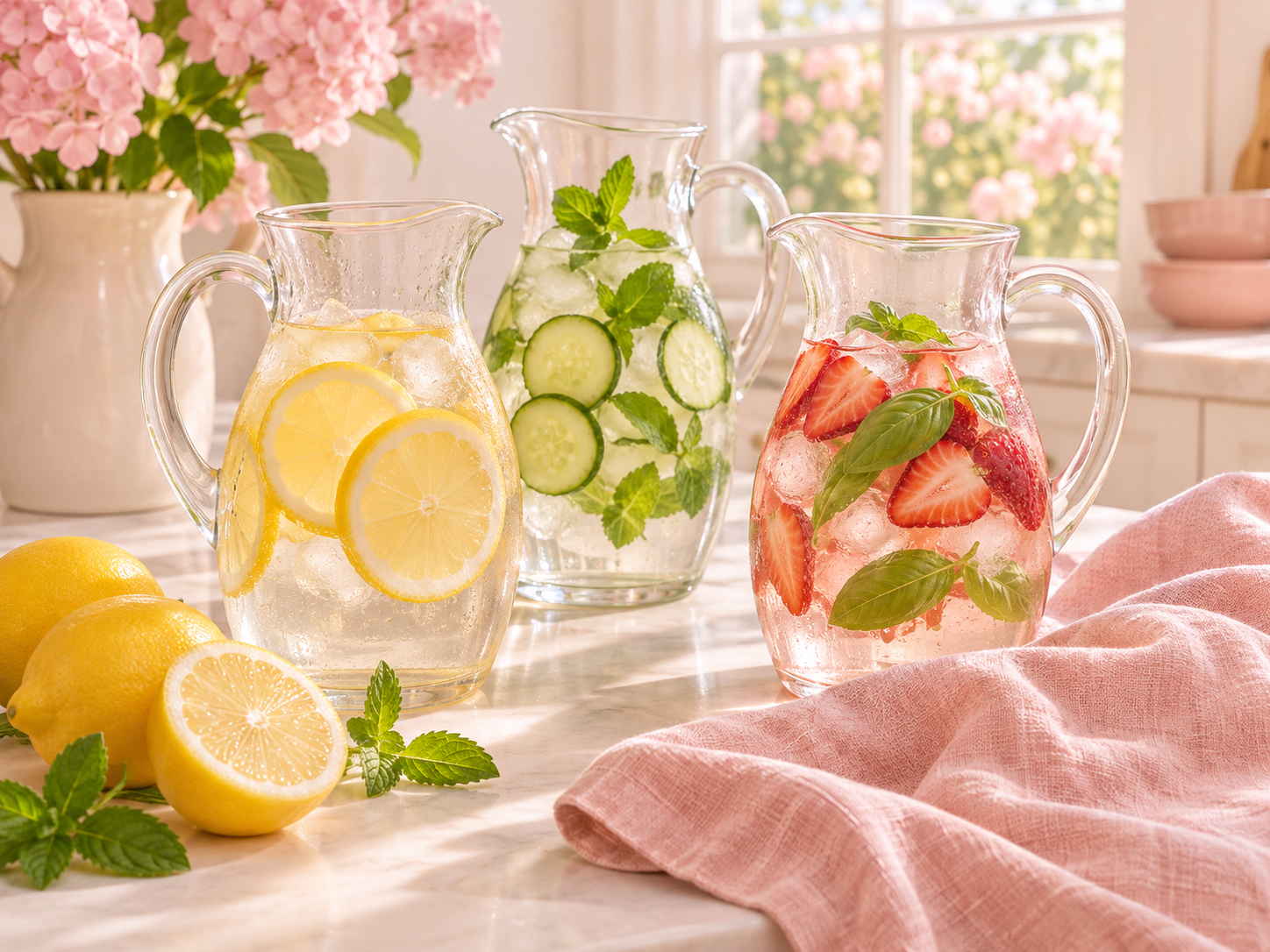
If you’ve ever bought a giant water bottle with the best intentions and then found it, still full, in your car three days later, this post is for you. Plain water can feel like a chore. A slice of lemon, a few strawberries or a handful of cucumber and mint can change that completely.
Lemon water has a bit of a cult following, and for good reason: it’s simple, pretty and refreshing. But it’s also surrounded by big promises it can’t keep. So in this post, we’ll be honest about what lemon water actually does (and doesn’t do), how to protect your teeth while you enjoy it and then give you more than 20 infused water ideas, from cucumber mint to apple cinnamon, so you never get bored.
No fancy equipment needed. Just water, a knife and whatever’s in your fruit bowl.
Why flavored water works
The best water is the water you’ll actually drink. That’s really the whole idea.
The CDC’s own tips for drinking more water include adding a wedge of lemon or lime to improve the taste, and public health departments regularly suggest berries and cucumber slices as a way to make water more appealing than sugary drinks. A dietitian at Northwestern Medicine put it simply: the primary benefit of lemon water is hydration, because people tend to drink more water when it’s flavored.
And there’s a second win. When infused water replaces soda, sweet tea, juice or a flavored coffee drink, you cut added sugar without feeling like you’re giving something up. According to the CDC, sugary drinks are a leading source of added sugars in the American diet. Swapping even one of them a day for something fresh and naturally flavored is a meaningful change.
For many women, it’s also about the ritual. A pitcher of strawberry basil water in the fridge feels like a little act of self-care. It’s pretty. It feels intentional. And on a hard day, small things that make you feel taken care of matter.
Think of infused water as a habit helper, not a health miracle. The magic is that you drink more of it.
How much water do you actually need?
You’ve probably heard “eight glasses a day.” It’s a reasonable goal, but it isn’t a hard rule. The National Academies of Sciences, Engineering, and Medicine set general targets for total water each day, which includes water from all drinks and food:
- About 2.7 liters a dayRoughly 11 cups, from all drinks and foodBaseline
- About 3.0 liters a dayRoughly 12.5 cups totalA bit more
- About 3.8 liters a dayRoughly 16 cups totalThe most
- About 20% comes from foodFruits, veggies, soupsIt counts
Because about a fifth of your water usually comes from food, the amount you need to drink is lower than those totals. And your needs go up with heat, exercise, illness, pregnancy and breastfeeding.
A few simple ways to tell how you’re doing:
- Check your thirst. If you’re often thirsty, you’re probably behind.
- Check your pee. Pale yellow is generally a good sign. Dark yellow usually means you need more.
- Notice how you feel. Headaches, fatigue and feeling foggy in the afternoon can sometimes be thirst.
If you have a heart, kidney or other medical condition, or your doctor has given you a fluid limit, follow their guidance, not a general target.
All about lemon water
Let’s give lemon water its own moment, because it’s the one everyone asks about.
How to make it
Squeeze the juice of half a lemon into a glass of water (about 8 to 12 ounces). That’s it. You can also drop in a few slices, but squeezing gets more flavor and more of the good stuff into your glass. Fresh lemon is best. Bottled lemon juice works in a pinch, too (more on shortcuts below).
Warm or cold? Whichever you prefer. Dietitians say there’s no evidence one is healthier than the other. If a warm mug in the morning is cozy and helps you start your day with water, wonderful. If you like it ice cold with a straw, also wonderful.
What lemon water really does
- 💧HydrationHelps you drink more
This is the big one. If lemon makes water taste better to you, you’ll drink more of it.
- 🍊NutritionAdds a little vitamin C
The juice of half a lemon adds some vitamin C. It’s a modest amount, not a replacement for eating fruits and vegetables, but it’s a nice bonus.
- 🪴CitrateMay help prevent some kidney stones
Lemons are rich in citrate, which can help keep the most common type of kidney stone from forming. If you’ve had kidney stones, ask your doctor whether lemon water is a good idea for you.
- 🥗With mealsCan help you absorb iron
Vitamin C helps your body absorb iron from plant foods like spinach and beans, so lemon water with a meal can help a little.
- 🥤The swapReplaces sugary drinks
If a glass of lemon water replaces a soda or sweet tea, you’ve cut added sugar. That’s a real, meaningful change.
- ✨HabitMakes it feel like a ritual
Slicing a lemon in the morning can become a small, calming routine that starts your day on purpose.
Lemon water myths
Here’s where it gets a little less glamorous. Lemon water is great, but it isn’t magic.
- Myth #1What you’ve heard
“Lemon water detoxes your body.”
What’s actually trueYour liver and kidneys do the detoxing, all day, every day. Water supports them. There’s no good evidence that lemon water does it better than plain water.
- Myth #2What you’ve heard
“Lemon water burns fat.”
What’s actually trueDietitians say there’s no evidence it boosts metabolism or melts fat. If it replaces soda or sweet coffee drinks, though, that swap can genuinely cut sugar and calories.
- Myth #3What you’ve heard
“Lemon water alkalizes your body.”
What’s actually trueYour body keeps your blood pH in a very tight range on its own. A glass of lemon water won’t change that.
- Myth #4What you’ve heard
“You have to drink it hot, first thing in the morning.”
What’s actually trueThere’s no evidence hot is better than cold or that morning is better than afternoon. Drink it when and how you like it.
- Myth #5What you’ve heard
“Lemon water is totally harmless, so sip it all day.”
What’s actually trueIt’s acidic. Sipping it constantly can wear down tooth enamel and bother people with acid reflux. A few simple habits help (see below).
None of this means you should stop drinking it. It just means you can enjoy it for what it is: a refreshing, low-calorie way to drink more water.
Protecting your teeth
This is the one real downside of lemon water, and it’s easy to manage. Lemon juice is acidic, and frequent contact with acid can soften and wear down tooth enamel over time. Sipping lemon water slowly all day long is the habit most likely to cause trouble, because your teeth are bathed in acid for hours.
- Drink it, don’t sip it all day. Enjoy a glass with a meal or in the morning, then switch to plain water.
- Use a straw. It helps keep the acid off the front of your teeth.
- Rinse with plain water after you finish your glass.
- Wait before brushing. Acid temporarily softens enamel, so dentists often recommend waiting about 30 to 60 minutes before you brush.
- Dilute it. A squeeze of lemon in a big glass is gentler than a lot of lemon in a little water.
If you have sensitive teeth or acid reflux, lemon water may not agree with you. Cucumber, berries, mint and melon are all lower-acid options that still taste great. If you notice heartburn or tooth sensitivity, cut back on the citrus and check in with your dentist or doctor.
How to make infused water
Infused water is just water that’s had fruit, vegetables or herbs sitting in it long enough to pick up flavor. Here’s the basic method.
- Wash your hands and your produce. Rinse fruit, cucumbers and herbs under running water, even if you’re peeling them.
- Slice thin. Thinner slices mean more surface area and more flavor, faster.
- Wake up the herbs. Gently clap mint or basil between your hands, or twist it, to release the oils.
- Crush soft fruit a little. Lightly press berries with a spoon to help the flavor come out.
- Add cold water and refrigerate. Let it sit at least an hour, or a few hours for stronger flavor.
- Pull out the citrus after a few hours. Lemon, lime and orange peels can turn the water bitter if they sit too long. Squeeze the juice in before you toss them.
- Refill once. You can usually top off the pitcher with fresh water once before the flavor fades.
A good rule of thumb: about 1 to 2 cups of fruit or vegetables and a small handful of herbs per 8 cups (half a gallon) of water. Adjust to taste. For a single bottle, a few slices and a couple of herb leaves is plenty.
Want bubbles? Make your infusion with plain water, then top each glass with sparkling water. It’s the easiest soda swap there is.
The classics
If you’re new to infused water, start here. These are simple, inexpensive and nearly impossible to mess up.
- 🍋The originalClassic lemon
Half a lemon, sliced, in a big bottle or pitcher. Or squeeze the juice of half a lemon into a glass. Bright, simple and the easiest place to start.
- 🥒Spa waterCucumber mint
Half a cucumber, thinly sliced, and a small handful of mint leaves, lightly bruised. Cool, clean and the most refreshing water you’ll ever drink.
- 🍋Best of bothLemon cucumber
A few lemon slices and a few cucumber slices. The lemon wakes it up and the cucumber smooths it out.
- 🌿Mojito vibesLime and mint
One lime, sliced, and a handful of mint. Add sparkling water if you’re missing soda.
- 🍊Gentle citrusOrange slice
A few orange rounds. Sweeter and softer than lemon, and great for anyone who finds lemon too sour.
Cucumber mint is the one I’d tell every new mom to try first. It tastes like you’re at a spa, even if you’re actually standing in your kitchen in yesterday’s leggings with spit-up on your shoulder.
Fruity and sweet
These are for the sweet tooth, and for anyone trying to cut back on soda or juice. The fruit adds a natural sweetness without any sugar being added.
- 🍓Fan favoriteStrawberry basil
Five or six sliced strawberries and a few torn basil leaves. Sweet, a little peppery and gorgeous in a glass pitcher.
- 🫐Pretty and purpleBlueberry lemon
A handful of blueberries, lightly crushed, and a few lemon slices. Crushing the berries helps the flavor come out faster.
- 🍉Summer in a glassWatermelon mint
A cup of watermelon cubes and a few mint leaves. Naturally sweet, and the color is a whole mood.
- 🍑Warm and fruityPeach ginger
One sliced peach (fresh or frozen) and three or four thin coins of fresh ginger.
- 🍍Vacation waterPineapple coconut
A handful of pineapple chunks in coconut water cut half and half with plain water. Lighter than straight coconut water.
- 🍒Tart and sweetCherry lime
A handful of pitted cherries (frozen works) and a sliced lime.
- 🍏Fall favoriteApple cinnamon
One thinly sliced apple and a cinnamon stick. Tastes like fall, with zero sugar added.
- 🍇Bright and juicyRaspberry orange
A handful of raspberries and a few orange slices. Great for brunch or a baby shower.
Tip: Frozen fruit works beautifully here. It’s already washed and cut, it’s often cheaper than fresh, and it chills your water as it thaws. Frozen berries, peaches, cherries, pineapple and mango are all great options.
Fresh and herby
These feel a little more grown-up. Perfect for a brunch, a book club, a baby shower or just a Tuesday when you want to feel fancy.
- 🌿Grown-upGrapefruit rosemary
A few grapefruit slices and one sprig of rosemary. A little bitter, a little piney and very fancy.
- 🥒Garden freshCucumber lime basil
Cucumber slices, a sliced lime and a few basil leaves. Tastes like a summer garden.
- 🍐Soft and subtlePear thyme
One sliced pear and two sprigs of thyme. Gentle and lovely in cooler months.
- 🥝Tropical twistKiwi strawberry
One peeled, sliced kiwi and a few strawberries. Sweet-tart and bright green and red.
- 🍋CalmLemon lavender
A few lemon slices and a small pinch of culinary lavender. A little goes a long way; too much tastes like soap.
Herbs are where infused water gets really fun. If you have a windowsill pot of basil or mint, you have a free, endless supply. Rosemary and thyme are hardy and easy to grow, too.
Warm and cozy
Infused water isn’t only for summer. When it’s cold out, a warm mug can be the easiest way to keep drinking water.
- ☕Morning ritualWarm lemon water
Juice of half a lemon in a mug of warm (not boiling) water. There’s no evidence it’s healthier than cold, but if a warm mug helps you drink it, that’s a win.
- 🫚SoothingLemon ginger
Lemon slices and fresh ginger coins in hot water. Steep five minutes. A cozy option when you want something warm.
- 🍉HolidayCinnamon orange
Orange slices, a cinnamon stick and a couple of whole cloves in hot water. Makes the whole kitchen smell like the holidays.
- 🍃SimpleFresh mint tea
A big handful of fresh mint leaves in hot water. Steep, sip and relax.
These are all caffeine-free and super simple. Just use warm or hot water instead of cold, let it steep for a few minutes and enjoy. If you’re pregnant or breastfeeding, stick to common food ingredients like these and check with your provider before adding herbal teas or supplements.
For pregnancy and new moms
Pregnancy and nursing both raise your water needs, and they’re also the times when drinking enough is hardest. You’re nauseous, you’re exhausted or you have a baby attached to you and your water bottle is across the room.
- If plain water makes you queasy, many women find cold lemon, lime or ginger water easier to sip during pregnancy. If you’re struggling to keep fluids down, call your provider.
- Set up a nursing station. Keep a big bottle of infused water wherever you feed the baby. Many moms find they get thirsty while nursing.
- Make a pitcher at night. Slice cucumber or berries while you make dinner, put the pitcher in the fridge and it’s ready all the next day.
- Ask your partner to refill. “Can you refill my water?” is one of the easiest ways for a partner to help.
- Eat your water, too. Watermelon, cucumber, oranges, strawberries and soups all help. Our one-handed snacks for new moms post has more ideas.
- Be extra careful with food safety. Wash produce well and keep your infused water in the fridge (more on that below).
Food safety basics
Infused water is fresh produce sitting in water, so a little food safety goes a long way. University extension programs that specialize in food safety recommend:
- Start clean. Wash your hands, cutting board, knife and pitcher before you start.
- Use good produce. Skip bruised or soft spots, which can carry more bacteria.
- Rinse everything. Rinse fruit, vegetables and herbs under running water before cutting.
- Keep it cold. Store infused water in the refrigerator at 40°F or below in a covered pitcher.
- Watch the clock at room temperature. If you take infused water on the go, drink it within about four hours, then toss what’s left.
- Don’t keep it forever. Strain out the produce after about a day, and drink the water within a couple of days. If it looks cloudy, smells off or the fruit is mushy, dump it.
- Wash between batches. Clean the pitcher or bottle with hot, soapy water before making a new batch.
If you’re pregnant, have a weakened immune system or are making it for little ones, be especially careful about washing produce and keeping it cold. And for young kids, remove the fruit pieces before serving to avoid choking.
Shortcuts: bottled lemon, lime and more
Let’s be real: fresh lemons go bad in the fruit bowl, and slicing cucumbers isn’t happening every day when you have a newborn or a full calendar. Shortcuts count. A squeeze of ReaLemon from your fridge door is still lemon water, and it’s still better than skipping water altogether.
- 🍋The classicReaLemon 100% lemon juice
The bottle you’ve seen in every grocery store. A squeeze or two in a glass of water and you’re done. Keep it in the fridge door after opening. See options on Amazon →
- 🌿Lime loversReaLime 100% lime juice
Same idea, in lime. Great with mint and sparkling water, or with a few cucumber slices. See options on Amazon →
- 🍋Grab and goLemon-shaped squeeze bottles
The little plastic lemons are perfect for a lunch box, desk drawer or diaper bag. See options on Amazon →
- 🌱OrganicOrganic lemon and lime juice
Brands like Santa Cruz Organic and Lakewood make organic, not-from-concentrate options if that matters to you. See options on Amazon →
- 🥑Something differentKey lime juice
Bottled key lime juice is a little more floral and tart. Try a splash with sparkling water and mint. See options on Amazon →
- 👜On the goTrue Lemon and True Lime packets
Single-serve packets of crystallized citrus you shake into a water bottle. Check the label: the original versions are unsweetened, and some flavored versions are sweetened. See options on Amazon →
- 🍊VarietyTrue Orange and grapefruit packets
The same idea in orange and grapefruit if you want to switch it up. See options on Amazon →
- 🍓PantryFreeze-dried fruit
Freeze-dried strawberries, raspberries or citrus slices last for months and add flavor and color to water. See options on Amazon →
- ❄️FreezerFrozen fruit
Frozen berries, mango, peaches or pineapple are already washed and cut. Drop a few in your bottle and they chill your water, too. See options on Amazon →
A few things to know about shortcuts:
- Read the label. Look for 100% lemon or lime juice. Some bottled juices contain preservatives such as sulfites, which a small number of people are sensitive to.
- Watch for added sugar and sweeteners. Some flavored packets and drops are sweetened. That’s a personal choice, but check the label so you know what you’re getting.
- Fresh tastes brighter. Bottled juice is a little flatter in flavor. Many people like a squeeze of bottled juice during the week and fresh lemons on the weekend.
- It’s still acidic. The same teeth tips apply to bottled lemon and lime juice: drink it rather than sipping all day, use a straw and rinse with plain water.
Helpful gear
You really don’t need anything special. A glass and a knife will do. But if you want to make it easier, these are the things I’d look at. The links go to general Amazon searches so you can compare options and prices. We don’t earn anything from them.
- 🥤On the goInfuser water bottle
A bottle with a built-in basket keeps the fruit out of your mouth. Look for one that’s dishwasher safe. See options on Amazon →
- 🫙At homeGlass pitcher with infuser
A big pitcher in the fridge means a fresh pour is always ready. Glass doesn’t hold onto smells. See options on Amazon →
- 🍋Lemon waterCitrus squeezer
A simple handheld squeezer gets more juice out and catches the seeds. See options on Amazon →
- 🥤TeethReusable straws
Sipping through a straw can help keep acidic drinks off your teeth. See options on Amazon →
- ❄️PrepBig ice cube trays
Freeze berries, lemon slices or mint into ice cubes for instant infused water. See options on Amazon →
- 📏HabitTime-marked bottle
A bottle with times printed on the side is a simple visual reminder to keep sipping. See options on Amazon →
Making it a habit
The recipes are the fun part. Actually drinking the water every day is the harder part. A few ideas that help:
- Pair it with something you already do. A glass of lemon water while your coffee brews. A refill every time you feed the baby. A glass with every meal.
- Keep it where you can see it. A pitcher on the front shelf of the fridge and a bottle on your desk or in your car.
- Pick a weekly “flavor of the week.” It keeps things interesting and makes grocery shopping easy.
- Prep on Sunday. Wash and slice cucumbers and lemons, and store them in a container in the fridge so you can grab and go.
- Freeze it. Freeze berries, citrus or mint in ice cube trays. Drop a few in a glass of water and you’re done.
- Track it lightly. Rubber bands on your bottle, a time-marked bottle or a note on your phone. Nothing complicated.
- Do it with friends. Share your favorite combos with a friend or your circle. A little accountability goes a long way.
If you’re working on bigger health goals, drinking more water is a perfect first step. It’s small, it’s doable and it builds the habit muscle you’ll use for everything else. We talk about that in our post on non-scale wins, too.
Your turn
Pick one combo from this list and make a pitcher tonight. That’s it. Tomorrow, see if you drink a little more water than usual. Small wins add up.
Lemon water won’t detox you or melt fat, but it can help you drink more water, cut back on sugary drinks and give you a calm little ritual in a busy day. And if lemon isn’t your thing, cucumber mint, strawberry basil or apple cinnamon might be.
If you’d like a group of women to swap recipes, cheer you on and help you stick with the small stuff, that’s what our circles are for. Come find your people.
Sources
- National Academies of Sciences, Engineering, and Medicine: Dietary Reference Intakes for Water, Potassium, Sodium, Chloride, and Sulfate
- CDC: Water and healthier drinks
- Northwestern Medicine: Is drinking lemon water good for you?
- Medical News Today: Lemon water: benefits and myths
- SingleCare (dietitian review): Lemon water benefits and myths
- NC State Extension: Infused water food safety
- Iowa State University Extension: Fruit-infused water food safety tips
- Ohio State University CFAES: Chow Line: Food safety and homemade fruit- or vegetable-infused water
This article is for general information and isn’t medical advice. Talk with your doctor or midwife about what’s right for you.
- Nutrition
- Hydration
- Lemon water
- Healthy habits
- Recipes
Find your strength. Find your girls.
Tell us where you are right now. We’ll reply within two business days with circles, walk clubs and coaching to help the small habits stick.
Questions
Good questions.
Is it good to drink lemon water every day?
For most people, yes. A glass or two of lemon water a day is a refreshing way to stay hydrated. Because it’s acidic, drink it rather than sipping it all day, use a straw, rinse with plain water and wait before brushing to protect your teeth. If you have acid reflux or sensitive teeth, it may not agree with you.
Does lemon water help you lose weight?
There’s no evidence lemon water burns fat or boosts metabolism more than plain water. But if it replaces soda, sweet tea or sugary coffee drinks, that swap can cut sugar and calories.
How long can you keep fruit-infused water?
Keep it in the refrigerator in a covered container. Many food safety experts suggest straining out the fruit after about a day and drinking the water within a couple of days. At room temperature, drink it within about four hours. Toss it if it looks cloudy or smells off.
What are the best fruits for infused water?
Lemon, lime, orange, cucumber, strawberries, blueberries, watermelon and pineapple are all great. Pair them with herbs like mint, basil, rosemary or thyme. Cucumber mint, strawberry basil and lemon cucumber are favorite combinations.
Is infused water safe during pregnancy?
Infused water made with common fruits, vegetables and kitchen herbs is generally a great way to drink more water during pregnancy. Wash produce well, keep it refrigerated and check with your provider before adding herbal teas or supplements.
Keep reading
 Nutrition
 Nutrition