Pilates is everywhere right now. Your feed is full of reformer classes, “Pilates body” transformations and promises of long, lean muscles. Meanwhile, everyone from doctors to fitness experts keeps telling women to lift heavy. So which one should you actually do?
Here’s a balanced, research-based comparison of Pilates and weight training for strength, bones, posture, mobility, back pain and more, plus which one fits different goals, how to combine them and why your personal preference matters more than you might think.
We’re health coaches, not doctors or physical therapists. If you’re pregnant, postpartum, recovering from an injury, have osteoporosis or have back or joint pain, check with your doctor or a physical therapist about what’s right for you.
The short answer
- 🏋️♀️Lean toward weightsFor strength, muscle and bones
It’s easier to keep progressing with weights, and heavier loading has strong evidence for bone health.
- 🧘♀️Lean toward PilatesFor control, posture and mobility
Pilates shines for core control, flexibility, balance, body awareness and low-impact movement.
- 🤝Do bothFor most women
Strength training two or more days a week, with Pilates or mobility work mixed in, covers almost every base.
- 💖The one you’ll stick withThe real winner
The workout you enjoy and keep doing will beat the “perfect” workout you quit in three weeks.
What each one actually is
🧘♀️ Pilates
Pilates is a method developed in the early 1900s by Joseph Pilates to improve overall flexibility, health, core strength and posture, with movements coordinated with breathing. Today it comes in a few main forms:
- Mat Pilates: bodyweight exercises on a mat, sometimes with small props like bands, rings or balls.
- Reformer Pilates: done on a sliding carriage machine with springs that add resistance or assistance.
- High-intensity or “athletic” Pilates: faster-paced classes that blend Pilates with strength and cardio.
It’s also incredibly popular. Pilates has been the most-booked workout on ClassPass for three years running, with reservations up 66% in 2025 alone.
Mat vs. reformer: which Pilates?
- Mat Pilates uses your bodyweight, which can actually make some moves harder because there are no springs to help you. It’s cheap, portable and easy to do at home.
- Reformer Pilates uses springs that can add resistance or support, which makes it easy to adjust for beginners and also very challenging for advanced students. It usually requires a studio and costs more per class.
- Either one works. Start with what you can access and afford. Many women do mat at home and treat themselves to a reformer class now and then.
🏋️♀️ Weight training
Weight training (also called strength or resistance training) uses external resistance, like dumbbells, kettlebells, barbells, machines or bands, to make your muscles work hard. The key principle is progressive overload: gradually increasing the challenge over time with more weight, more reps or harder variations.
Think squats, deadlifts, rows, presses, lunges and hip thrusts. If you want to learn the basics, our exercise guides for the goblet squat, Romanian deadlift and dumbbell row are great places to start.
Side by side
-
🧘♀️PilatesMat or reformer
Best forCore control, posture, mobility, balance and a low-impact, mindful workout.
The good- Builds core strength and control
- Improves flexibility and balance
- Joint-friendly and low impact
- Focuses on breathing and body awareness
- Mat Pilates needs almost no equipment
The trade-offs- Harder to keep adding heavy load over time
- Less bone-loading than heavier lifting
- Reformer classes can be pricey
- Quality depends a lot on the instructor
-
🏋️♀️Weight trainingDumbbells, barbells, machines, bands
Best forBuilding muscle and strength, bone health, metabolism and getting stronger for everyday life.
The good- Easy to measure and progress (more weight, more reps)
- Strong evidence for muscle, strength and bone
- Home setups can be cheap
- Builds strength for lifting kids, groceries and more
The trade-offs- Can feel intimidating at first
- Form matters, so learning takes time
- Less built-in focus on mobility and breath
- Gym environments aren’t for everyone
Factor by factor
- 💪Edge: weights (slightly)Muscle and strength
A systematic review found very low to low quality evidence of no difference between Pilates and other exercise types for strength, balance and flexibility. But weights make it easier to keep adding load, which is what drives long-term strength and muscle gains.
- 🦴Edge: weightsBone health
Bones respond to heavy, challenging loads. In the LIFTMOR trial, postmenopausal women with low bone mass who did supervised, heavy lifting twice a week improved spine and hip bone density compared with a low-intensity home program.
- 🎯TieCore and back pain
Pilates can help with chronic low back pain, but a Cochrane review found no conclusive evidence it’s better than other forms of exercise. Weight training with good form strengthens the core too.
- 🧍♀️Edge: PilatesPosture
A 2024 systematic review found evidence that Pilates can help improve common posture problems. Strength training for the back and glutes helps too.
- 🧘Edge: PilatesFlexibility and mobility
Pilates builds in stretching, spinal movement and full range of motion. Weight training through a full range of motion also improves mobility, but it isn’t the main focus.
- ⚖️TieBalance
Both can improve balance, especially in older women. Pilates focuses on it directly.
- ❤️Neither is enough aloneHeart and cardio fitness
Neither is a full replacement for cardio. Add walking, cycling, swimming or other aerobic activity.
- 💰Edge: weights or mat PilatesCost and access
A pair of dumbbells or a mat at home is cheap. Reformer studio classes are often the most expensive option.
What the research says
- Pilates builds real fitness. A review of nine trials in older adults found mat Pilates appears to improve muscle strength, flexibility, balance and cardiovascular fitness compared with no exercise.
- Head to head, results are similar for many outcomes. A 2022 systematic review found very low to low quality evidence that there’s no difference between Pilates and other exercise types for strength, balance and flexibility.
- They build strength a bit differently. In a randomized trial of older women, the Pilates group improved isometric (holding) hip and trunk strength more, while the resistance training group gained more isokinetic (moving) trunk and hip strength. Both groups improved on a walking and balance test.
- Back pain: Cochrane researchers concluded that there is some evidence Pilates helps low back pain, but no conclusive evidence that it’s better than other exercise, so the choice can come down to preference and cost.
- Bone: The LIFTMOR trial found that supervised, high-intensity lifting improved bone density at the spine and hip in postmenopausal women with low bone mass, and it was safe for participants under supervision.
The overall picture: both are good for you. Weights have the edge for progressive strength and bone loading. Pilates has the edge for mobility, posture and mindful, joint-friendly movement. Neither replaces cardio.
Which is better for your goal?
- Getting strongerWeights, with Pilates as a bonus
- Building muscle and shapeWeights (easier to progress)
- Protecting bonesWeights plus impact like brisk walking or jumping if appropriate
- Better posturePilates, plus back and glute strength work
- Flexibility and mobilityPilates
- Back painEither (ask your doctor or PT)
- Balance and fall preventionBoth
- Weight managementBoth, plus nutrition and daily movement
- Stress relief and body connectionPilates (and whatever you enjoy)
- Busy schedule, small budgetHome dumbbells or mat Pilates
Through life’s seasons
- 🤰With your provider’s OKPregnancy
Both can be adapted for pregnancy with guidance. Prenatal Pilates and modified strength training are popular options. Avoid lying flat on your back for long periods later in pregnancy, and check with your provider.
- 🍼Start gentlyPostpartum
Many women start with breathing, pelvic floor and gentle core work before adding load. A pelvic floor physical therapist can be a huge help. See our postpartum exercise guide.
- 🌼Lift, and keep movingPerimenopause and menopause
As muscle and bone loss speed up, strength training becomes especially important. Pilates adds balance and mobility. Our perimenopause guide covers this season.
- 👪Do what fitsBusy mom years
A 20-minute dumbbell session or a 20-minute mat Pilates video at nap time both count. Our 20-minute dumbbell workout was built for this.
How to do both
You really don’t have to choose. Here are three sample weeks depending on how much time you have:
⏱️ Three days a week
- MondayFull-body weights (30–40 min)
- WednesdayPilates class or mat Pilates at home
- FridayFull-body weights
- Most daysWalk
📅 Four days a week
- MondayLower-body weights
- TuesdayPilates
- ThursdayUpper-body weights
- SaturdayPilates or a long walk
🌱 Short on time
- Two days20-minute full-body dumbbell workouts
- Daily10 minutes of mat Pilates or core and mobility work before bed
The CDC recommends that adults do muscle-strengthening activities at least two days a week, plus at least 150 minutes of moderate activity like brisk walking. Pilates and weights can both count toward the strength part.
What about barre, sculpt and hybrid classes?
Between pure Pilates and traditional lifting, there’s a whole world of hybrid classes: barre, sculpt, “Pilates with weights,” strength-focused reformer classes and more. They can be a great middle ground.
- Barre mixes ballet-inspired moves with small pulses and light weights. It’s great for muscular endurance and posture, but the weights usually stay light.
- Sculpt classes often use light to moderate dumbbells for higher reps, sometimes with cardio bursts.
- Athletic or high-intensity Pilates adds speed and sometimes cardio to Pilates movements.
- The thing to watch: if every class uses the same light weights for lots of reps, you may eventually stop progressing. Mixing in some heavier strength sessions, even at home, helps fill that gap.
If a hybrid class is what you love and keeps you showing up, that’s a fantastic foundation. You can build from there.
What you need to start
- Mat PilatesA mat (or carpet) and an optional small ball or band
- Reformer PilatesA studio class or a home reformer, which is a bigger investment
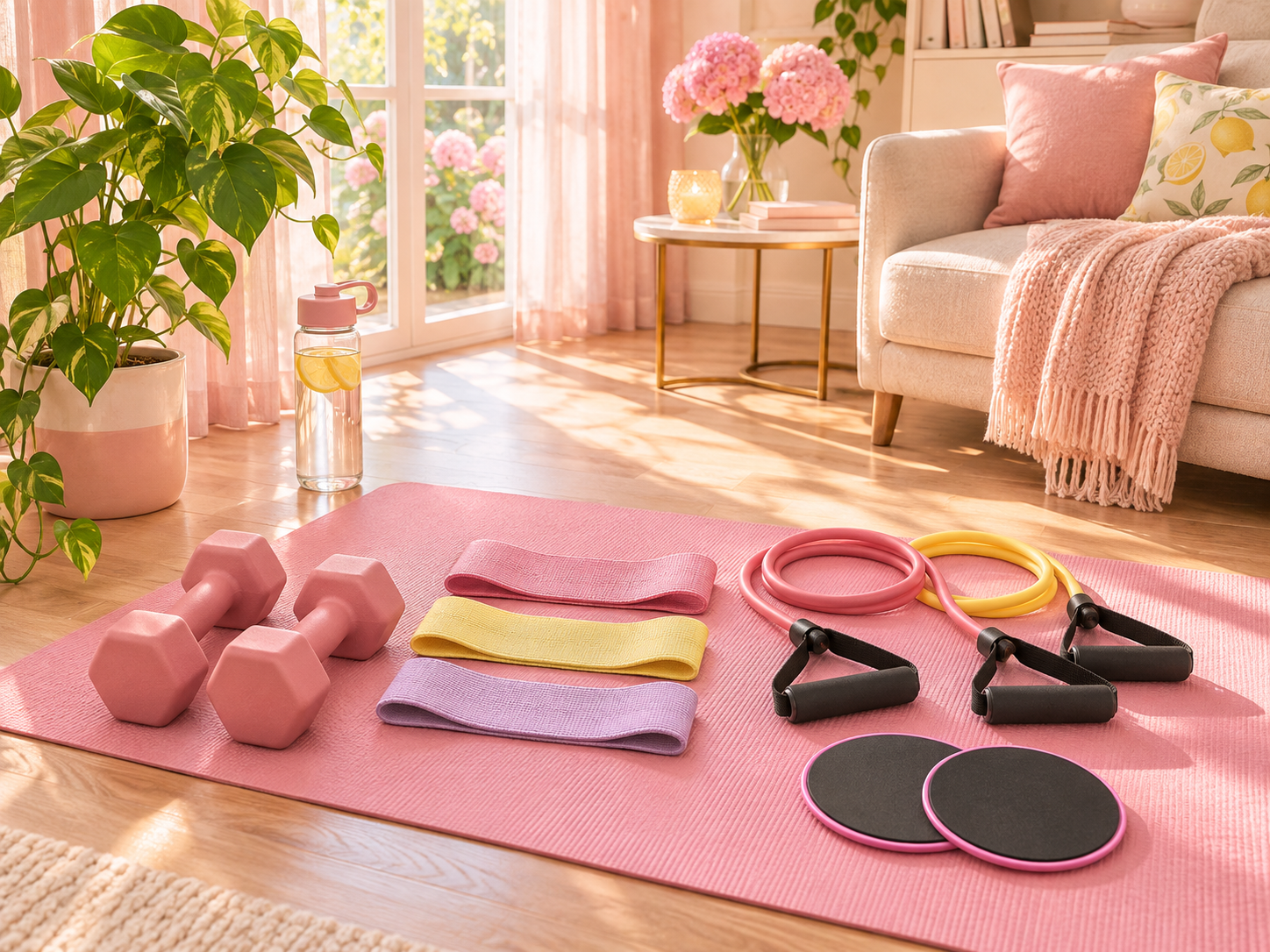
- Weights at homeA mat, one or two pairs of dumbbells and a set of bands
- Weights at the gymA membership and a simple plan to follow
You don’t need fancy gear to get real results. Start with what you have and add equipment as you find what you enjoy.
How to get started
If you’re starting Pilates
- Try a beginner or intro class rather than jumping into an advanced or high-intensity one.
- Look for a qualified, certified instructor who gives clear cues and offers modifications.
- Mention any injuries, pregnancy or postpartum status before class.
- Check intro offers, since many studios discount first classes. Mat Pilates videos at home are a budget-friendly way to try it.
If you’re starting weights
- Learn the basic movements (squat, hinge, push, pull, carry) with light weights first.
- Start with two days a week and 1 to 3 sets of 8 to 12 reps.
- Add weight gradually when the last couple of reps start to feel easy.
- Consider a session with a coach or trainer to check your form.
- Start at home if the gym feels intimidating. Our home gym under $100 guide shows you how.
Try them both: two free beginner videos
The easiest way to figure out which one you like is to try them. Here are two beginner-friendly videos you can do at home this week, one Pilates and one weight training, from coaches we think do a great job teaching beginners. We’re not affiliated with either of them.
🧘♀️ Gentle 15-minute Pilates
Curious but not ready to book a studio class? This video is a great first step. It’s slow, calm and has no music, so you can focus on your breathing and form. You just need a mat or a carpeted floor.
Video: “Gentle Pilates – 15 Minute Pilates for Beginners Workout!” by Jessica Valant, a physical therapist and certified Pilates teacher. Watch it on YouTube.
- Go at your own pace. Pause the video, skip a move or take a modification whenever you need to.
- Focus on control, not speed. Slow, steady movements are the point.
- Breathe. Pilates pairs each movement with your breath, which is part of why it can feel so calming.
- Check with your provider first if you’re pregnant, recently postpartum, recovering from surgery or managing an injury.
- Try it three times in one week. The first session is about learning the moves. By the third, you’ll feel the difference.
🏋️♀️ 20-minute beginner weight training
Ready to pick up some dumbbells? This step-by-step, full-body workout is designed for women who are new to lifting or getting back into it. Grab a light to moderate pair of dumbbells (or water bottles to start).
Video: “20 Min Beginner Weight Training For Women (Step-by-Step, Workout from Home)” by Jenny J Fitness. Watch it on YouTube.
- Pick weights that feel challenging by the last few reps but still let you keep good form.
- Watch the demo before each move and start a little lighter if you’re unsure.
- Rest between rounds as long as you need. You’re building a habit, not racing the clock.
- Do it twice a week, with at least a day in between, and try a slightly heavier weight once it feels easy.
A simple first week: Pilates video on Monday, weights video on Wednesday, Pilates again on Friday and weights on Saturday. Then notice which one you were most excited to press play on, and which one left you feeling best afterward.
The one that wins: the one you’ll do
Here’s the part that rarely makes it into the comparison charts: the best workout is the one you’ll actually keep doing. Consistency over months and years beats the “optimal” plan you abandon.
Ask yourself:
- Which one do I look forward to?
- Which one leaves me feeling better afterward?
- Which one fits my schedule, budget and the space I have?
- Do I like the energy of a class, or would I rather train alone at home?
- Do I want to see numbers go up (heavier weights), or do I care more about how I feel?
Pilates’ huge popularity is partly about this. People tend to stick with it once they try it, and it was the most rebooked workout genre on ClassPass in every region in 2025. If Pilates is what gets you moving consistently, that’s a big win, and you can always add a couple of short strength sessions on top.
And if you love both? Even better. Working out with friends helps too. Our post on why working out with friends works explains why.
Common mistakes with each
Pilates mistakes
- Rushing through reps. Pilates works best slow and controlled. Momentum takes the work away from your muscles.
- Holding your breath. Keep breathing steadily through every movement.
- Straining your neck during ab work. Keep your gaze forward and let your core do the lifting.
- Never increasing the challenge. Once a class feels easy, try harder variations, heavier springs or a more advanced level.
- Expecting it to cover everything. Add walking or other cardio, and consider some heavier strength work for bone health.
Weight training mistakes
- Going too light forever. If you can easily do 20 reps, the weight is probably too light to keep building strength.
- Going too heavy too soon. Ego lifting with poor form is how injuries happen. Master the movement first.
- Skipping the warm-up. Five minutes of light movement and a few practice sets help your joints and muscles get ready.
- Random workouts every time. Repeating the same core moves for several weeks lets you track progress and get stronger.
- Ignoring recovery. Muscles get stronger between workouts, so sleep, protein and rest days matter. Our protein guide can help.
Pilates and lifting myths
- Myth #1What you might have heard
“Lifting weights will make me bulky.”
What’s actually trueBuilding big muscles takes years of heavy training, eating in a surplus and genetics. Most women who lift get stronger and more defined, not bulky.
- Myth #2What you might have heard
“Pilates makes long, lean muscles.”
What’s actually trueYou can’t change the length of a muscle. Both Pilates and weights build muscle; how “lean” you look depends mostly on overall body composition and genetics.
- Myth #3What you might have heard
“Pilates is too easy to count as strength training.”
What’s actually truePilates, especially reformer and well-taught mat classes, can be very challenging, and research shows it can build strength, particularly in beginners and older adults.
- Myth #4What you might have heard
“Weights are bad for your joints.”
What’s actually trueWith good form and gradual progress, strength training strengthens the muscles that support your joints and can help many people with joint pain.
- Myth #5What you might have heard
“You have to pick one.”
What’s actually trueMany women get the best results doing both: weights for strength and bone, Pilates for mobility, control and posture.
- Myth #6What you might have heard
“Pilates is only for flexible, already-fit people.”
What’s actually truePilates was originally designed for rehabilitation and can be modified for almost any body and fitness level.
Your turn
This week, try one of each: the Pilates video and the weight training video above, or a class at a local studio or gym. Then notice which one you were most excited to do again. That’s your starting point.
Want help building a routine that blends strength, Pilates-style core work and movement you love, around your real life? That’s exactly what our coaches do. Whether you end up on a reformer, under a barbell or doing both in your living room during nap time, the goal is the same: feeling stronger, moving better and truly enjoying the process.
Sources
- Heliyon (2022): Is Pilates better than other exercises at increasing muscle strength? A systematic review
- NIHR Evidence: Mat Pilates probably improves balance and strength in older adults
- Systematic review (2024): Effects of Pilates on common body postures
- Cochrane (2015): Pilates for low back pain
- American Family Physician: Pilates for the treatment of low back pain
- Carrasco-Poyatos et al., PeerJ (2019): Pilates versus resistance training on trunk strength and balance adaptations in older women
- Watson et al., Journal of Bone and Mineral Research (2018): High-intensity resistance and impact training improves bone mineral density: the LIFTMOR trial
- Osteoporosis International (2019): High-intensity exercise did not cause vertebral fractures: the LIFTMOR trial
- European Review of Aging and Physical Activity: Effects of the Pilates method on physical fitness in older adults
- Jessica Valant on YouTube: Gentle Pilates: 15 minute Pilates for beginners workout
- Jenny J Fitness on YouTube: 20 min beginner weight training for women
- ClassPass: 2025 Look Back Report
- CDC: Adult activity: an overview
This article is for general information and isn’t medical advice. Talk with your doctor or midwife about what’s right for you.
- Pilates
- Strength training
- Weight training
- Workouts
- Bone health
Find your strength. Find your girls.
Tell us how you like to move and what you’re working toward. We’ll reply within two business days with coaching and community that fit your goals.
Questions
Good questions.
Is Pilates or weight training better for women?
Both have real benefits. Weight training has the edge for building strength and muscle over time and loading bones, while Pilates shines for core control, posture, flexibility and balance. For most women, a mix of both, plus cardio, covers the most bases.
Can Pilates replace weight training?
Pilates can build strength, especially for beginners, and research shows it improves strength, balance and flexibility compared with no exercise. But it’s harder to keep adding heavy load over time, so many experts recommend including some weight training too, especially for bone health.
Does Pilates build muscle?
Yes. Pilates challenges your muscles, particularly the core, hips and glutes, and can build strength. Reformer Pilates adds spring resistance, which can make it more challenging. Weight training makes it easier to keep increasing the challenge.
Which is better for bone density, Pilates or lifting?
Bones respond best to heavy loads and impact. The LIFTMOR trial found that supervised high-intensity lifting improved bone density in postmenopausal women with low bone mass. If bone health is a priority, include weight training and talk to your doctor.
How often should I do Pilates and weight training?
The CDC recommends muscle-strengthening activity at least two days a week. A simple plan is two days of weights and one or two days of Pilates, plus regular walking or other cardio.
 Fitness
 Fitness
 Fitness