Community-led marketing: connecting with women beyond traditional influencers
What Lululemon, Athleta and FP Movement have built through ambassadors, run days and gatherings, why community earns more trust than reach alone and eight ideas for reaching the women who never join.
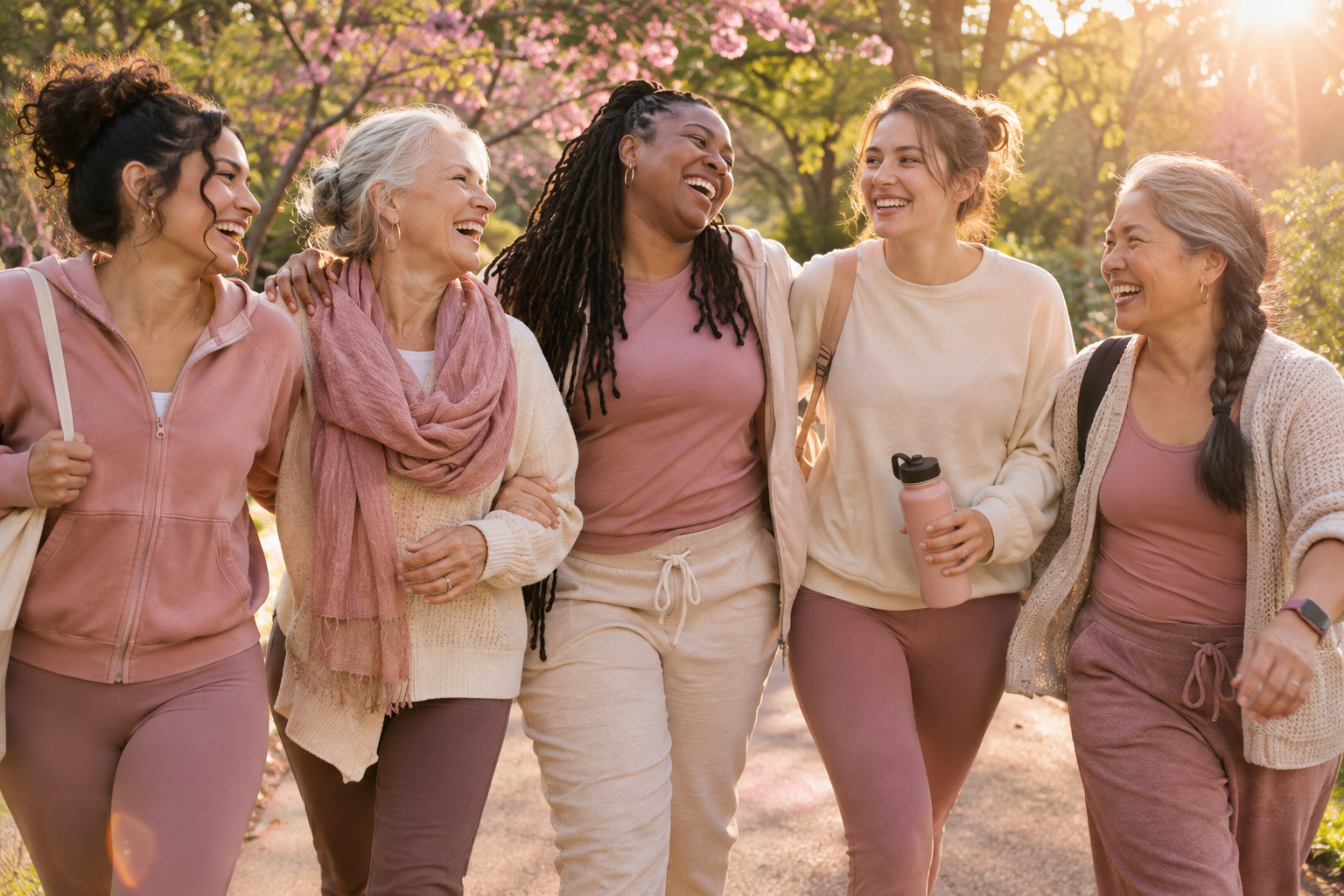
The most powerful recommendation a woman gets isn’t from a stranger with a million followers. It’s from the friend walking next to her who says, “I love these leggings,” or “Come with me Saturday, it’s fun.” That’s the idea behind community-led marketing, and it’s what Pink in Progress is built on.
Brands like Athleta, FP Movement and Lululemon have shown how much community can do for an activewear brand, from ambassador programs and run clubs to monthly gatherings. This page explains why community-led marketing is growing, what each of these brands has built and how a partnership with Pink in Progress could help reach women that traditional influencer campaigns often miss.
Please note: Athleta, FP Movement and Lululemon are examples of prospective collaborators based on mission and audience alignment. Pink in Progress has no existing partnership, affiliation or endorsement with these brands.
What community-led marketing means
Community-led marketing puts real people and real relationships at the center of how a brand grows. Instead of paying one person to talk about a product, a brand helps create spaces where people meet, move, share and recommend things to each other naturally. Think run clubs, workout meetups, small groups, local events and honest conversations, both online and in person.
In practice, it can look like a store hosting a Saturday run, a brand sponsoring a walking route in a city park, a small group that meets online every Tuesday or a product that’s shaped by honest feedback from the women who use it. The brand provides the space, the structure and sometimes the gear. The community provides the warmth, the stories and the reasons to come back.
It doesn’t replace influencers. It gives them, and the brand, something real to point to. A post about a run club means more when the run club actually exists, meets every week and welcomes everyone who shows up.
Why it matters now
People still trust people they know more than anyone else. In an April 2026 NP Digital survey, 84% of consumers said they trust friends or family most when evaluating a brand. A June 2026 Field Agent Canada survey of more than 2,000 people found that only 5% view influencers as their most trusted source when deciding what to buy, with many saying recommendations from friends feel less transactional.
At the same time, people are looking for in-person connection through movement. Strava’s 2025 Year in Sport report found that new clubs on the app nearly quadrupled, reaching one million, with running clubs growing 3.5 times. But the same report found that 27% of women surveyed see run clubs as exclusive or intimidating.
- 👪NP Digital, 2026Friends come first
84% of consumers trust friends or family most when evaluating a brand.
- 📈Strava, 2025Clubs are booming
New clubs on Strava nearly quadrupled to one million, and running clubs grew 3.5 times.
- 🙈Strava, 2025Not everyone feels welcome
27% of women surveyed said run clubs feel exclusive or intimidating.
Those numbers point in the same direction. Women are hungry for real-world connection through movement, and they trust the people beside them more than the people in their feeds. That gap is the opportunity. The demand for community is huge, but many women are still on the outside looking in. Brands that help them take the first step, and make them feel welcome once they do, will earn something more durable than a click: loyalty that lasts for years.
Influencers vs. community
- Reaches a large audience quickly
- Polished content on a set timeline
- One person’s voice and following
- Often one post or a short series
- Measured mostly in views and clicks
- Builds trust with a smaller, engaged group
- Real conversations and real-life moments
- Many women’s voices, in their own words
- Ongoing relationships over months
- Measured in participation, return visits and feedback
The two can work together. Community gives reach something real to point to.
How influencers and community can work together
This isn’t an either-or choice. The strongest programs often combine both, with each doing what it does best.
- Creators spread the word; community keeps people. A creator can invite thousands of women to a walk. The community is what makes them come back the next week.
- Local leaders beat distant celebrities for trust. Lululemon’s ambassador model shows how much weight a local instructor or run leader carries in their own city.
- Real stories make better content. With permission, the experiences women share at events can become honest guides, recaps and social posts, in their own words.
- Smaller voices reach different women. A mom who just finished her first 5K will reach women a professional athlete never could.
A partnership with Pink in Progress can sit alongside a brand’s existing creator and ambassador work, giving it a welcoming, beginner-friendly home base for the women those campaigns reach.
Three brands built on community
Lululemon: grassroots from the start
Lululemon says community is the backbone of the company and that the brand grew through grassroots, community-led engagement. Its ambassador program partners with values-driven role models in local communities, from local influencers to professional athletes. Many ambassadors are fitness instructors, run club leaders and studio owners.
That work continues at scale. In 2026, Lululemon brought 100 ambassadors to Vancouver and Whistler for an Ambassador Summit that included product-testing workshops and feedback sessions. Its Summer Series kicked off in June 2026 at New York City’s Pier 17, where more than 250 guests took a Pilates class led by an ambassador.
Athleta: the Power of She
Athleta first introduced its Power of She platform in 2016 and launched its Power of She Collective of women athletes in 2023, with members like Simone Biles and Katie Ledecky. Collective members help influence product, access mentorship and take part in impact programs.
The brand is also leaning into everyday community. For International Women’s Day 2026, Athleta hosted a cold plunge gathering, and its chief marketing officer described it as something that started with a small group of women craving connection and grew into a monthly movement. In fall 2026, Athleta launched its “My World. My Rules.” campaign as part of what Gap Inc. has called a rebuild year for the brand.
FP Movement: all year, all together
FP Movement, Free People’s activewear brand, describes its community program as created to bring the power of collective movement to all through fun, community-driven fitness and wellness experiences. Its ambassadors host run days in cities across the country, and its run program includes 5K, 10K and marathon run leads.
On International Women’s Day 2026, FP Movement hosted a 5K from its Broadway store in New York City with a local run community, finishing with giveaways and post-run bagels. It’s a simple model: show up, move together and make it fun. Pairing runs with local partners and small rewards gives people an easy reason to try it once, and a friendly crowd gives them a reason to return.
Where Pink in Progress fits
Each of these brands has a strong community engine. Here’s where a partnership with us could reach women those programs don’t always reach.
The common thread is that their communities often start with people who already identify as runners, yogis or athletes. Pink in Progress starts with women in the middle of real life: new moms, women in midlife, women starting over and women who’d love to move more but don’t know where to begin. We’re a bridge to the women who are still on the sidelines.
What we bring
Pink in Progress is a women’s wellness community built around coaching, small circles and practical, research-backed content. Ritner Digital is the team behind Pink in Progress, so strategy, writing, design and community all come from one place.
- 🌱ConnectionSmall circles
Our circles and coaching give women a place to talk honestly and support each other week after week.
- 📍LocalCity walking guides
We’ve published walking routes in seven cities, from New York to Los Angeles, built for real women and real schedules.
- 📚LibraryMovement content
Beginner form guides, a walk-to-run plan for moms and guides to finding a workout buddy.
- 🫶TrustHonest standards
No invented testimonials, clear sponsor labels and linked sources on every article.
Eight community ideas
These are starting points, not finished proposals. Tap a category to filter. Each idea notes which brands it might suit best.
- Community
1.🚶♀️The all-paces walk and run club
A weekly meetup where walking is as welcome as running, designed for women who find traditional run clubs intimidating. Every route has a walking group, a slow-jog group and a regroup point, so nobody finishes alone.
What it could include: Weekly meetups in our cities, a printable route card and a short guide to starting at any pace.
- Community
2.👶Stroller strides
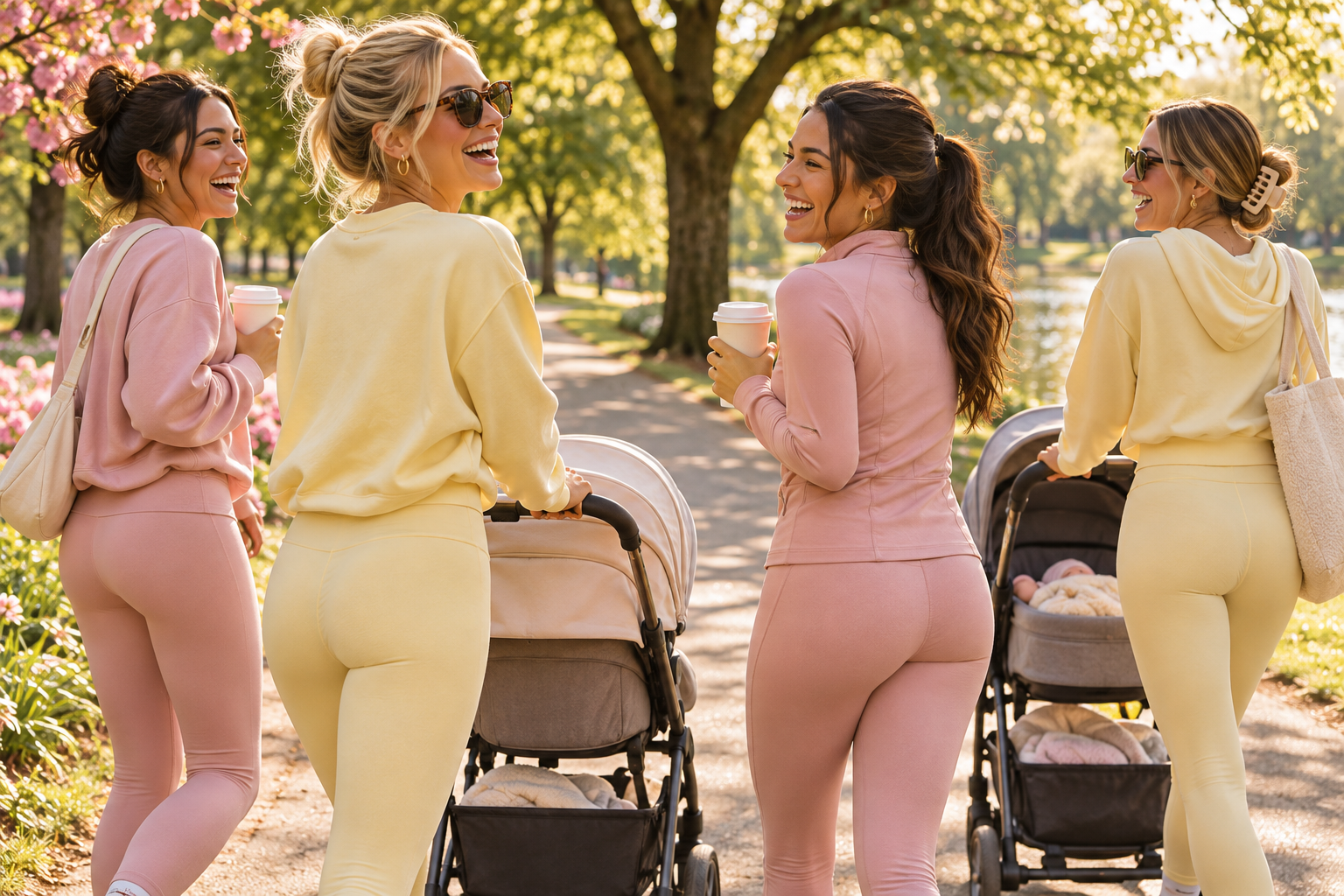
Morning walks built for moms with babies and toddlers, with routes chosen for smooth paths, shade, bathrooms and coffee at the end. The real goal is connection for new moms who feel isolated.
What it could include: Monthly stroller walks, a new-mom walking guide and a virtual circle for the weeks in between.
- Campaigns
3.🏃♀️Your first 5K, together
An eight-week walk-to-run program that ends with a group 5K, building on our walk-to-run plan for moms. Women train on their own schedule and check in weekly with their group.
What it could include: A training plan, weekly check-in circles, a finish-line celebration and honest gear notes.
- Community
4.🏋️♀️Strong at every age
A strength series for women in their 40s, 50s and beyond, pairing beginner-friendly form guides with small in-person or virtual sessions led by qualified coaches.
What it could include: Form guides from our library, a four-week plan and small-group sessions with Q&A.
- Content
5.🧪The real-women wear test
Women of different ages, sizes and activity levels test gear for a month and report back honestly, in their own words, about fit, comfort and what didn’t work. Gifted products are always disclosed.
What it could include: A sourced comparison guide, real feedback and a clearly labeled sponsor note.
- Community
6.🏙️New in town, find your people
Movement meetups for women who’ve recently moved and don’t know anyone yet. A walk, a stretch and a coffee is a far easier way to meet people than a networking event.
What it could include: City-based meetups, a guide to making friends as an adult and an invitation to ongoing circles.
- Content
7.🗺️Sponsored city walking guides
Our city pages already include walking routes in seven cities. A brand could sponsor new routes, seasonal guides or a printable map, with a clearly labeled sponsor credit.
What it could include: New route guides, printable maps and a launch walk in each city.
- Campaigns
8.🌸Move for your mind
A month-long campaign connecting movement and mental health, with gentle daily prompts, a walking challenge and circles where women talk about how moving helps them cope.
What it could include: A daily email series, a printable tracker and weekly virtual circles, with support resources included.
The women who never join
When more than a quarter of women say run clubs feel exclusive or intimidating, it’s worth asking why. The reasons can be easy to imagine: worrying they’ll be the slowest, not knowing anyone, feeling self-conscious about their bodies, not having the “right” gear and not being able to commit to a fixed time every week. Moms with young kids, women returning after an injury or illness and women who’ve never thought of themselves as athletic often feel this most.
Community-led marketing works best when it’s designed for those women from the start:
- Make walking normal. Every route should have a walking option, and walkers shouldn’t be an afterthought.
- Never leave anyone behind. Use regroup points and a sweeper who finishes with the last person.
- Say exactly what to expect. Distance, pace options, where to meet, where the bathroom is and what happens after.
- Welcome kids and strollers when the route allows it.
- Skip the gear pressure. Whatever you have is fine, even when the event is sponsored by an apparel brand.
- Make the social part the main event. Coffee afterward often matters more than the miles.
Our posts on why working out with friends actually works and things to do alone go deeper on the connection side.
What makes women’s communities different
Women often come to fitness communities with different needs than the ones many programs were originally built around. Schedules are shaped by school pickups, caregiving and shift work. Safety matters, especially for early-morning and evening routes. Bodies change through pregnancy, postpartum recovery, perimenopause and menopause, and a program that ignores those seasons can quietly push women out.
Women-centered communities also tend to be about more than the workout. For many women, a weekly walk is the only time they talk to a friend without a child, a coworker or a to-do list in the way. That’s why our circles pair movement with conversation, and why the coffee afterward is never an afterthought.
Brands that design for these realities, with flexible times, safe and well-lit routes, stroller-friendly options and honest talk about changing bodies, earn loyalty that a discount code can’t buy.
Common community marketing mistakes
Community can’t be bought quickly, and it can be damaged quickly. A few patterns tend to backfire:
- Showing up once. A single splashy event with no follow-up feels like a campaign, not a community.
- Making it all about the product. When every moment is a sales pitch, people stop coming.
- Designing for people who are already fit. Fast-paced events can unintentionally tell beginners they don’t belong.
- Staging authenticity. Scripted “real” stories and paid testimonials dressed up as organic feedback erode trust.
- Ignoring feedback. If women say a time, route or format doesn’t work, change it and tell them you did.
- Measuring only reach. Big numbers can hide the fact that nobody came back.
Our principles
- Lead with the community’s needs, not the product launch
- Make every event welcoming to beginners, walkers and every body
- Let women speak in their own words, and never script or invent testimonials
- Label every sponsored or gifted mention clearly
- Show up consistently, not just once
- Measure what matters: who came back and what they said
Community is earned slowly and lost quickly. These keep us honest.
Every sponsored piece is clearly labeled, in line with the Federal Trade Commission’s endorsement guidance. When women share their experiences, we use their own words with their permission, and we never invent quotes, reviews or testimonials.
How we’d measure success
Follower counts and impressions don’t tell you whether a woman made a friend or found the courage to show up again. We’d agree on measures with each partner up front, which could include:
- Participation: how many women came, and how many were first-timers.
- Return rate: how many came back a second, third or fourth time.
- Connection: simple, voluntary check-ins asking whether women met someone new or feel more confident moving.
- Content engagement: time spent with guides, downloads of plans and newsletter replies.
- Honest feedback: what women liked, what they’d change and what they want next, shared only with permission.
What a season together could look like
- Listen firstShort surveys and a kickoff circle to learn what women in our community want and what holds them back.Insight
- Launch the meetupsWeekly all-paces walks or runs in one or two cities, plus a virtual option.Community
- Add the contentA sourced guide, a beginner plan or a sponsored city route, clearly labeled.Content
- Celebrate and recapA finish-line event, honest feedback and a plan for what comes next.Recap
Smaller starts work too. A single event series, a sponsored route guide or a wear test can be a meaningful first step. Many of the best community programs began as one small gathering that people kept coming back to, and grew from there because the women in it invited their friends.
Beyond these three brands
Lululemon, Athleta and FP Movement are clear examples, but community-led marketing fits many brands that serve active women: running shoe companies, hydration and nutrition brands, wearable technology, maternity and postpartum brands and local studios and gyms. Our Partner With Us page lists more of the industries we’d love to work with.
How to start
If your brand is building community, or wants to reach women who aren’t in your existing clubs yet, we’d love to talk. Our Partner With Us page outlines all seven ways we work with brands, and our piece on body confidence campaigns shows another way we approach partnerships.
To start the conversation, fill out our short form or email cara@ritnerdigital.com. Our brand kit has everything needed for co-branded work.
Real women. Real routes. Real friendships. That’s what community-led marketing looks like at Pink in Progress.
Sources
- Lululemon: Community engagement
- RetailBoss (2026): Lululemon hosts 100 ambassadors at Vancouver and Whistler summit
- Athletech News (2026): Lululemon continues to embrace in-person fitness
- Marketing Dive (2024): Athleta’s Power of She and Find Your Movement
- Gap Inc. (2025): Athleta’s Power of She Collective
- Glossy, sponsored by Athleta (2026): Athleta’s International Women’s Day cold plunge
- Marketing Dive (2026): How Athleta is revamping its brand narrative
- FP Movement: All Year, All Together run day
- FP Movement: Run together, give back
- NYC for Free (2026): FP Movement International Women’s Day run
- NP Digital (2026): Which sources do consumers trust most when evaluating a brand?
- Canadian Grocer (2026): Are influencers losing their lustre?
- SGI Europe (2025): Strava Year in Sport findings
- Athletech News (2025): Strava Year in Sport report
- Federal Trade Commission: Disclosures 101 for social media influencers
Brand details are drawn from each company’s public statements and news coverage as of November 2026.
- Community
- Partnerships
- Brand collaborations
- Run clubs
- Marketing
Let’s bring more women into the circle.
Tell us about your brand and the community you’re building. We’ll reply within two business days with next steps.
Questions
Good questions.
Does Pink in Progress partner with Athleta, FP Movement or Lululemon?
Not currently. These brands are examples of prospective collaborators based on mission and audience alignment. Their inclusion does not imply an existing partnership, affiliation or endorsement.
What is community-led marketing?
It’s an approach where a brand grows by helping real people connect, through events, clubs, groups and honest conversations, rather than relying mainly on paid endorsements.
How is community-led marketing different from influencer marketing?
Influencer marketing reaches a large audience through one person’s following. Community-led marketing builds trust with a smaller, engaged group through ongoing relationships and real-life moments. The two can work well together.
Why do brands invest in community?
People trust recommendations from people they know. In a 2026 NP Digital survey, 84% of consumers said they trust friends or family most when evaluating a brand.
Who does Pink in Progress reach?
Women in the middle of real life, including new moms, women in midlife, women starting over and women who want to move more but don’t know where to begin.
What kinds of community partnerships could you create?
Ideas include all-paces walk and run clubs, stroller walks, a first 5K program, strength sessions for women 40+, honest wear tests, new-in-town meetups, sponsored city walking guides and a movement and mental health campaign.
How would you measure success?
Beyond reach, we’d look at participation, how many women return, whether they made connections, engagement with content and honest feedback shared with permission.
How can a brand get in touch?
Fill out the form on our homepage or email cara@ritnerdigital.com. We’ll reply within two business days and set up a discovery call.
 Stories & spotlights
 Stories & spotlights
 Friendship & community