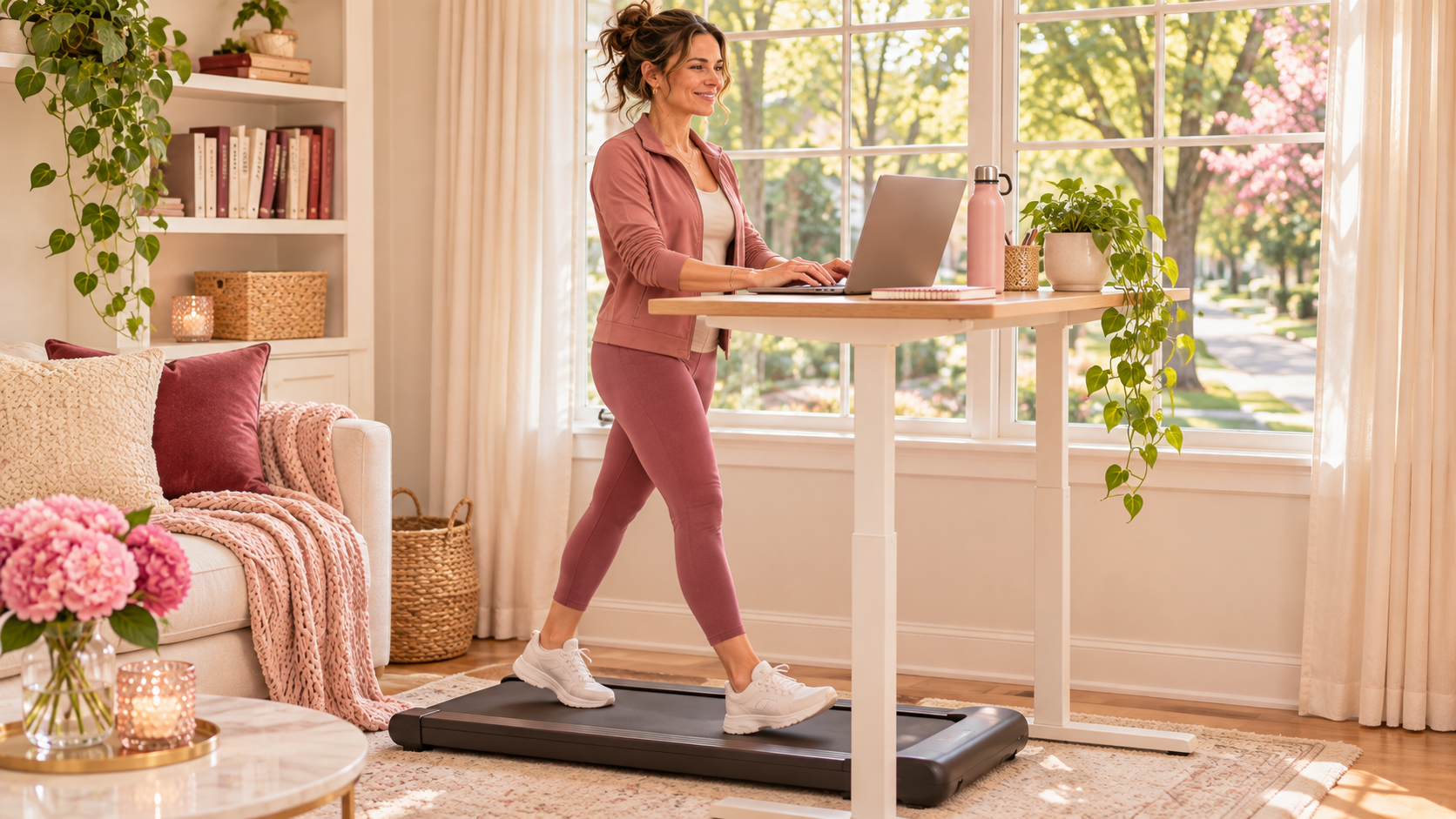
You want to walk more. Maybe it’s getting dark at 4:30. Maybe you work from home and realized you took 900 steps yesterday. Maybe your kids nap at the exact hour you could walk. So you start shopping and suddenly you’re comparing walking pads, folding treadmills, incline treadmills and wondering if you should just buy better shoes instead.
Here’s our honest breakdown of walking pads vs. treadmills vs. walking outside: what each one is actually good for, what it costs, who it fits and what to look for if you buy. Every product links to an Amazon search so you can compare current options and prices yourself.
A quick note: we don’t earn anything from these links, and we’re not recommending one specific brand. Prices are rough ranges we’ve seen and change often, so check current prices, reviews and specs before you buy.
The quick answer
- 💻Small space, desk jobGet a walking pad if…
You work from home, want more steps during the day, have limited space and mostly walk at an easy to brisk pace.
- 🏃♀️Workouts, incline, runningGet a treadmill if…
You want incline walks, plan to jog or run, want handrails for balance or have a spot for it to live permanently.
- 🌳Mood, friends, freeWalk outside if…
You can safely get out most days, love fresh air, walk with friends or a stroller or want to start without spending anything.
- 💖Our favorite answerOr mix them
Most women do best with a combination: outside when you can, indoors when life, weather or darkness get in the way.
The truth is that the best option is the one you’ll actually use. A large 2025 review in The Lancet Public Health found that people who took about 7,000 steps a day had a 47% lower risk of death from any cause than people taking about 2,000, along with lower risks of heart disease, dementia, depressive symptoms and falls. Even smaller increases helped. Every one of those steps counts, wherever you take them.
Side by side
-
💻Walking padAbout $130–$500
Best forWorking from home, small spaces and easy, steady steps during the day.
The good- Slim enough to slide under a bed or couch
- Fits under a standing desk
- Usually the cheapest way to walk indoors
- Quiet enough for many calls
The trade-offs- Most top out around 3.8 to 4 mph
- Usually no incline, or a small fixed one
- Usually no handrails
- Shorter, narrower belt
-
🏃♀️TreadmillAbout $500–$3,000+
Best forIncline workouts, jogging or running, and anyone who wants handrails and room to grow.
The good- Higher speeds for jogging and running
- Incline settings on many models
- Handrails and a safety key
- Longer, wider belt and sturdier frame
The trade-offs- Takes up real floor space
- Heavy and hard to move
- Costs more up front, and some need a subscription
- Big hazard for little kids and pets
-
🌳Walking outsideFree (plus good shoes)
Best forMood, fresh air, variety, walking with friends and stroller walks.
The good- Costs nothing
- Natural hills and uneven ground
- Nature time can boost mood
- Easy to do with friends, kids or the dog
The trade-offs- Weather, heat and early darkness
- Safety and lighting concerns
- Harder to fit in during the workday
- Sidewalks and traffic aren’t always friendly
How they compare, factor by factor
💰 Price
- Walking padRoughly $130–$500, with most in the low hundreds
- TreadmillRoughly $500–$3,000+, and some models add a monthly app fee
- OutsideFree, plus shoes and weather gear
📏 Space
This is where walking pads shine. Most are a few inches tall and slide under a couch, bed or desk when you’re done. A full treadmill usually needs its own spot, and even folding models are tall and heavy when folded. If you live in an apartment or a small home, be honest about where it will actually live. A treadmill you have to drag out every time is a treadmill you’ll stop using.
⚡ Speed
Most walking pads max out around 3.8 to 4 mph, which is a brisk walk for most women. That’s plenty for daily steps but not enough for running. 2-in-1 folding models with a handrail often reach 6 to 7.5 mph. Full home treadmills usually go up to 10 to 12 mph.
⛰️ Incline
Incline is one of the biggest differences. Most walking pads are flat or have a small fixed incline. Many treadmills offer incline up to 10 to 15 percent, and some go higher. Walking uphill makes your legs and glutes work harder and raises your heart rate without having to go faster. One study found that walking at a 10% grade took about 23% more energy than walking on flat ground, and about 44% more at 16%.
🤝 Balance and safety features
Treadmills have handrails, an emergency stop and usually a safety key that clips to your clothes. Most walking pads have no handrails and are controlled with a remote or app. If you have balance concerns, are pregnant, are newly postpartum, have dizziness or are recovering from an injury, handrails can matter a lot. Ask your doctor or physical therapist if you’re unsure.
🔊 Noise
Walking pads are generally quieter, which is why so many people use them during calls. A treadmill at higher speeds or steep inclines is louder, and both can transmit sound through floors, which matters if you have neighbors below you. A rubber mat helps with both.
🌄 Mood and mental health
This is where walking outside has a real edge. In one Stanford study, people who walked for 90 minutes in a natural, green area reported less rumination (those repetitive negative thoughts) and showed less activity in a brain region linked to it, compared with people who walked along a busy road. Another study from the same research group found a 50-minute nature walk reduced anxiety and improved working memory compared with an urban walk. Indoor walking still helps your mood, but fresh air, daylight and green space add something extra.
👥 Social connection
Walking outside makes it easy to walk with a friend, your kids, your dog or a group. It’s much easier to stay consistent when someone is expecting you. That’s the whole idea behind our walk clubs.
Which one is right for you?
- Where will you walk most often? At your desk? In front of the TV? Around your neighborhood? Picture your real life on a regular Tuesday.
- How fast do you want to go? If you only plan to walk, a walking pad is enough. If you want to jog or run someday, you’ll outgrow a basic pad quickly.
- Do you want incline? If hill walking or “12-3-30” style workouts are why you’re shopping, you’ll want a treadmill or a pad with a real incline.
- How much space do you have? Measure the space where it will live and where it will be stored. Check the machine’s length, width and height before you buy.
- Who else is at home? Little kids and pets change the safety picture for any motorized belt. More on that below.
- What’s your budget? Include extras like a mat, a desk converter and any app subscription.
- Could you start outside first? If you’re not sure you’ll stick with it, try walking outside for a few weeks with good shoes. If weather or time keeps getting in the way, that’s your sign to buy.
Our picks by situation
- Work-from-home mom with a small apartment: a basic walking pad plus a desk converter, and an outdoor walk on weekends.
- New mom with a stroller: walk outside on nice days, and consider a walking pad for nap time. Avoid using any treadmill with a baby or toddler loose in the room.
- Training for your first 5K: a treadmill or a 2-in-1 pad that can handle jogging, plus outdoor runs when you can. Our walk-to-run plan works on any of them.
- Love hills and incline walks: a treadmill with a good incline range.
- On a tight budget: walk outside and put your money toward great shoes and a reflective vest.
- Live somewhere with harsh winters or summers: outdoor walking in good months, plus an indoor option so you don’t lose your habit for three months at a time.
Walking pads worth a look
These are types of walking pads, not specific models. Search, compare reviews and choose the one that fits your space and budget.
-
A basic walking pad
Often about $130–$300
The classic under-desk option: a flat belt, a small motor and a remote. Perfect for slow, steady walking while you work, watch TV or take calls.
Look for: A weight capacity well above your body weight, a belt at least 15 to 16 inches wide, built-in wheels for moving it and a decent warranty.
Shop on Amazon -
A walking pad with incline
Often about $200–$450
Some newer pads add a small fixed incline or an adjustable one. Even a few percent makes a walk noticeably harder without walking faster.
Look for: Whether the incline is fixed or adjustable, how high it goes and whether it still fits under your desk or bed.
Shop on Amazon -
A 2-in-1 folding pad with a handrail
Often about $200–$450
A middle ground. These fold flat for storage, but the handrail flips up so you can walk faster or jog lightly, often up to 6 to 7.5 mph.
Look for: Top speed, belt length if you’re tall, a handrail that locks firmly and a safety key or auto-stop.
Shop on Amazon
Treadmills worth a look
-
A folding home treadmill
Often about $500–$1,200
The workhorse for most homes. Handrails, a console, incline on many models and enough speed for jogging and running. Many fold up to save some floor space.
Look for: Continuous horsepower (not just “peak”), the incline range, belt size (longer if you plan to run), weight capacity and whether features need a paid app.
Shop on Amazon -
An incline-focused treadmill
Often about $800–$2,500+
If incline walking is your thing, some machines go well past the usual 10 to 15 percent. Great for hill training without leaving home.
Look for: Maximum incline, motor strength, sturdy handrails and how loud it is at a steep grade.
Shop on Amazon
Gear for walking outside
You don’t need much, but a few things make outdoor walking a lot more comfortable year-round.
-
Supportive walking shoes
About $60–$150
The single most important piece of gear for any walk, indoors or out. Comfortable, supportive shoes make it easier to keep going.
Look for: A good fit with a thumb’s width at the toe, cushioning that feels good to you and a sole with grip for outdoor paths.
Shop on Amazon -
A reflective vest or clip-on light
About $10–25
Shorter days mean more walks in the dark. Being seen by drivers matters more than anything you wear for style.
Look for: Reflective strips on the front and back, or a rechargeable clip-on light.
Shop on Amazon -
A packable rain jacket
About $30–80
A light, waterproof layer turns a drizzly day from “skip it” into “go anyway.”
Look for: Waterproof (not just water-resistant), a hood that stays on and pockets for your phone and keys.
Shop on Amazon -
Layers for cold weather
About $15–40 each
Gloves, a warm hat and a moisture-wicking base layer keep winter walks comfortable.
Look for: Breathable fabrics that dry quickly, plus touchscreen-friendly gloves.
Shop on Amazon
Helpful extras
-
A standing desk or desk converter
About $100–$400
To walk while you work, your desk has to be at standing height. A converter sits on top of the desk you already have.
Shop on Amazon -
A treadmill mat
About $25–60
Protects your floors, cuts down on noise and vibration and keeps dust out of the motor.
Shop on Amazon -
Treadmill belt lubricant
About $10–20
Many belts need occasional silicone lubrication. Check your manual first for what your machine needs and how often.
Shop on Amazon
Walking while you work
Walking pads exploded in popularity because of remote work. Is it actually realistic to walk and work at the same time? Research suggests yes, with a few caveats.
- You may type a bit slower. In a Brigham Young University study, people walking at a slow pace on treadmill desks typed about 13 fewer words per minute and scored slightly lower on some thinking tests than people sitting. The researchers called the differences modest and felt the health benefits likely outweigh them.
- Thinking may actually improve. A Mayo Clinic study published in the Journal of the American Heart Association found that active workstations, including walking pads, helped reduce sitting time and may improve cognitive performance without hurting typing much.
- Go slow. Most people find a gentle pace easiest for typing and calls. Save your brisk walks for when you’re not working.
- Pick your tasks. Walking during calls, reading and email works well for many people. Detailed writing or spreadsheets may be easier sitting down.
- Start small. Try 20 to 30 minutes at a time and build up. Your feet and legs need time to adjust.
- Set up your desk properly. Your screen should be at eye level and your elbows bent at about 90 degrees while you walk.
Three walks to try on any of them
🌱 The easy daily walk
- Warm up5 minutes at a comfortable pace
- Main walk15 to 30 minutes at a pace where you can still talk
- Cool down5 minutes slower, then stretch your calves and hips
⚡ Brisk intervals
- Warm up5 minutes easy
- Repeat 6 times2 minutes brisk, then 2 minutes easy
- Cool down5 minutes easy
Works on a walking pad, treadmill or outside. Outside, use lampposts or songs instead of a timer.
⛰️ Hill walk
- Warm up5 minutes flat
- ClimbRaise the incline a little every 2 minutes until it feels challenging
- Hold5 to 10 minutes at your top incline
- Come downLower it gradually, then 5 minutes flat
Hold the handrails only for balance, not to support your weight. Outside, find a hill or a parking garage ramp. You may have heard of the viral “12-3-30” workout (12% incline, 3 mph, 30 minutes). A 2025 study found it burned a higher share of fat than running for the same calories, but took longer to burn the same total. Build up to steep inclines gradually.
The CDC recommends at least 150 minutes of moderate activity a week for adults, like brisk walking, plus two days of muscle strengthening. That’s about 30 minutes, five days a week, and it can be broken into shorter walks. Pair your walks with our 20-minute dumbbell workout and you’ve covered both.
Safety, especially with kids
Any motorized belt deserves respect. The Consumer Product Safety Commission estimated about 22,500 treadmill-related injuries were treated in U.S. emergency rooms in 2019, including about 2,000 involving children under 8. Kids can get friction burns or get their hands, hair or bodies pulled under the belt.
- Never run the belt with little kids or pets loose in the room. Use it during nap time, after bedtime or behind a gate.
- Unplug it and remove the safety key or lock it when you’re done, and store walking pads where kids can’t turn them on.
- Clip on the safety key if your machine has one.
- Start slowly. Step on at a very slow speed, find your rhythm, then speed up.
- Leave space behind it. Follow the manufacturer’s recommended clearance in case you slip off the back.
- Watch your cords so no one trips or gets tangled.
- Check for recalls on CPSC.gov before buying, especially secondhand.
Outside, safety looks different: walk facing traffic where there’s no sidewalk, wear something reflective after dark, let someone know your route and trust your gut about places that don’t feel safe. Walking with a group helps with all of this.
If you’re pregnant, postpartum, have heart or joint problems, balance issues or any health condition, check with your doctor before starting a new walking or treadmill routine. Stop and get help if you have chest pain, dizziness or trouble breathing.
Smart buying tips
- Check the weight capacity and choose a machine rated well above your body weight.
- Look at continuous horsepower, not just peak horsepower, if you plan to walk a lot or use a treadmill for running.
- Measure everything: the machine, your space, your doorways and your stairs.
- Check the belt size. Taller women and anyone who plans to jog will want a longer, wider belt.
- Read recent reviews for noise, belt slipping and customer service. Look at customer photos.
- Check the warranty on the motor, frame and belt, and the return policy. These are heavy to send back.
- Watch for subscriptions. Some treadmills lock features behind a monthly app fee. Make sure it works without one if you don’t want to pay.
- Consider secondhand. Treadmills are often sold barely used. Check that it works, ask about its age and check for recalls.
Myths about indoor walking
- Myth #1What you might think
“Treadmill walking doesn’t count.”
What’s actually trueSteps are steps. The research on daily steps and health counts all of them, whether they happen on a sidewalk, a trail or a belt under your desk.
- Myth #2What you might think
“A walking pad is just a cheap treadmill.”
What’s actually trueIt’s a different tool. A walking pad is built for slow, all-day steps in small spaces. A treadmill is built for workouts. Neither is better. They do different jobs.
- Myth #3What you might think
“I need to set the incline to 1% to make it real.”
What’s actually trueThat rule came from a 1996 study of trained runners, where air resistance matters. At walking speeds, air resistance is tiny. Use incline when you want a harder walk, not to make it “count.”
- Myth #4What you might think
“I’ll walk outside when the weather gets better.”
What’s actually trueThere’s always another cold snap, heat wave or rainy week. Having a backup plan, indoors or with the right gear, is what keeps the habit going.
Your turn
Before you buy anything, take one walk this week, inside or out. Then ask yourself: what got in the way, and what would make it easier next time? Your answer tells you exactly which option you need.
And if what you really need is someone to walk with, that’s what we’re here for. Our walk clubs and circles make it a lot easier to keep showing up. Our guide to starting a stroller walk club is a great place to begin.
Sources
- Ding et al., The Lancet Public Health (2025): Daily steps and health outcomes in adults: a systematic review and dose-response meta-analysis
- University of Sydney: Rethink the 10,000 a day step goal, study suggests
- Garage Gym Reviews: Walking pad vs. treadmill
- WalkingPad: What is the difference between a treadmill and a WalkingPad?
- Healthline: Walking on an incline: benefits and calories burned
- International Journal of Exercise Science (2025): Comparing the metabolic responses between the 12-3-30 treadmill workout and self-paced treadmill running
- Stanford University: Stanford researchers find mental health prescription: nature
- University of Washington Nature and Health: The benefits of nature experience: improved affect and cognition
- Jones and Doust, Journal of Sports Sciences (1996): A 1% treadmill grade most accurately reflects the energetic cost of outdoor running
- Brigham Young University: People on treadmill desks perform tasks nearly as well as those sitting
- Mayo Clinic: Active workstations may improve cognitive performance
- Consumer Reports: How Consumer Reports tests treadmills for safety
- U.S. Consumer Product Safety Commission: Recalls
- CDC: Adult activity: an overview
Product links are Amazon searches, and we don’t earn anything from them. Prices are rough ranges and will change. This article is for general information and isn’t medical advice. Talk with your doctor or midwife about what’s right for you.
- Walking
- Walking pad
- Treadmill
- Home workouts
- Equipment
Find your strength. Find your girls.
Tell us where you walk and what gets in the way. We’ll reply within two business days with walk clubs, circles and coaching that fit your life.
Questions
Good questions.
Is a walking pad as good as a treadmill?
It depends on your goal. A walking pad is great for slow to brisk walking and adding daily steps in a small space, especially under a desk. A treadmill is better if you want incline, jogging, running, handrails or a longer, wider belt.
Is walking on a treadmill as good as walking outside?
For your heart, muscles and daily step count, walking indoors and outdoors both count. Walking outside adds fresh air, daylight, natural terrain and, in green spaces, some extra mood benefits. Many people do best with a mix.
How much does a walking pad cost?
Most walking pads cost roughly $130 to $500, depending on features like incline, top speed, belt size and weight capacity. Full home treadmills usually cost more, from roughly $500 to over $3,000.
Can you lose weight using a walking pad?
A walking pad can help you move more throughout the day, which supports overall health and can be part of a weight loss plan along with nutrition, strength training and sleep. Results vary from person to person.
Are walking pads safe with kids at home?
Any motorized belt can injure children. Never use a walking pad or treadmill with young kids or pets loose in the room, and unplug it, remove the safety key and store it out of reach when you're done.
 Fitness
 Fitness
 Community