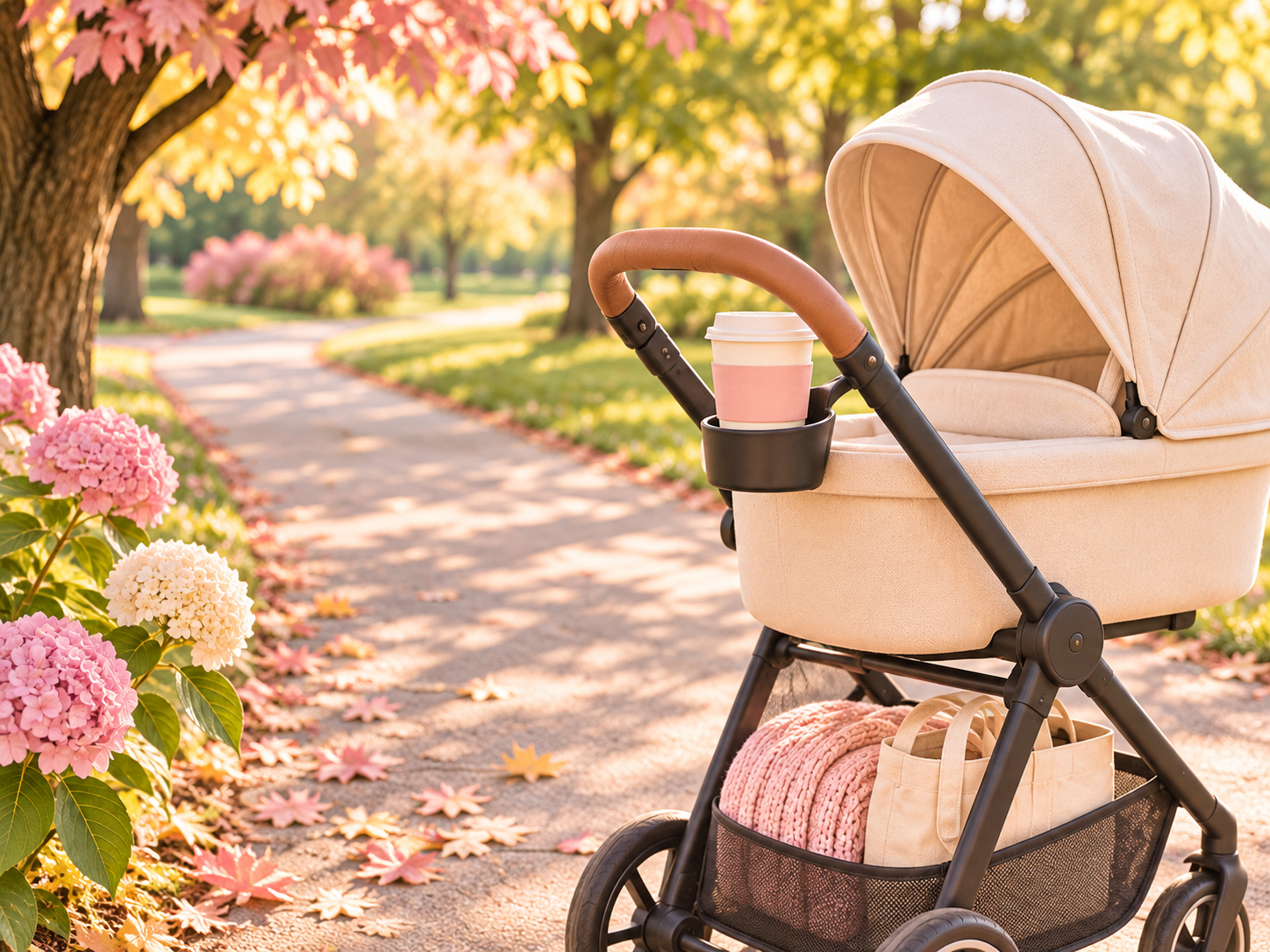
Some of the best friendships of early motherhood start the same way: two strollers, one sidewalk and someone brave enough to say, “Want to walk together next week?”
A stroller walk club is about as simple as a group can get. There’s no equipment to buy, no studio to book and no fitness level required. You pick a route, pick a time, invite a few moms and keep showing up. That’s it. And yet for a lot of women, that weekly walk becomes the thing that holds the whole week together: fresh air, a little movement, adult conversation and the reminder that you’re not the only one running on three hours of sleep.
This guide walks you through every step, from scouting your route to keeping the group going once the novelty wears off. You don’t need to be outgoing, organized or especially fit to do this. You just need to go first.
Why a stroller walk club works
Walking gets underestimated because it’s so ordinary. But a brisk walk counts as real exercise. The CDC counts brisk walking as moderate-intensity activity, the kind that adds up toward the 150 minutes a week recommended for adults. A forty-five minute group walk once or twice a week is a meaningful chunk of that, and it doesn’t require childcare, a gym membership or a change of clothes.
The bigger reason is the “club” part. In 2023 the U.S. Surgeon General issued an advisory on loneliness and isolation, calling social connection essential to health. New parenthood is one of those seasons where connection can quietly disappear. You’re home more, your old routines are gone and your friends without kids may be living on a different schedule. A standing walk with other moms brings it back in a low-pressure way. You don’t have to host anyone, clean anything or make small talk across a table. You just walk side by side, and conversation happens.
Walking groups also solve the motivation problem. It’s easy to skip a walk you planned alone. It’s much harder to skip one when three other women are waiting at the park entrance with their coffees.
What a good walk club gives you
- Movement that fits real life. Babies can nap, feed or look at trees while you walk.
- A reason to get out of the house. Some weeks, that alone is the win.
- People who get it. Sleep regressions, feeding questions, daycare waitlists. Someone on the walk has been there.
- A routine. Same time, same place, every week. Routines are what make habits stick.
Before you start
If you’ve recently had a baby, check with your doctor or midwife before you start a regular walking routine. ACOG says you can start gradually once it’s medically safe, which for some women is within days and for others, especially after a C-section or complications, takes longer. Walking is usually one of the gentlest ways back, but your provider knows your recovery.
It also helps to decide what kind of club you want before you invite anyone. Ask yourself:
- Who is it for? Brand-new moms with infants, moms with toddlers, or anyone with a stroller?
- How fast? A chatty stroll and a brisk power walk are two very different groups. Most new clubs do best starting easy.
- How often? Once a week is plenty to start. You can always add a second day later.
- How official? A group text of four moms is a walk club. So is a fifty-person group with a sign-up list. Start small.
Step 1: Pick a route
Your route matters more than you’d think. A good one makes the walk easy to say yes to. A bad one, with broken sidewalks, no shade and a busy road to cross, makes people quietly stop coming.
What to look for
- Smooth, wide paths. Paved park loops, rail trails and quiet neighborhood sidewalks work well. Gravel and grass are hard work with most strollers.
- A loop of one to two miles. Long enough to feel like a real walk, short enough to bail early if a baby melts down. Loops beat out-and-backs because everyone ends where they parked.
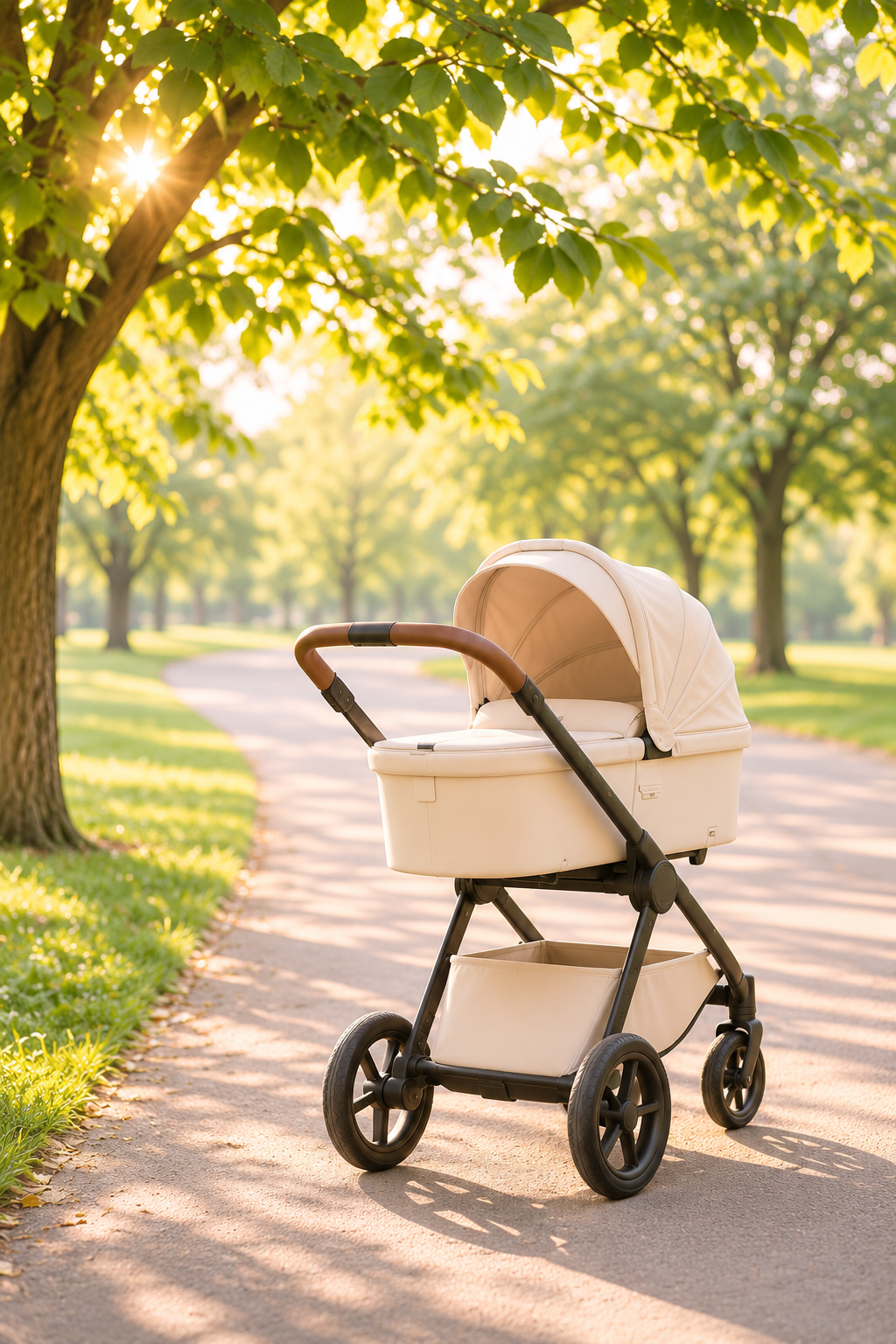
- Shade. Tree-lined paths make a huge difference, especially for young babies (more on that below).
- Bathrooms and benches. Somewhere to change a diaper or sit and feed a baby turns a good route into a great one.
- Easy parking or transit. Not everyone lives within walking distance.
- Few big road crossings. Fewer crossings means a safer, calmer walk.
- A finish line worth it. A coffee shop, playground or picnic lawn at the end gives the walk a natural hangout afterward.
Scout it first
Walk the route yourself with your stroller, ideally on the same day and at the same time you’re planning to meet. You’ll notice things a map can’t tell you: the stretch with no sidewalk, the hill that’s steeper than it looks, the school drop-off traffic at 8:15. Time it, too, at an easy pace. That’s the number you’ll share when you invite people.
Step 2: Choose a day and time
There’s no perfect time for every family, so pick one and stick with it. Consistency matters more than convenience. When the walk is always Thursday at 9:30, people can build their week around it.
- Mid-morning is popular. Many babies have had a feed and are ready for a stroller nap, and you avoid the hottest part of the day in summer.
- Weekend mornings open the door for working moms and partners.
- Early evening works in summer when it’s light out, but it competes with dinner and bedtime.
Plan for about forty-five minutes of walking plus fifteen or so to hang out. Decide ahead of time what happens when the weather turns: maybe the walk moves indoors to a mall loop, or it’s simply canceled with a message by a set time that morning. A clear rain plan stops the group chat from turning into a debate every week.
Step 3: Round up your first moms
You don’t need a crowd to start. Three or four moms is a great first group. It’s small enough to feel cozy and big enough that the walk still happens when someone cancels.
Where to find them
- Moms you already half know. The woman from your birth class, the neighbor with the new baby, the mom you always see at the library.
- Library story time and baby classes. Everyone there has a baby and a free morning.
- Local parent groups. Neighborhood apps, local Facebook groups and community boards are made for this.
- Community bulletin boards. Coffee shops, libraries and community centers often have one.
- Your own social media. A simple post saying “starting a weekly stroller walk, who’s in?” often surprises people.
A message you can copy
Hi! I’m starting a weekly stroller walk for moms in the neighborhood. We’ll meet Thursdays at 9:30 a.m. at the main entrance of Riverside Park and do an easy 1.5-mile loop (about 40 minutes), then grab coffee if anyone’s up for it. All paces, all strollers, all babies welcome. Want to join? Just reply and I’ll add you to the group chat.
Keep the invite short and specific. People say yes to a time and place, not to a vague “we should walk sometime.”
Step 4: Plan the first walk
The first walk sets the tone, so make it easy to show up and easy to come back.
- Pick an obvious meeting spot. A named entrance, a specific bench, a fountain. “The park” isn’t a meeting spot.
- Send a reminder the night before. Include the spot, the time and the rain plan.
- Arrive five minutes early. New people relax when they see someone waiting.
- Do a quick intro. Names, babies’ names and ages, and one easy question, like the best thing that happened this week.
- Start slower than you think. You can always speed up. Nobody comes back to a walk that felt like a race.
- End somewhere to linger. The coffee or playground afterward is where friendships actually form.
- Ask before everyone leaves. “Same time next week?” Then start the group chat that day.
Step 5: Set a few ground rules
Rules sound formal, but a few shared expectations keep a group friendly as it grows. You can share these in the group chat or just say them out loud at the first walk.
- Nobody walks alone. The group moves at the pace of the slowest stroller, or splits into a faster and a chattier group that meet up at the end.
- Babies come first. Stopping to feed, change or soothe is always fine. The group waits or loops back.
- Come as you are. Messy buns, leggings with spit-up, a twenty-minute late arrival. All welcome.
- No comparing. Not bodies, not babies, not sleep schedules.
- Say if you’re out. A quick message in the chat means nobody waits around.
Stroller and sun safety
A walk club should feel easy, and a little planning keeps it that way.
Stroller basics
- Use the brake every time you stop, especially on slopes.
- Buckle the harness, even for short stretches.
- Watch what hangs on the handles. Heavy bags on the handlebar can make some strollers tip. Use the basket and check your stroller’s manual.
- Use the wrist strap if your stroller has one, particularly on hills.
- Walk single file on narrow sidewalks and near traffic.
Sun and weather
Young babies need extra care outside. The American Academy of Pediatrics and the FDA recommend keeping babies younger than six months out of direct sunlight, using shade from trees, umbrellas or a stroller canopy, and talking to your pediatrician before using sunscreen on a young baby. That’s one more reason a shady route and a mid-morning time are worth planning for.
- In heat, walk earlier, choose shade, bring water for yourself and cut the route short if anyone seems too warm.
- In cold, dress babies in layers and use a stroller cover or footmuff, and keep walks shorter.
- Pack the basics: water, snacks, diapers, a light blanket and your phone.
- Share the route in the group chat so anyone running late knows where to find you.
Step 6: Keep it going
Starting a walk club is the easy part. The real trick is week eight, when the weather turns, babies start daycare and the first-week excitement has worn off. Here’s what keeps clubs alive.
Make it someone’s job, but not just yours
Ask one or two moms to share leading. Rotating who sends the weekly reminder or picks the coffee stop means the club doesn’t fall apart the week you have a sick baby.
Use one group chat
Keep logistics in one place: the weekly reminder, the rain call and a quick “who’s coming?” Pin the meeting spot and route so new members can find them.
Keep inviting
Groups naturally shrink as babies grow and families move. Make it normal to bring a friend, and keep the door open to new moms. A club that welcomes new people is a club that lasts.
Notice who’s missing
If someone who usually comes has gone quiet for a few weeks, send a simple “we missed you, hope you’re okay.” Sometimes that message matters more than any walk. If a mom in your group seems to be really struggling with her mood, it’s okay to gently share the National Maternal Mental Health Hotline: call or text 1-833-TLC-MAMA (1-833-852-6262), any time.
Celebrate the little milestones
The tenth walk. The first walk with a baby who can sit up and look around. A mom’s first week back at work. A seasonal picnic or a coffee on you makes the group feel like a group.

Your club’s first month
If you like a plan, here’s a simple way to get a new walk club through its first four weeks.
- Week 1Scout the route at walk time. Send your invite to five to ten moms. Start the group chat with whoever says yes.
- Week 2First walk. Arrive early, do quick intros, keep it easy and end with coffee. Ask “same time next week?”
- Week 3Second walk. Pin the meeting spot, route and rain rule in the chat. Ask everyone to bring one friend.
- Week 4Third walk. Ask one mom to co-lead or send next week’s reminder. Post a photo of the strollers, not the faces, if you share online.
After a month you’ll have a regular time, a handful of familiar faces and a rhythm. That’s a club. Everything after that is just showing up.
Making it welcoming for every mom
The best walk clubs feel easy to join, even for the mom who’s nervous about showing up alone. A few small choices make a big difference.
- Pick an accessible route. Smooth paths with curb cuts and ramps work for every stroller, wheelchairs and moms still recovering from birth.
- Say the pace out loud. “Easy, chatty pace” in your invite tells new moms they won’t be left behind.
- Welcome every kind of family. Moms, dads, grandparents, nannies, foster and adoptive parents, twins, babies in carriers. Decide early that everyone with a little one is in.
- Make it free and simple. No gear to buy, no sign-up fees, no pressure to buy the coffee afterward.
- Greet the new person first. Introduce her to one other mom by name and walk with her for the first stretch.
- Respect privacy. Ask before posting photos of anyone or their baby, and keep last names and home addresses out of public posts.
- Offer a virtual option. A monthly video chat keeps moms who can’t make the walk connected.
It also helps to think about the moms who aren’t there yet: the one who just moved to town, the one whose friends all went back to work, the one who’s been meaning to get out of the house for weeks. A friendly flyer at the library or a post in a local parent group may be exactly the nudge she needed.
Welcoming isn’t a big gesture. It’s a hundred small ones that tell a new mom, without anyone saying it, that she belongs here.
Common hiccups (and easy fixes)
Every walk club hits a few bumps. Here are the ones we hear about most, and what tends to help.
“Only one person came.”
Walk anyway. A walk with one other mom is still a walk, and often the best conversations happen in small groups. Keep the same day, time and place for at least a month before deciding it isn’t working. Consistency is what turns a maybe into a regular.
“Everyone walks at a different pace.”
Split into two loops that end at the same coffee shop, or have the faster walkers do an extra lap while the chattier group finishes. The goal is that nobody feels rushed and nobody feels held back.
“The group chat is chaos.”
Pin one message with the meeting spot, the route and the rain rule. Send one reminder the night before and ask for a thumbs up from anyone coming. Everything else can be chatter, and that’s fine.
“People keep canceling last minute.”
That’s life with babies, and it’s okay. Make it guilt-free to bow out with a quick message, and keep the walk happening no matter who comes. A club that always shows up is a club people come back to.
“Winter is coming.”
Shorten the loop, move the time to the warmest part of the day, or take the walk indoors to a mall or a big indoor track for the coldest weeks. Some groups switch to a monthly indoor meetup over the winter and come back outside in spring.
“I’m burning out on organizing.”
Hand off pieces. One mom sends reminders, another picks coffee spots, another welcomes new members. You started it; you don’t have to carry it alone.
Ways to level it up
Once your club has a rhythm, you can add a little variety. None of these are required. Pick what fits your group.
- Strength stops. Pause at a bench for a few rounds of squats, incline push-ups or calf raises. Only for moms who’ve been cleared to exercise, and always optional.
- A faster group. If a few moms want more of a workout, let them do a brisker lap and meet everyone at the end.
- Theme walks. A fall leaf walk, a holiday lights walk, a farmers market walk.
- Walk and talk topics. Sleep, starting solids, going back to work. Light structure can make it easier for quieter moms to join in.
- A second day. If the group is growing, a weekend walk can bring in working moms and partners.
- Track a group goal. Add up everyone’s miles for a month and celebrate when you hit it.
Start one with Pink in Progress
Walk clubs are at the heart of what we do, because finding your girls matters as much as finding your strength. If you want to start a Pink in Progress walk in your neighborhood, raise your hand. We’ll help you pick a route, share your walk with moms nearby and get it on our events calendar, so you don’t have to build it from scratch.
And if you’d rather join than lead, that works too. Members of The Flock get walk club invites, virtual nap-time circles and monthly meetups. Our 1:1 coaching clients get all of that, plus a plan built around their own body and schedule.
Either way, the first step is the same: one walk, one sidewalk, a few strollers. Someone has to go first. It might as well be you.
Sources
- Centers for Disease Control and Prevention: Adult Activity: An Overview
- AHRQ: Surgeon General Advisory on the Epidemic of Loneliness and Isolation
- American College of Obstetricians and Gynecologists: Exercise After Pregnancy
- American Academy of Pediatrics, HealthyChildren.org: Baby Sunburn Prevention
- U.S. Food and Drug Administration: Should You Put Sunscreen on Infants? Not Usually
- HRSA: National Maternal Mental Health Hotline
This article is for general information and isn’t medical advice. Talk with your doctor or midwife about what’s right for you.
- Walk clubs
- New moms
- Community
- Stroller walks
- Postpartum fitness
Ready to find your walking crew?
Tell us where you are and we’ll help you join a walk club near you, or start your own.
Questions
Good questions.
How many moms do I need to start a stroller walk club?
Three or four is plenty. A small group feels cozy and still works when someone cancels. Many clubs grow by word of mouth once they’re meeting regularly.
Do I need a jogging stroller?
No. For walking, any stroller that handles your route comfortably is fine. Pick smooth, paved paths if your stroller has small wheels, and save trails and gravel for strollers built for them.
What if nobody shows up to the first walk?
Walk anyway, and invite again. Early walks are often small. Keep the same day, time and place for a few weeks, send a reminder the night before, and ask each person who comes to bring one friend.
How soon after having a baby can I join a walk club?
Check with your doctor or midwife first. ACOG says you can start exercising gradually once it’s medically safe, which depends on your birth and recovery. Start with shorter, slower walks and build up.
Can I bring older kids or my dog?
That’s up to your group. Many clubs welcome toddlers on scooters and calm dogs on leashes. Just agree on it ahead of time so the walk stays safe and easy for everyone.
Do I need a permit to start a walk club?
Casual groups walking public paths usually don’t, but rules vary. If your group gets large, uses a park for organized fitness, or charges money, check with your local parks department.
 Our story
 New moms