The best postpartum recovery essentials
What you’ll actually use at home after birth, for vaginal and cesarean recovery, feeding, sleep and your mental health, plus what to skip, what the fourth trimester really looks like and the warning signs every new mom should know.
So much of pregnancy prep is about the baby. The crib, the car seat, the tiny socks. Then you come home from the hospital and realize nobody really prepared you for your own recovery: the bleeding, the soreness, the sweats, the feeding, the stitches, the emotions that seem to come from nowhere.
Postpartum recovery is real healing. Your body just did something enormous, whether you gave birth vaginally or by cesarean, and it deserves care, rest and the right supplies within arm’s reach. The good news is you don’t need a cart full of products. You need a short list of things that actually help, a few systems that make life easier and a clear sense of when to call for help.
This guide covers the essentials we hear about again and again, what the research and medical guidance say, and what you can happily skip. It’s a companion to our hospital bag checklist, which covers what to bring for the birth itself. This one is all about the weeks at home.
A quick note: This is general information, not medical advice. Your recovery depends on your birth, your body and your health history. Always follow your own provider’s instructions, and ask before taking any medication or supplement, especially if you’re breastfeeding.
The short answer
- 🧣HealingSoothe and protect
Pads, a peri bottle, cooling relief and soft, high-waisted underwear do most of the work.
- 🚽BathroomMake it gentle
A stocked bathroom kit makes those first trips easier. Ask your provider about stool softeners.
- 🍼FeedingSupport, not perfection
Comfortable bras, nipple care and a water bottle, plus a lactation consultant’s number if you’re nursing.
- 💖Your mindPlan for support
Rest, food, people and a hotline number matter as much as any product.
What the fourth trimester really looks like
The weeks after birth are often called the fourth trimester. It’s a time of big physical, emotional and practical change, and it deserves real care.
In 2018, the American College of Obstetricians and Gynecologists (ACOG) updated its guidance to treat postpartum care as an ongoing process rather than a single six-week appointment. ACOG recommends that new moms have contact with their maternal care provider within the first three weeks after birth, followed by ongoing care as needed and a comprehensive postpartum visit no later than 12 weeks after delivery. That comprehensive visit should look at your physical, social and emotional well-being.
This matters because the postpartum period carries real risks. A 2022 CDC report on pregnancy-related deaths found that 53% happened between seven days and one year after the pregnancy ended, and mental health conditions were the leading underlying cause. The same report found that about four in five of these deaths were preventable. That’s not meant to frighten you. It’s a reminder that your recovery matters, your symptoms deserve attention and it’s always okay to call.
A rough timeline
- Days 1 to 3Heaviest bleeding, cramping as your uterus shrinks, soreness, swelling and night sweats. Milk may not be fully in yet.
- Days 3 to 7Milk often comes in, breasts may feel full or engorged, and the baby blues often show up.
- Weeks 1 to 2Bleeding lightens and changes color. Many women find tear or incision pain starts easing.
- Weeks 2 to 6Energy slowly returns, though sleep is still broken. Bleeding tapers. Contact your provider if anything feels off.
- Weeks 6 to 12Comprehensive postpartum visit. A good time to talk about mood, pelvic floor, birth control, exercise and how you’re really doing.
Everyone’s recovery is different. This is a general guide, not a schedule you need to meet.
Bleeding and the pads you’ll need
After birth, whether vaginal or cesarean, you’ll have vaginal bleeding called lochia as your uterus sheds its lining and heals where the placenta was attached. According to Cleveland Clinic, lochia is heaviest in the first few days, when you may soak a thick maxi pad every two to three hours and pass small clots. It gradually becomes lighter and pinkish brown, then creamy yellowish white, and typically lasts up to about six weeks. Some people have traces for up to eight weeks.
A few things that help:
- Heavy overnight pads or maxi pads. Many hospitals send you home with some. Stock up on a pack or two for the first week.
- Disposable postpartum underwear. Think of them as a giant, comfortable pad and underwear in one. Great for the heaviest days and nights.
- Mesh underwear. The hospital ones are stretchy and surprisingly comfortable. Ask if you can take extras home.
- Lighter pads and liners. For the later weeks as bleeding tapers.
- Dark towels or a waterproof mattress pad. Peace of mind for night sweats and leaks.
Avoid tampons and menstrual cups until your provider says it’s okay, usually after your postpartum visit, to reduce the risk of infection.
Vaginal birth recovery essentials
After a vaginal birth, it’s very common to have swelling, soreness and sometimes a tear or episiotomy that needs stitches. Most tears are first or second degree, and many women find tear pain eases within a couple of weeks, though larger tears take longer.
Perineal care basics
- Peri bottle. A squeeze bottle you fill with warm water to rinse the area after using the toilet instead of wiping. Cleveland Clinic recommends rinsing after you pee or poop and then gently patting dry. Many hospitals give you one, and an angled-neck version is easier to use.
- Cooling relief. Ice packs or cold packs can ease swelling and pain, especially in the first 24 to 48 hours. Always place a cloth or pad between ice and your skin, and limit each use to about 10 to 20 minutes.
- Witch hazel pads. Cooling pads you can layer on top of your maxi pad. They’re commonly used for perineal soreness and hemorrhoids.
- “Padsicles.” Some women make frozen pads with witch hazel or aloe. If you do, change them regularly and follow your provider’s guidance.
- Sitz bath. A shallow basin that fits over your toilet. Soaking for a few minutes a few times a day can soothe soreness. Cleveland Clinic notes warm soaks promote blood flow, and some research suggests cool water can ease pain, so ask your provider which they recommend for you.
- Perineal spray. Over-the-counter numbing or cooling sprays can bring short-term relief. Ask your provider before using any medicated product.
- A soft cushion. A pillow or cushion can make sitting more comfortable. Some providers advise against donut cushions because of how they distribute pressure, so ask what’s best for you.
A 2012 Cochrane review on local cooling for perineal pain found limited evidence that ice packs may help in the short term compared with no treatment, and called for better research. Cooling is low cost and low risk, which is why so many providers recommend it, but listen to your body and stop if it doesn’t help.
C-section recovery essentials
A cesarean birth is major abdominal surgery, and recovery usually takes longer. You’ll still have postpartum bleeding, and you’ll also be healing an incision.
- High-waisted, soft underwear. Look for a waistband that sits well above your incision so nothing rubs. Some brands make postpartum underwear designed specifically for C-section recovery.
- Loose, high-rise pants and nightgowns. Avoid anything tight at the bikini line.
- A pillow for coughing, laughing and the car ride. Gently pressing a pillow against your belly, sometimes called splinting, can make coughing or sneezing less painful.
- Something to help you get out of bed. Learn the log roll technique: roll to your side, then push up with your arms. A bed rail or a sturdy nightstand within reach can help too.
- An abdominal binder, only if your provider recommends it. Some providers suggest one for support. Ask before buying.
- Help with lifting. Many providers advise not lifting anything heavier than your baby for a while. Line up help with laundry baskets, car seats and older kids.
Keep your incision clean and dry as instructed, and watch for redness, swelling, warmth, drainage, an opening incision or fever. Call your provider if you notice any of these.
The bathroom kit
Let’s talk about the part nobody mentions at baby showers: the first bowel movements after birth. Many women feel nervous about them, especially with stitches, hemorrhoids or a C-section. A few things can make it easier.
- Stool softener. Many providers recommend one after birth. Ask yours which one and how long to take it, especially if you’re breastfeeding.
- Fiber and fluids. Water, fruit, vegetables, oatmeal and whole grains help keep things moving. Our post on one-handed snacks for new moms has easy ideas.
- A small footstool. Raising your feet can put your body in a more comfortable position.
- Gentle wipes or a peri bottle. Pat, don’t wipe hard.
- Hemorrhoid relief. Witch hazel pads and any cream your provider recommends.
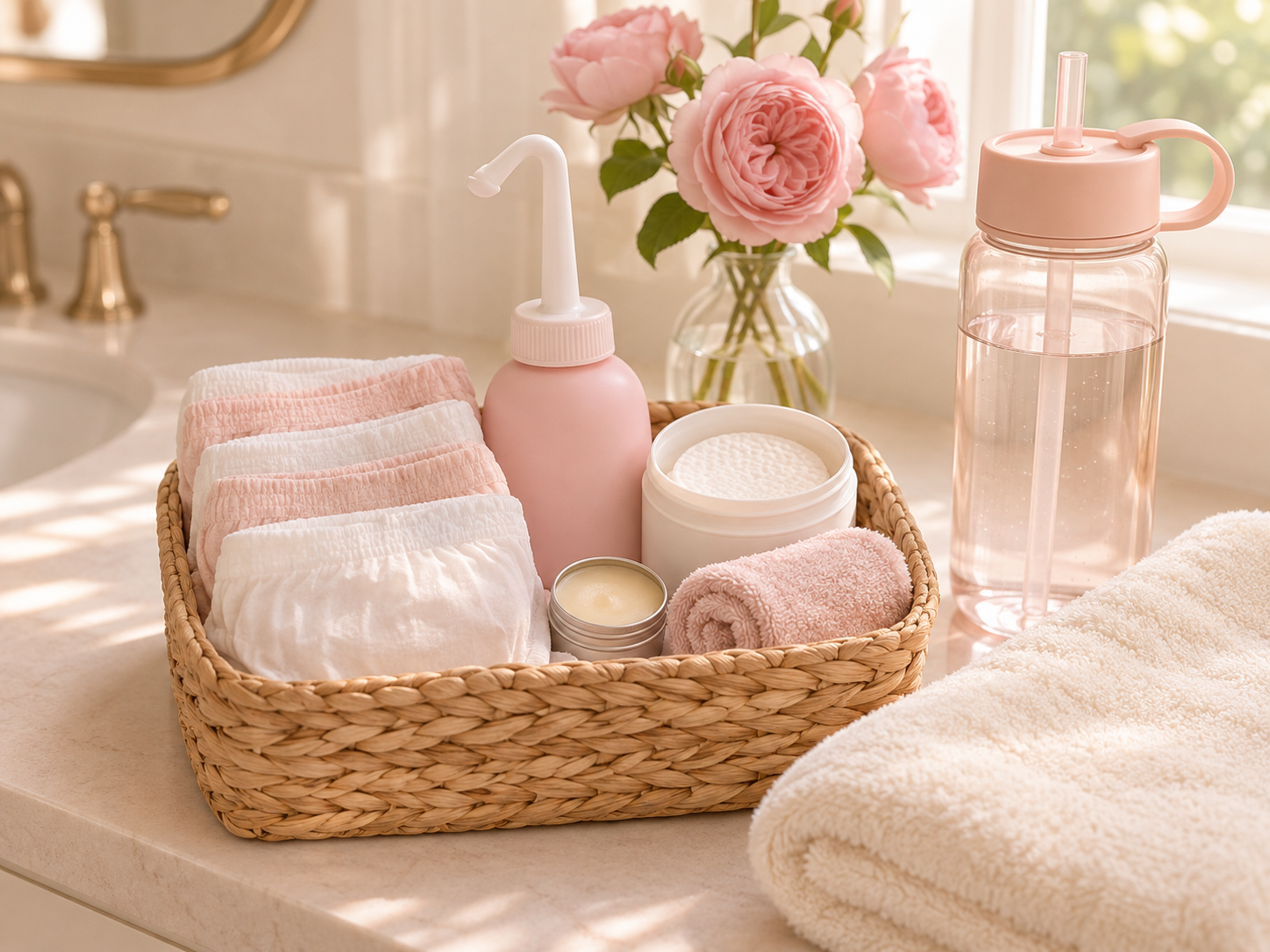
- A basket. Keep pads, peri bottle, witch hazel pads, spray and spare underwear together in every bathroom you use.
If you’re having trouble controlling urine, gas or stool, or feel heaviness or bulging, tell your provider. These are common and treatable, and you don’t have to just live with them.
Feeding essentials
However you feed your baby, breast, bottle or both, you deserve comfort and support. Our post fed is best is a gentle reminder that a fed baby and a supported mom are what matter most.
If you’re breastfeeding or pumping
- Soft nursing bras or sleep bras. Your size may change a lot in the first weeks, so start with stretchy, wire-free options.
- Nipple balm. Lanolin or plant-based balms can soothe soreness. Ongoing pain is a reason to see a lactation consultant.
- Nursing pads. Disposable or reusable, for leaks.
- Cool or warm packs. Many women use cold packs for engorgement comfort and warmth before feeding. Ask your lactation consultant what fits your situation.
- A big water bottle with a straw. Feeding can make you thirsty, and a straw lets you sip one-handed.
- A breast pump. Many insurance plans cover one. Check with your plan before you buy.
- A lactation consultant’s number. Ask your hospital or pediatrician for a referral, ideally an IBCLC. Many offer virtual visits.
If you’re formula feeding
- A supportive, comfortable bra. Your breasts may still fill with milk at first. Ask your provider about comfort measures as your milk supply decreases.
- Bottle setup. A drying rack, bottle brush and a clean prep station near where you feed.
- Night station. Pre-measured formula and a plan for night feeds so you’re not fumbling in the dark.
Comfort and rest essentials
- 👔ClothesSoft and easy
Front-opening pajamas, a robe and loose loungewear you don’t mind getting messy.
- 💧HydrationWater within reach
A large bottle at every feeding spot. Night sweats and feeding can leave you thirsty.
- 🍲FoodEasy nourishment
Freezer meals, grab-and-go snacks and a meal train from friends.
- 🛌SleepProtect your rest
Take turns with night feeds if you can, nap when possible and accept help.
- 🚽ShowersA shower chair
Helpful for the first wobbly showers, especially after a C-section.
- 🔑PracticalLong phone charger
So your phone reaches you on the couch, in bed and at the rocking chair.
If cooking feels impossible, our 10-minute dinner rotation is built for exactly this season.
Your pelvic floor
Pregnancy and birth put a lot of pressure on your pelvic floor, the group of muscles that supports your bladder, uterus and bowel. Leaking urine is very common after birth. A Cochrane review notes that about a third of women have urinary incontinence after childbirth and up to a tenth have fecal incontinence.
Pelvic floor muscle training is widely recommended during and after pregnancy. The same Cochrane review found that pregnant women without incontinence who did pelvic floor training were less likely to report leaking in late pregnancy and in the months after birth. The evidence for treating ongoing leaking after birth is less certain, which is one reason a personalized assessment can help.
A pelvic floor physical therapist can check how your muscles are working and give you a plan that fits your body. Consider asking for a referral if you notice:
- Leaking urine, gas or stool
- A feeling of heaviness, pressure or bulging
- Pain with sex, tampon use or exams once you’re cleared
- Ongoing pelvic, hip or back pain
- A gap or bulge along the middle of your belly that concerns you
Once you’re cleared to exercise, our guide to postpartum exercise walks through gentle ways to start moving again.
Your mind matters too
The best recovery kit includes support for your emotional health. Many new moms experience the baby blues, mood swings, tearfulness and anxiety that usually start in the first few days and get better within about two weeks.
Postpartum depression is different: more intense, longer lasting and harder to manage day to day. CDC research shows about 1 in 8 women with a recent live birth report symptoms of postpartum depression. Symptoms can include crying more than usual, feeling angry, withdrawing from loved ones, feeling distant from your baby, worrying you’ll hurt your baby, or feeling guilty and unsure you’re a good mom. Postpartum anxiety, OCD and, rarely, psychosis can also occur.
These are medical conditions, not personal failures, and they’re treatable. Some things to build into your recovery plan:
- Name your people. Pick two or three people you can text when you’re struggling, and tell them now.
- Save the numbers. Put the hotline numbers below in your phone before baby arrives.
- Plan for rest. Sleep loss affects mood. Trade off nights or ask for help with a feed if you can.
- Get outside. A short walk in daylight, when you’re ready, can lift your mood. Our post on walking for mental health explains why.
- Find other moms. Our post on new mom loneliness is a reminder that you’re far from alone.
- Be gentle with your body. Our post on postpartum body image is for the days the mirror feels hard.
Call or text the National Maternal Mental Health Hotline at 1-833-852-6262, available 24/7 in English and Spanish. Postpartum Support International’s helpline is 1-800-944-4773. If you’re in crisis or having thoughts of harming yourself or your baby, call or text 988 or call 911.
Set up recovery stations
One of the most helpful things you can do before baby arrives is set up a few small stations around your home so everything you need is within reach.
- Bathroom basket. Pads, postpartum underwear, peri bottle, witch hazel pads, cooling spray, stool softener if recommended and a small trash can with liners.
- Bedside caddy. Water bottle, snacks, nipple balm, phone charger, burp cloths, a small light and a notebook to track feeds and medications.
- Couch station. Nursing pillow or regular pillows, a blanket, the TV remote, snacks, water and a basket of diapers and wipes.
- Diaper stations. If you have stairs, keep diapers and wipes on each floor to save trips.
- Medication and info sheet. Write down what you’re taking and when, your provider’s number, the pediatrician’s number and hotline numbers.
Our short list
These are the categories most new moms tell us they actually used. Links are general Amazon searches so you can compare options. We don’t earn anything from these links.
-
Angled peri bottle
For vaginal births
An upside-down, angled spout makes rinsing much easier than the basic hospital bottle.
Look for: An angled neck and easy squeeze.
-
Postpartum cooling pads and witch hazel pads
For soreness and hemorrhoids
Instant cold pads or reusable perineal ice packs, plus witch hazel pads to layer on top of your maxi pad.
Look for: Pad-shaped packs designed for perineal use.
-
Disposable postpartum underwear
For the heaviest days and nights
Absorbent, high-waisted underwear that work for both vaginal and cesarean births.
Look for: A high waist that sits above a C-section incision.
-
Over-the-toilet sitz bath
For perineal soreness
A simple basin that fits on your toilet for short, soothing soaks a few times a day.
Look for: One that fits most toilets and is easy to clean.
-
Wire-free nursing bras and nipple balm
For breastfeeding and pumping
Soft, stretchy bras that adapt as your size changes, plus a soothing balm for sore nipples.
Look for: Stretchy, wire-free fabrics and easy clips.
-
A big straw water bottle
For feeding and recovery
A large, insulated bottle with a straw lid you can sip one-handed while holding your baby.
Look for: A straw lid, handle and leak-proof top.
What you can probably skip
- Waist trainers and “snap back” productsYour body needs time to heal. Ask your provider before using any compression garment, and skip anything promising a quick shape change.
- Detox teas and weight-loss supplementsMany aren’t tested for safety, especially while breastfeeding, and recovery is not the time for restriction.
- Fancy postpartum kits with everythingMany include items you won’t use. Buy the basics and add as needed.
- Too many sizes of nursing brasYour size can change a lot. Start with a couple of stretchy ones.
- Unproven lactation supplementsTalk to a lactation consultant about supply concerns before buying.
- Tampons and menstrual cupsWait until your provider says it’s okay.
Warning signs to know
Most postpartum symptoms are a normal part of healing, but some need urgent care. The CDC’s Hear Her campaign shares urgent maternal warning signs every new mom and her family should know. Save this list somewhere easy to find.
Call 911 for chest pain, trouble breathing, seizures, or thoughts of harming yourself or your baby. Call your provider right away for bleeding that soaks through a pad in an hour or clots the size of an egg or bigger, a fever of 100.4°F or higher, a headache that won’t go away or changes in your vision, a red or swollen leg, or an incision that isn’t healing. If you can’t reach your provider, call 911 or go to the emergency room. For emotional support any time, call or text the National Maternal Mental Health Hotline at 1-833-852-6262.
When you call or visit, say that you recently had a baby and when. It helps your care team understand your symptoms. Warning signs can appear up to a year after birth, so keep this list handy even after the first few weeks.
Myths about postpartum recovery
- Myth #1What you’ve heard
“You’ll feel back to normal at your six-week visit.”
The truthRecovery often takes months. ACOG recommends ongoing care, not a single check-in.
- Myth #2What you’ve heard
“C-section moms won’t bleed afterward.”
The truthLochia happens after both vaginal and cesarean births.
- Myth #3What you’ve heard
“Leaking is just part of being a mom now.”
The truthIt’s common, but it’s treatable. A pelvic floor physical therapist can help.
- Myth #4What you’ve heard
“If I’m struggling emotionally, I’m not a good mom.”
The truthPostpartum mood disorders are common medical conditions, and help works.
- Myth #5What you’ve heard
“You need to get your body back.”
The truthYour body didn’t go anywhere. It’s healing, and it deserves patience.
The bottom line
The best postpartum recovery essentials aren’t fancy. They’re a peri bottle, cooling relief, soft high-waisted underwear, a stocked bathroom basket, a big water bottle, comfortable feeding gear and a few people you can call. Add a plan for rest, food and emotional support, and keep the warning signs where you can see them.
Most of all, give yourself permission to heal slowly. You just grew and birthed a whole human. What you need is care, and you deserve it.
Sources
- NewYork-Presbyterian: A mother’s guide to the fourth trimester (ACOG recommendations)
- Lamaze International: New postpartum care recommendations from ACOG
- UNC Gillings School of Global Public Health: The fourth trimester
- CDC report coverage: 4 in 5 pregnancy-related deaths were preventable (2022)
- ABC News: Most pregnancy-related deaths occur after birth
- Cleveland Clinic: Lochia
- Cleveland Clinic: Home treatment for vaginal tears after birth
- Drugs.com care notes: Postpartum perineal care
- Cochrane: Local cooling for relieving pain from perineal trauma
- Cochrane: Pelvic floor muscle training for incontinence in antenatal and postnatal women
- CDC: Symptoms of depression among women
- CDC Vital Signs: Identifying maternal depression
- CDC Hear Her campaign: Urgent maternal warning signs
- HRSA: National Maternal Mental Health Hotline
Product links are general Amazon searches, and we don’t earn anything from them. This article is for general information and isn’t medical advice. Always follow your own provider’s guidance.
- Postpartum recovery
- Fourth trimester
- C-section recovery
- Breastfeeding
- New moms
Find your strength. Find your girls.
Tell us a little about where you are right now. We’ll reply within two business days with new mom circles, stroller walk clubs and coaching for life with a newborn.
Questions
Good questions.
What do I need for postpartum recovery at home?
The basics are heavy pads or disposable postpartum underwear, a peri bottle, cooling pads or witch hazel pads, soft high-waisted underwear, a water bottle, comfortable feeding gear and any medications your provider recommends, such as a stool softener.
How long does postpartum bleeding last?
Postpartum bleeding, called lochia, typically lasts up to about six weeks, and some people have traces for up to eight weeks. It’s heaviest in the first few days and gradually gets lighter. Call your provider if you soak a pad in an hour or pass clots the size of an egg or bigger.
What helps with C-section recovery?
High-waisted underwear and loose clothing, a pillow to press on your belly when you cough or laugh, help with lifting, rest and following your incision care instructions. Ask your provider whether an abdominal binder is right for you.
When should I see my provider after birth?
ACOG recommends contact with your maternal care provider within the first three weeks after birth and a comprehensive postpartum visit no later than 12 weeks. Call sooner for any warning signs or concerns.
Is it normal to leak urine after having a baby?
It’s common, affecting about a third of women after childbirth, but it’s treatable. Ask your provider about a referral to a pelvic floor physical therapist.
How do I know if it’s the baby blues or postpartum depression?
Baby blues usually ease within about two weeks. Postpartum depression is more intense, lasts longer and makes daily life harder. If you’re unsure, talk to your provider or call or text 1-833-852-6262.
 New moms
 New moms