It’s 2:47 in the afternoon. You realize you haven’t eaten since a handful of cereal at 7, there’s a baby asleep on your chest, and the only thing within reach is a burp cloth. Sound familiar?
New motherhood has a way of turning eating into an afterthought. You feed someone else every two to three hours, around the clock, and somehow forget to feed yourself. Then the energy crash hits, the mood dips, and dinner becomes whatever you can eat standing over the counter at 9 p.m.
This post is the fix: twelve snacks you can eat with one hand, mostly without utensils, that actually keep you going. Plus a simple way to prep them, where to stash them and what to know if you’re breastfeeding. No diets, no rules, no guilt. Just food that keeps up with your day.
Why snacks matter right now
In the early months, three neat meals a day is a lovely idea that rarely survives contact with a newborn. Snacks fill the gaps. Eating something every few hours can help keep your energy steadier, take the edge off afternoon crashes and stop you from being so hungry by dinner that you eat whatever’s fastest.
Your body is also still recovering from pregnancy and birth. Postpartum health guidance from NewYork-Presbyterian notes that losing weight too quickly after delivery can slow recovery, and that what you eat matters for healing. And if you’re breastfeeding, you’re making food for two. Snacks are not a luxury right now. They’re part of the plan.
Snacks also take pressure off meals. On the days when dinner is cereal, or when lunch never happens, a couple of solid snacks mean you’ve still eaten something real. Think of them less as treats and more as small meals spread through the day.
The good news: a good snack doesn’t need to be fancy. It needs to be within reach, easy to eat and a little more satisfying than a handful of crackers.
What makes a good one-handed snack
When we were choosing the twelve below, we looked for snacks that check most of these boxes:
- One hand, no utensils. You can eat it while holding, feeding or rocking a baby.
- Some protein. Protein helps snacks feel more filling and last longer than carbs alone. Eggs, yogurt, cheese, nuts, beans and lean meats all count.
- Some fiber. Fruit, vegetables, whole grains, beans and oats keep things moving, which many new moms appreciate.
- Not too messy. Nothing that drips on a baby’s head or requires a stack of napkins.
- Quiet. Bonus points for snacks that don’t crinkle loudly next to a sleeping baby.
- Prep once, eat all week. The best snacks are ready before you’re hungry.
A simple formula that works: protein plus fiber. Cheese and an apple. Yogurt and a banana. Hummus and a pita. Eggs and grapes. You don’t need to overthink it.
Build a snack plate in three steps
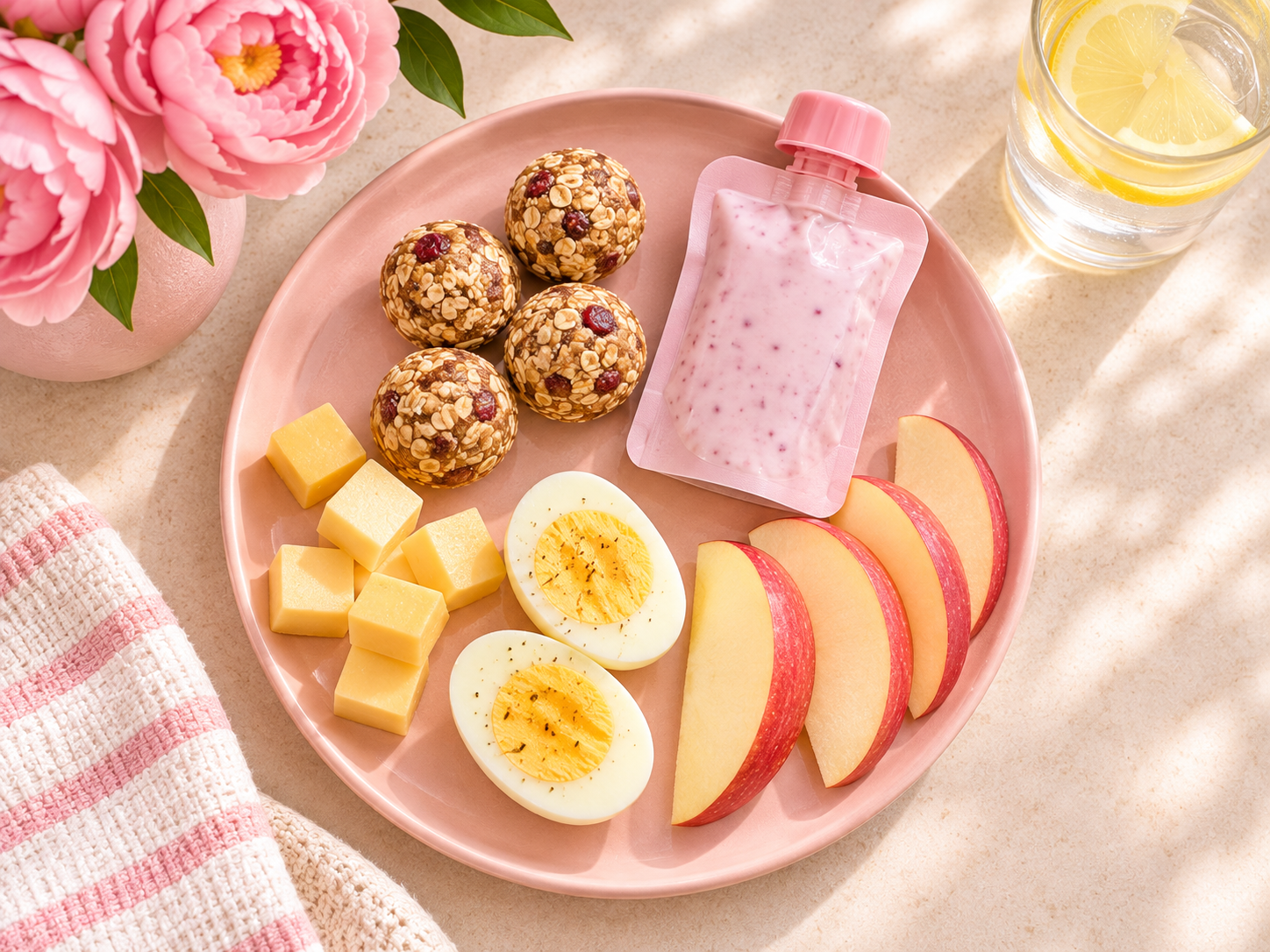
When you have two minutes and two hands, a snack plate is one of the most satisfying ways to eat. Think of it like a tiny meal:
- Pick a protein. An egg, a few cheese cubes, a roll-up, a scoop of hummus or a yogurt pouch.
- Add a fruit or vegetable. Apple slices, grapes, berries, cucumber rounds or snap peas.
- Finish with something crunchy or hearty. Whole-grain crackers, an energy bite, a handful of nuts or a mini pita.
That’s exactly what’s on the plate in the photo below, and it takes about five minutes if the eggs and bites are already made.
The 12 snacks
Mix and match these through the week. Many take five minutes or less to prep, and several need no prep at all.
- 🥚01 · ProteinHard-boiled eggs
Peel a batch ahead of time so they’re truly grab-and-go. Sprinkle with salt, pepper or everything bagel seasoning. Protein you can eat in four bites.
- 🥛02 · Protein · CalciumYogurt pouches or tubes
Greek yogurt in a squeeze pouch or tube is the ultimate no-spoon snack. Look for plain or lower-sugar versions, or fill reusable pouches yourself and keep them in the fridge door.
- 🧀03 · Protein · CalciumCheese sticks and cubes
String cheese, mini cheese rounds or pre-cut cubes. Pair them with something crunchy like whole-grain crackers or grapes to make them more filling.
- 🍪04 · Fiber · EnergyNo-bake energy bites
Oats, nut butter, a little honey and mix-ins rolled into balls. Make a batch once and you’re set for the week. Recipe below.
- 🍎05 · Fiber · Healthy fatsApple slices with a nut butter packet
Squeeze nut butter straight onto each slice, or dip. A squeeze of lemon on the apples keeps them from browning in the fridge.
- 🍞06 · ProteinTurkey and cheese roll-ups
Roll a slice of turkey around a cheese stick or a strip of cucumber. Make a few at once and keep them in a container.
- 🥜07 · Healthy fats · EnergyTrail mix in small cups
Nuts, seeds, a few dried fruit pieces and maybe some dark chocolate chips. Portion it into small cups so you can pour straight into your mouth.
- 🍌08 · Fiber · Quick energyBananas and clementines
Nature’s own packaging. Bananas peel one-handed with a little practice, and clementines can be peeled ahead and kept in a container.
- 🥙09 · Fiber · ProteinMini pitas stuffed with hummus
Fill mini pitas or wraps with hummus ahead of time so you’re not stuck needing two hands to dip.
- 🫘10 · Plant proteinRoasted chickpeas or edamame
Crunchy roasted chickpeas from a bag, or shelled edamame you can eat by the handful. Both bring plant protein and fiber.
- 🥤11 · Protein · Fruit · VegSmoothie in a lidded cup
Blend yogurt or milk, frozen fruit, a handful of spinach and a spoon of nut butter. Pour it into a cup with a lid and a straw and drink it while you feed.
- 🧁12 · Protein · VegEgg muffin cups
Whisk eggs with chopped veggies and cheese, bake in a muffin tin and keep them in the fridge. Warm one for thirty seconds or eat it cold.
A few more ideas
Once you’ve got the hang of it, keep adding to your list. Whole-grain crackers with cheese. A peanut butter and banana half-sandwich cut into strips. Frozen grapes. A cup of cottage cheese with pineapple you can drink from. Leftover chicken cut into strips. Mini bagels with cream cheese. A tortilla rolled around nut butter and banana. Snacks don’t have to be “snack foods.” Leftovers count.
Snacks for every situation
Different moments call for different snacks. Here’s what tends to work best when.
Night feeds
Middle-of-the-night hunger is real, especially if you’re breastfeeding. Keep quiet, shelf-stable snacks on your nightstand: a granola bar, a small cup of trail mix or a banana, plus a full water bottle. Skip anything crinkly or crunchy that might wake a half-asleep baby, and keep the lights low so you can both drift back off.
Pumping sessions
Pumping often keeps both hands busy, so aim for snacks you can eat during a break or right after: a smoothie with a straw, a cheese stick, an energy bite or a peeled clementine. If you pump at work, keep a stash in your bag or desk drawer.
Baby and a toddler
If you’re feeding a baby while also chasing a toddler, choose snacks you can share: apple slices, cheese cubes, banana and yogurt tubes work for both of you (cut appropriately for your toddler’s age). Sitting down together for a “snack picnic” on the floor can also buy you ten calm minutes.
On the go
For walks, appointments and errands, pack shelf-stable options in the diaper bag: nut butter packets, roasted chickpeas, whole-grain crackers, a granola bar and a refillable water bottle. A small insulated pouch with an ice pack lets you bring yogurt or cheese too.
Back to work
Returning to work brings a new rhythm. Pack two snacks for the day, one for mid-morning and one for mid-afternoon, so you’re not running on empty when you get home to the evening rush.
Recipe: no-bake energy bites
These are the snack we get asked about most, and they’re hard to mess up. No oven, one bowl, about fifteen minutes.
- 1 cup old-fashioned oats
- 1/2 cup peanut butter or any nut or seed butter
- 1/3 cup honey or maple syrup
- 2 tablespoons ground flaxseed or chia seeds
- 1/3 cup mini chocolate chips, dried cranberries or both
- 1 teaspoon vanilla and a pinch of salt
- Stir everything together in a bowl until it holds together. If it’s too dry, add a little more nut butter; too wet, a few more oats.
- Chill for 20 to 30 minutes so it’s easier to roll.
- Roll into about 15 bite-size balls.
- Store in a container in the fridge for up to a week, or freeze for longer.
Make them yours: swap in sunflower butter for a nut-free version, add shredded coconut or cocoa powder, or roll the finished bites in crushed nuts. If your baby’s doctor has asked you to avoid any foods while breastfeeding, follow their advice first.
Set up snack stations
The single most helpful thing you can do is put snacks where you actually are. Most new moms spend a lot of time in two or three spots: the feeding chair, the couch, maybe the bed. Stock each one.
The feeding station basket
Keep a small basket or caddy next to wherever you usually feed. Fill it with shelf-stable snacks and a water bottle you refill every morning.
- A big water bottle with a straw or flip lid
- Trail mix cups and nut butter squeeze packets
- Granola or snack bars you like
- Roasted chickpeas or whole-grain crackers
- Bananas or clementines
- A few napkins, lip balm and your phone charger (you’ll thank us)
The fridge “grab shelf”
Clear one shelf at eye level and fill it with ready-to-eat snacks: peeled eggs, yogurt tubes, cheese sticks, energy bites, roll-ups, cut fruit and egg muffins. When you open the fridge with one hand, everything you need is right there. No digging, no decisions.
The car and diaper bag stash
A couple of shelf-stable snacks in the diaper bag and car turn a long pediatrician wait or an unexpected errand into no big deal.
A 30-minute weekly snack prep
Pick one time each week, maybe a weekend nap or an evening when a partner is on baby duty, and do a quick snack prep. Here’s a simple order that gets a lot done in about half an hour.
- Start the eggs. Hard-boil a dozen eggs. While they cook, do everything else.
- Mix the energy bites. Stir them together and pop the bowl in the fridge to firm up.
- Wash and cut fruit and veggies. Apples (with a little lemon juice), grapes, cucumbers, peppers, peeled clementines.
- Portion the trail mix. Divide it into small cups or containers for the feeding basket.
- Make roll-ups or stuffed pitas. Enough for two or three days at a time.
- Roll the energy bites and peel the eggs. Everything goes onto the grab shelf.
- Refill the feeding basket. Done for the week.
If thirty minutes feels like too much right now, do just one thing: boil eggs, or make the bites, or portion the trail mix. Even one prepped snack is better than none. And in the earliest weeks, a grocery delivery of ready-to-eat snacks is a perfectly good plan too.
A simple snack shopping list
Screenshot this or hand it to whoever is doing the grocery run. You don’t need all of it. Pick what your family likes.
- Eggs
- Greek yogurt cups, tubes or pouches
- Cheese sticks or a block to cube
- Sliced turkey or chicken
- Hummus
- Berries, grapes and cut melon
- Cucumbers, baby carrots and snap peas
- Old-fashioned oats and nut or seed butter
- Nut butter squeeze packets
- Nuts, seeds and a little dried fruit
- Whole-grain crackers and mini pitas
- Roasted chickpeas
- Bananas, apples and clementines
- Frozen fruit and shelled edamame
Keeping it budget-friendly
Snacks can add up quickly, especially single-serve packs. A few ways to keep costs down: buy yogurt in large tubs and fill reusable pouches, cube cheese from a block, mix your own trail mix from bulk nuts and seeds, choose fruit that’s in season, and lean on eggs, oats, beans and bananas, which are some of the most affordable nutritious foods around. If money is tight, WIC and local food banks can help with groceries for new parents.
If you’re breastfeeding
Making milk takes energy. The CDC notes that breastfeeding moms generally need more calories than before pregnancy, often around 330 to 400 extra a day, though it varies from person to person. You don’t need to count anything. In practice, it usually just means eating when you’re hungry and not skipping meals, and snacks make that much easier.
The USDA’s MyPlate guidance for pregnant and breastfeeding women recommends eating a variety of fruits, vegetables, grains, protein foods and dairy or fortified soy alternatives. The twelve snacks above cover most of those groups between them.
A note on fish
Fish is a great source of protein and nutrients like omega-3s. The FDA and EPA advise breastfeeding moms to eat two to three servings a week from their “Best Choices” list, which includes options like salmon, shrimp, cod and canned light tuna, while limiting higher-mercury fish. A tuna or salmon salad in a mini pita makes an easy snack or light lunch.
Supplements and special diets
Many providers recommend continuing a prenatal vitamin while breastfeeding, and some moms on vegetarian or vegan diets need extra attention to nutrients like vitamin B12. Ask your provider or a registered dietitian what’s right for you.
Water, coffee and other drinks
Water
New moms often get surprisingly thirsty, especially while breastfeeding. A simple habit is to drink a glass of water every time you feed your baby. Keep a large bottle at every snack station, and use thirst and urine color as a guide: pale yellow is a good sign.
Coffee
Good news for tired parents: the CDC says moderate caffeine, roughly two to three cups of coffee a day, is generally not linked with problems for breastfed babies. Some babies are more sensitive than others, so if yours seems fussy or wakeful, try cutting back and see if it helps.
Smoothies count
A smoothie with yogurt or milk, fruit and a handful of greens is a drink and a snack in one, and it’s one of the easiest ways to get fruit and vegetables in when you can’t sit down for a meal.
Feeding yourself is part of feeding your baby. You’re allowed to come first for five minutes.
Quick food safety
Snacks that sit in a feeding basket all day need a little care. A few simple habits from FoodSafety.gov go a long way:
- Keep cold food cold. Eggs, yogurt, cheese, meats and cut fruit belong in the fridge, not the feeding basket.
- Follow the two-hour rule. Refrigerate perishable food within two hours, or one hour if it’s very hot out. When in doubt, throw it out.
- Wash produce under running water before cutting.
- Label prepped food with the day you made it, so you know what to eat first.
- Wash your hands before prepping and eating. Easier said than done with a baby, but worth it.
Let people help
When friends and family ask what they can do, snacks are a wonderful answer. People love being given a specific job.
- Ask for a snack drop-off instead of flowers: a bag of fruit, cheese sticks, trail mix and your favorite granola bars.
- Ask a visitor to do the weekly prep while you nap or feed.
- Start a snack train alongside a meal train, so a different friend drops something off each week.
- Hand your partner the list. This post works great as a grocery list.
A note for partners
If you’re the partner reading this: one of the most helpful things you can do is notice when she hasn’t eaten and bring a snack and a glass of water without being asked. Refill the feeding basket. Peel the eggs. Hand over a smoothie at the 3 a.m. feed. Small, quiet acts of care like these add up to a lot.
And if you’re in a walk club or a moms’ group, try a snack swap: everyone makes a double batch of one thing and trades. You go home with five kinds of snacks for the effort of one.
When food feels hard
For some women, the postpartum months bring a lot of pressure around food and bodies. If you notice that eating feels stressful, that you’re skipping meals on purpose, or that you’re worrying about food or your body most of the day, please talk to your provider. You deserve support, and you don’t have to sort it out alone.
At Pink in Progress, food is about energy and feeling like yourself, not shrinking. There are no foods you’re “not allowed,” and birthday cake is welcome. Our Pink Plate guide and 1:1 nutrition coaching are built around simple habits like regular meals, enough protein and enough water, in a way that fits your real life.
If you’re not sure where to start, pick three snacks from the list that you already like, buy them this week and put them where you’ll see them. That’s a win. Next week, add one more, or try the energy bites. Small and steady works for food just like it works for fitness.
So tonight, before you go to bed, put one snack and one bottle of water next to the feeding chair. Tomorrow, 2:47 p.m. you will be very grateful.
Sources
- Centers for Disease Control and Prevention: Maternal Diet and Breastfeeding
- USDA MyPlate: Healthy Eating for Women Who Are Pregnant or Breastfeeding
- USDA WIC Works (FDA/EPA advice): Advice About Eating Fish for Pregnant and Breastfeeding Women
- FoodSafety.gov: 4 Steps to Food Safety
- NewYork-Presbyterian: Postpartum Diet and Exercise
This article is for general information and isn’t medical advice. Talk with your doctor or midwife about what’s right for you.
- Postpartum nutrition
- New moms
- Healthy snacks
- Breastfeeding
- Meal prep
Want more energy and less guesswork?
Tell us where you are right now. We’ll reply within two business days about nutrition coaching, The Pink Plate guide and our community.
Questions
Good questions.
What are the best snacks for new moms?
Snacks you can eat with one hand that include some protein and fiber, like hard-boiled eggs, yogurt pouches, cheese sticks, energy bites, apple slices with nut butter, turkey roll-ups and trail mix.
How often should I snack as a new mom?
There’s no set rule. Many new moms feel best eating every few hours, especially if they’re breastfeeding. Let hunger guide you, and keep snacks within reach so it’s easy to eat when you need to.
Do I need to eat more while breastfeeding?
Usually, yes. The CDC notes that breastfeeding moms generally need more calories than before pregnancy, often around 330 to 400 extra a day, but needs vary. Eating when you’re hungry and not skipping meals is a good place to start.
How long do hard-boiled eggs and energy bites keep?
Store them in the fridge in a covered container. Many people use them within about a week. Label them with the day you made them, and when in doubt, throw them out.
Can I drink coffee while breastfeeding?
For most moms, yes, in moderation. The CDC says roughly two to three cups a day is generally not linked with problems for babies. If your baby seems fussy or wakeful, try cutting back.
What if I don’t have time to prep snacks?
Start with no-prep options like bananas, cheese sticks, yogurt tubes and trail mix, or ask a friend or partner to do a quick weekly prep. Even one ready snack is better than none.
 New moms
 Our story