It’s 5:47 p.m. The baby is crying, the toddler is hanging off your leg, someone is asking “what’s for dinner?” for the fourth time, and you’re standing in front of the open fridge like it’s going to give you an answer. It won’t. But this post will.
Dinner is one of the hardest parts of the day for tired families, and it’s usually not because cooking is hard. It’s because deciding is hard. By dinnertime, you’ve already made about a thousand decisions. One more feels impossible.
So we made the decisions for you. Below you’ll find a simple formula for throwing dinner together with about 10 minutes of hands-on time, a seven-night rotation you can repeat every week, an at-a-glance grid, a grocery list and ideas for every kind of family. No recipes to follow, no fancy ingredients and no judgment if Sunday’s dinner is crackers and cheese.
Why a rotation works
A dinner rotation is just a short list of meals you repeat on a schedule. Restaurants do it. School cafeterias do it. Your grandmother probably did it, with meatloaf every Tuesday and fish every Friday. There’s a reason it’s stuck around.
- It removes the daily decision. You decide once, then follow the plan. No more 5:47 p.m. fridge-staring.
- It makes grocery shopping simple. When you eat the same seven dinners, you buy the same list. It gets faster every week.
- It cuts down on waste. Ingredients overlap across meals, so the rest of the tortillas and that half a rotisserie chicken actually get eaten.
- It’s easier on picky eaters. Kids often do better with predictable meals. Taco Tuesday becomes something to look forward to.
- It frees up brain space. And when you have a baby, a job or both, brain space is the most precious thing you’ve got.
Will you get bored? Maybe, eventually. That’s why we included extra combos further down. But most families find that the relief of not having to think about dinner is worth a lot more than variety on a Wednesday.
The 10-minute dinner formula
Every dinner in this rotation is built from the same four blocks. Once you know the formula, you can make dinner from almost anything in your kitchen.
- 🍗Block 1A ready protein
Something already cooked or that cooks in minutes: rotisserie chicken, eggs, canned beans, frozen meatballs, deli turkey, tofu.
- 🍚Block 2A shortcut carb
Microwave rice, tortillas, fresh tortellini, bread, frozen waffles, crackers. Fast, filling and kid-approved.
- 🥦Block 3A frozen (or bagged) veggie
Peas, stir-fry mix, broccoli, corn, bagged salad, baby carrots, cherry tomatoes. Steam, toss or serve raw.
- 🥫Block 4A flavor shortcut
The secret weapon: salsa, pesto, teriyaki, marinara, hummus, everything seasoning, a squeeze of lemon.
That’s it. Protein + carb + veggie + flavor. When you’re staring into the fridge, just ask: “Which protein, which carb, which veggie, which sauce?” Four tiny decisions are a lot easier than one big one.
The formula also happens to make a balanced plate without you having to think about it. A protein to keep you full, a carb for energy, a vegetable for fiber and vitamins and a sauce to make everyone actually want to eat it. If you’re an adult who loves numbers, great. If not, you don’t need any.
Shortcuts aren’t cheating
Let’s get this out of the way: a rotisserie chicken is not a moral failure. Neither is microwave rice, jarred sauce, bagged salad or frozen anything. These are tools that busy families use to get food on the table. They’re not a sign you’ve given up.
Somewhere along the way, a lot of us picked up the idea that “real” cooking means chopping everything from scratch, and anything else is lazy. That idea is not helping you at 5:47 p.m. A dinner made with shortcuts that actually gets eaten beats a from-scratch dinner that never happens, every single time.
The shortcuts we lean on most:
- Rotisserie chicken. Shred it once and use it in bowls, tacos, quesadillas and fried rice all week.
- Microwave rice and grain pouches. Ninety seconds. No pot to scrub.
- Fresh refrigerated pasta. Cooks in a few minutes instead of ten or more.
- Frozen vegetables. Already washed and chopped, and they won’t go bad in your crisper drawer.
- Jarred sauces. Salsa, pesto, marinara and teriyaki do the flavor work for you.
- Pre-cut and bagged produce. Slaw, salad, baby carrots and snap peas. Open the bag and serve.
A quick note on cost
Shortcuts can cost a little more per item than doing everything from scratch, but they often save money overall. A rotisserie chicken that turns into three dinners, frozen veggies that never go slimy in the fridge and a plan that keeps you from ordering takeout three nights a week can add up to real savings. If budget is tight, lean hardest on the cheapest shortcuts: eggs, canned beans, rice, tortillas and frozen vegetables. Store brands work just as well as name brands for almost everything on this list.
And remember, the most expensive dinner is the one you buy ingredients for and never make. A simple plan you actually follow is the budget-friendly choice.
Yes, frozen veggies count
If you’ve ever felt guilty reaching for a bag of frozen broccoli, here’s some good news. A study from the University of Georgia compared fresh, “fresh-stored” (five days in the fridge, like most of us do) and frozen produce. As Ohio State University Extension summarized, the researchers found no significant differences in vitamin content in most comparisons, and frozen produce sometimes came out ahead of fresh produce that had been sitting in the fridge.
And according to USDA MyPlate guidance, canned, fresh and frozen fruits and vegetables all count toward your daily goals. The big-picture tip is to aim for about half your plate as fruits and veggies, in whatever form works for your life. If you buy canned, look for options labeled low-sodium or no-salt-added and fruit packed in water or juice.
So the next time you toss frozen peas into the tortellini pot, know that you’re not cutting a corner. You’re feeding your family vegetables. That’s the whole goal.
The 7-night rotation
Here’s the full week. Each dinner takes about 10 minutes of hands-on time (give or take a toddler interruption). Make them in order, mix them up or repeat your favorites. The point is that you never have to decide from scratch again.
🍚 MondayRotisserie chicken bowls- ProteinShredded rotisserie chicken
- CarbMicrowave rice
- VeggieFrozen stir-fry veggies
- FlavorTeriyaki or pesto
Microwave the rice and veggies while you shred the chicken. Pile it in bowls and drizzle with sauce. Done.
🌮 TuesdayFive-minute bean tacos- ProteinCanned black beans (or leftover chicken)
- CarbTortillas
- VeggieBagged slaw or frozen corn
- FlavorSalsa and shredded cheese
Warm the beans with a pinch of cumin or taco seasoning, warm the tortillas and let everyone build their own.
🍝 WednesdayTortellini night- ProteinFresh cheese tortellini (or frozen meatballs)
- CarbIt’s the pasta
- VeggieFrozen peas or spinach
- FlavorJarred marinara or pesto
Fresh tortellini cooks in about three minutes. Toss the frozen peas into the same pot for the last minute, drain and sauce.
🍳 ThursdayBreakfast for dinner- ProteinScrambled eggs
- CarbToast or frozen waffles
- VeggieCherry tomatoes or frozen berries
- FlavorEverything seasoning or maple syrup
The most-loved night in the rotation. Eggs take five minutes, the toaster does the rest.
🧀 FridayCheesy quesadillas- ProteinLeftover chicken or beans
- CarbTortillas
- VeggieFrozen peppers and onions
- FlavorSalsa, sour cream or guac
Fill, fold and toast in a pan for a couple of minutes per side. Cut into triangles. Fridays are for triangles.
🥡 SaturdaySpeedy fried rice- ProteinEggs (plus any leftover protein)
- CarbMicrowave or leftover rice
- VeggieFrozen peas and carrots
- FlavorSoy sauce and a little sesame oil
Scramble the eggs, toss in the rice and veggies, add a splash of soy sauce and stir until hot. Takeout energy, couch-friendly speed.
🍇 SundaySnack board supper- ProteinDeli turkey, cheese or hummus
- CarbCrackers or pita
- VeggieCucumbers, baby carrots, grapes
- FlavorRanch, hummus or a little jam
No cooking at all. Arrange it on a board, call it a charcuterie night and let everyone graze.
Your week at a glance
Screenshot this, print it or stick it on the fridge. When someone asks “what’s for dinner?” you can just point.
| Day | Dinner | Protein | Carb | Veggie | Flavor |
|---|---|---|---|---|---|
| Mon | Rotisserie chicken bowls | Shredded rotisserie chicken | Microwave rice | Frozen stir-fry veggies | Teriyaki or pesto |
| Tue | Five-minute bean tacos | Canned black beans (or leftover chicken) | Tortillas | Bagged slaw or frozen corn | Salsa and shredded cheese |
| Wed | Tortellini night | Fresh cheese tortellini (or frozen meatballs) | It’s the pasta | Frozen peas or spinach | Jarred marinara or pesto |
| Thu | Breakfast for dinner | Scrambled eggs | Toast or frozen waffles | Cherry tomatoes or frozen berries | Everything seasoning or maple syrup |
| Fri | Cheesy quesadillas | Leftover chicken or beans | Tortillas | Frozen peppers and onions | Salsa, sour cream or guac |
| Sat | Speedy fried rice | Eggs (plus any leftover protein) | Microwave or leftover rice | Frozen peas and carrots | Soy sauce and a little sesame oil |
| Sun | Snack board supper | Deli turkey, cheese or hummus | Crackers or pita | Cucumbers, baby carrots, grapes | Ranch, hummus or a little jam |
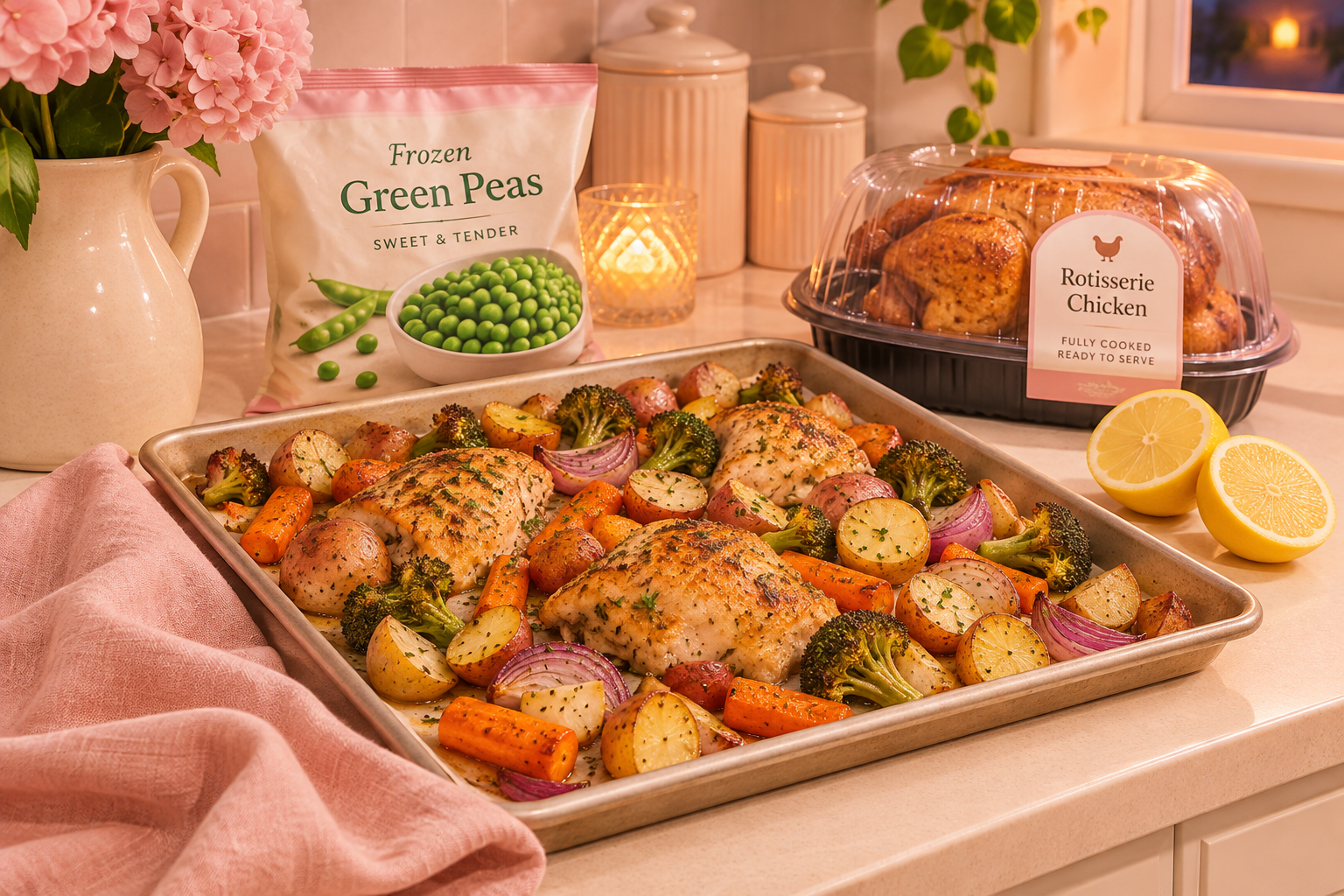
Bonus: the hands-off sheet pan
Some nights you have a little more time but no more energy. That’s sheet pan night. It takes about 10 minutes of hands-on work, and the oven does the rest while you do bath time or sit on the floor with the baby.
- Heat the oven to around 425°F and line a sheet pan with foil or parchment for easy cleanup.
- Add a protein. Chicken thighs, sausage, salmon, tofu or chickpeas.
- Add veggies. Baby potatoes, carrots, broccoli, onions or a bag of frozen roasting veggies. Cut big things smaller so everything cooks evenly.
- Season. A drizzle of olive oil, salt, pepper and one seasoning blend you love.
- Roast until the veggies are tender and browned and the protein is fully cooked, usually 20 to 35 minutes depending on what you used. Use a food thermometer for meat and fish if you have one.
- Squeeze a lemon over the top and serve straight from the pan. Fewer dishes, more couch.
More combos for when you get bored
Once the rotation feels easy, swap a night for one of these. They all follow the same formula: protein, carb, veggie, flavor.
- 🥗MediterraneanGreek-ish pitas
Rotisserie chicken or chickpeas, warm pita, cucumbers and cherry tomatoes, hummus or tzatziki.
- 🍜CozyUpgraded ramen
Instant ramen noodles (skip half the seasoning packet), a soft-boiled or scrambled egg, frozen spinach or edamame, a splash of soy sauce.
- 🍟Kid favoriteBaked potato bar
Microwave potatoes, canned chili or black beans, frozen broccoli, shredded cheese and salsa.
- 🥖No cookPesto chicken wraps
Rotisserie chicken, tortillas, bagged spinach or slaw and a spoonful of pesto. Roll and slice.
- 🥣ComfortSoup and toast
Boxed or canned soup (add frozen veggies to stretch it), grilled cheese or toast with a little butter.
- 🥝Lazy luxuryYogurt bowls for dinner
Greek yogurt, frozen berries, granola and a spoon of peanut butter. Breakfast’s cousin, totally valid at 7 p.m.
You can also play with the flavor block alone. The same chicken, rice and broccoli taste completely different with teriyaki, pesto, salsa or a squeeze of lemon and a sprinkle of everything seasoning. Same groceries, brand-new dinner.
The grocery list
This list covers the whole rotation for a small family, with plenty of overlap so nothing goes to waste. Adjust amounts for your crew, then save it and reuse it every week.
- 1 rotisserie chicken
- 1 dozen eggs
- 2 cans black beans
- 1 pack fresh tortellini
- Deli turkey or a tub of hummus
- Shredded cheese
- Microwave rice (2–3 pouches)
- Tortillas (one big pack)
- Bread or frozen waffles
- Crackers or pita
- Frozen stir-fry mix
- Frozen peas (or peas and carrots)
- Frozen peppers and onions
- Frozen berries or corn
- Salsa
- Jarred marinara or pesto
- Teriyaki and soy sauce
- Bagged slaw or salad
- Cucumbers, baby carrots, cherry tomatoes
- Grapes or apples
Pantry staples to keep on hand: olive oil, salt, pepper, one or two seasoning blends (taco seasoning and everything bagel seasoning are great), cumin, soy sauce, a jar of peanut butter and a box of pasta for emergencies.
Making the rotation stick
A plan is only helpful if you actually use it. Here are a few ways to make the rotation feel automatic:
- 📅RoutineSame night, same meal
When Tuesday is always tacos, nobody asks what’s for dinner. Decision fatigue: defeated.
- 📝EasyKeep the list on your phone
Screenshot the grocery list and reuse it every week. Add or delete a few things and you’re done.
- 🛒ShortcutUse pickup or delivery
Order the same base list on the same day each week. One less trip with a car seat.
- 🍳OptionalPrep one thing on Sunday
Shred the chicken, wash the grapes or cook a batch of rice. Just one thing. It makes the week feel lighter.
- 🔄FlexibleSwap, don’t scrap
Not feeling fried rice? Swap it with breakfast for dinner. The rotation is a menu, not a rulebook.
- 👪TeamworkHand off a night
Because every meal is simple, anyone can make it. Give your partner or an older kid a night of their own.
Give it three or four weeks. The first week, you’ll still be checking the list. By week four, you’ll be shredding chicken on Monday without thinking about it. That’s the magic of a routine: it takes the thinking out.
Feeding the little ones
The best part of the formula is that it’s easy to make one meal for the whole family. A few ideas:
- Deconstruct it. Instead of mixing everything together, put the protein, carb and veggie in separate piles on your toddler’s plate. Many kids are more willing to eat foods that aren’t touching.
- Serve it family style. Put everything in the middle of the table and let kids serve themselves (with help). It gives them a sense of control.
- Always include one “safe” food. Something you know they usually eat, like rice, tortillas or fruit. That way there’s always something on the plate they’ll touch.
- Cut food to a safe size. For babies and toddlers, cut foods like grapes, cherry tomatoes and meatballs into small, age-appropriate pieces, and follow your pediatrician’s guidance on starting solids and textures.
- Don’t worry about one meal. If your toddler eats only the tortilla tonight, that’s okay. Kids’ appetites change a lot from day to day. Look at the whole week, not one plate.
And yes, the nugget test applies here too. If some nights your kid eats nuggets and fries, they will still grow up just fine.
Swaps for every family
The formula works with almost any way of eating. A few common swaps:
- 🥑Plant-poweredVegetarian
Swap chicken for beans, chickpeas, lentils, tofu, eggs or veggie crumbles. Every night in the rotation works.
- 🥛Easy swapDairy-free
Skip the cheese or use a dairy-free version, and choose olive oil and pesto without cheese, or a tomato-based sauce.
- 🍞SimpleGluten-free
Use corn tortillas, rice, gluten-free pasta and crackers. Check sauce labels, especially soy sauce.
- 💰SaveTight budget
Lean on eggs, beans, rice and frozen veggies. Canned and frozen produce are budget heroes, and they all count.
If someone in your family has a food allergy, a medical condition or specific nutrition needs, please follow the advice of your doctor or a registered dietitian. Our coaches can help with everyday habits, but specialized diets are their area.
Leftovers and food safety
Leftovers are part of the plan: Monday’s chicken becomes Friday’s quesadillas. Just keep a couple of food safety basics in mind:
- Refrigerate within two hours. Put leftovers in the fridge within two hours of cooking (or one hour if it’s above 90°F, like a hot car).
- Use within three to four days. Most cooked leftovers, including rotisserie chicken, are best eaten within three to four days. The USDA’s FoodKeeper app lets you look up specific foods.
- Freeze what you won’t use. Shredded chicken, cooked rice and leftover soups freeze well. Label and date them.
- Store in shallow containers. They cool faster in the fridge.
- When in doubt, throw it out. Smell isn’t a reliable test.
When even 10 minutes is too much
Some nights, 10 minutes might as well be 10 hours. The baby was up all night, you’re sick, the day was just too much. On those nights, here’s your permission slip:
- Cereal and milk is dinner. Add a banana and call it balanced.
- Toast with peanut butter is dinner. Protein, carb, done.
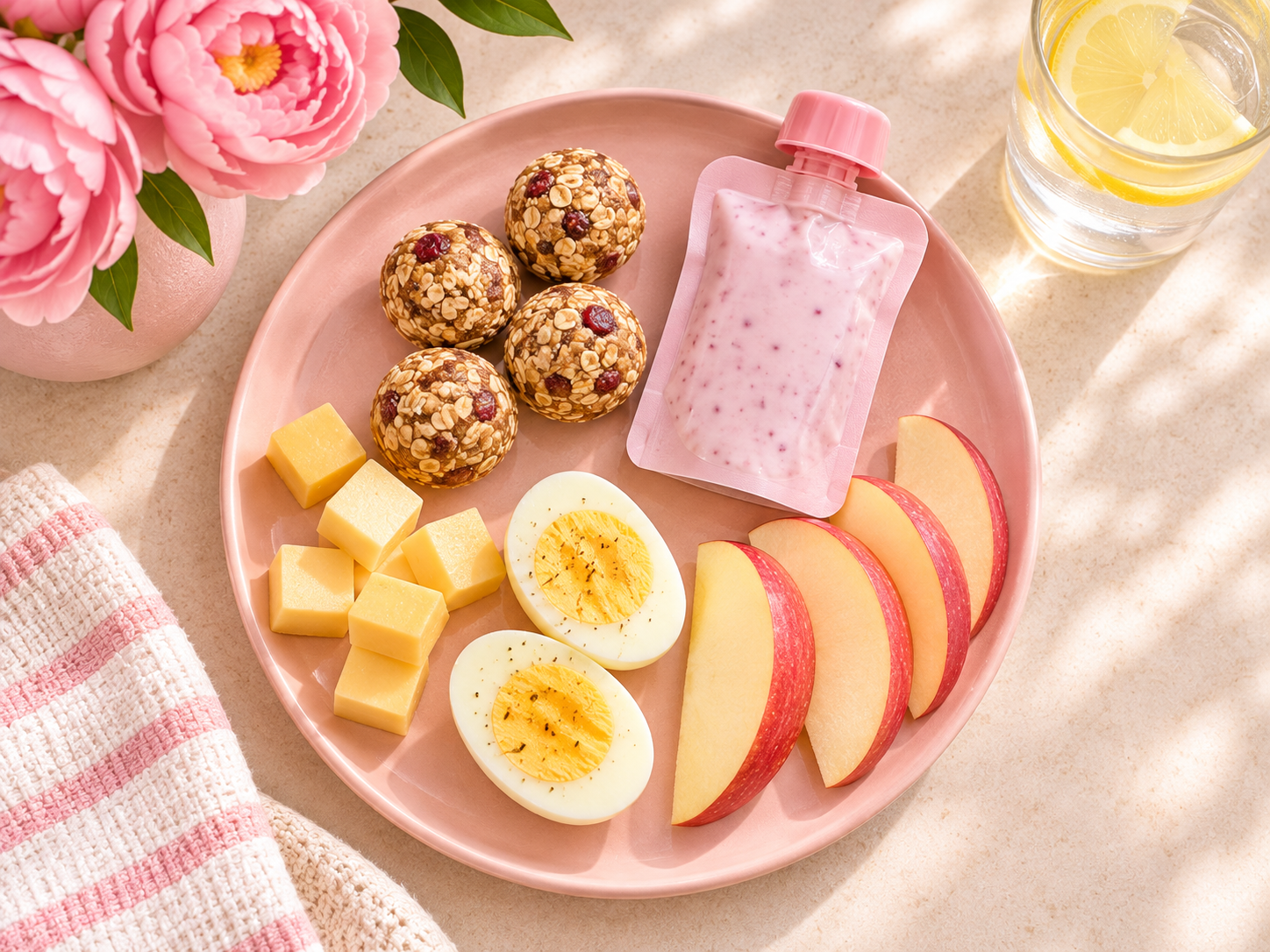
- A snack plate is dinner. Cheese, crackers, fruit, whatever’s there. Our one-handed snacks post has more ideas.
- Takeout is dinner. There’s no prize for cooking every night.
- Someone else’s cooking is dinner. If a friend offers a meal, say yes.
A rotation is supposed to make life easier, not give you something else to feel bad about. Skipping a night isn’t failing the plan. It’s using common sense.
Dinner doesn’t have to be impressive. It has to be food, on a plate, eaten by people you love. Some nights that’s a sheet pan. Some nights it’s cereal. Both count.
Where coaching fits
At Pink in Progress, nutrition coaching isn’t about diets, calorie counting or perfect meal plans. It’s about simple habits that make eating easier and give you more energy, like the formula in this post.
When you work with one of our coaches, we’ll look at your real week, your family, your budget and your energy, and help you build a rhythm that works. Maybe that’s a dinner rotation. Maybe it’s snacks you can eat with one hand, a better breakfast or just drinking water before coffee. Whatever it is, it’ll fit your life, not the other way around. You can read more about how 1:1 coaching works.
For now, pick one night from the rotation and try it this week. Just one. If it works, add another next week. Before long, “what’s for dinner?” won’t be the hardest question of your day.
Sources
- Ohio State University Extension: Chow Line: Frozen Vegetables Are Healthy Options
- NDSU Extension: Canned, Fresh or Frozen: What Kinds of Fruits and Vegetables Do You Choose?
- FoodSafety.gov: FoodKeeper App
- Caregiver Action Network: Leftovers Storage Tips (USDA guidance)
This article is for general information and isn’t medical advice. Talk with your doctor or midwife about what’s right for you.
- Easy dinners
- Meal planning
- Nutrition
- New moms
- Family meals
Make dinner the easy part.
Tell us a little about your family and your week. We’ll reply within two business days with coaching and community that fit your real life.
Questions
Good questions.
Can you really make dinner in 10 minutes?
Yes, with shortcuts. Each dinner in this rotation takes about 10 minutes of hands-on time using ready proteins like rotisserie chicken or eggs, microwave rice, fresh pasta, frozen vegetables and jarred sauces.
Are frozen vegetables as healthy as fresh?
Research from the University of Georgia found most vitamin levels were similar between fresh and frozen produce, and frozen sometimes beat fresh produce that had been stored in the fridge for several days. USDA MyPlate counts fresh, frozen and canned fruits and vegetables.
Is it okay to use rotisserie chicken and jarred sauces?
Absolutely. Shortcuts are tools, not cheating. A simple dinner that actually gets made and eaten is better than an ambitious one that doesn’t happen.
How long do leftovers last?
Refrigerate leftovers within two hours and eat most cooked leftovers within three to four days. Freeze anything you won’t use in time. The USDA FoodKeeper app has details for specific foods.
What if my kids won’t eat it?
Deconstruct the meal into separate piles, include one food your child usually eats and look at what they eat across the week rather than at one meal. Cut foods into safe, age-appropriate pieces for babies and toddlers.
Does Pink in Progress make meal plans?
Our coaches don’t prescribe meal plans or diets. We help you build simple, flexible food habits that fit your family. For medical conditions, allergies or specialized diets, we’ll point you to a registered dietitian or your doctor.
Keep reading
 Nutrition
 Coaching