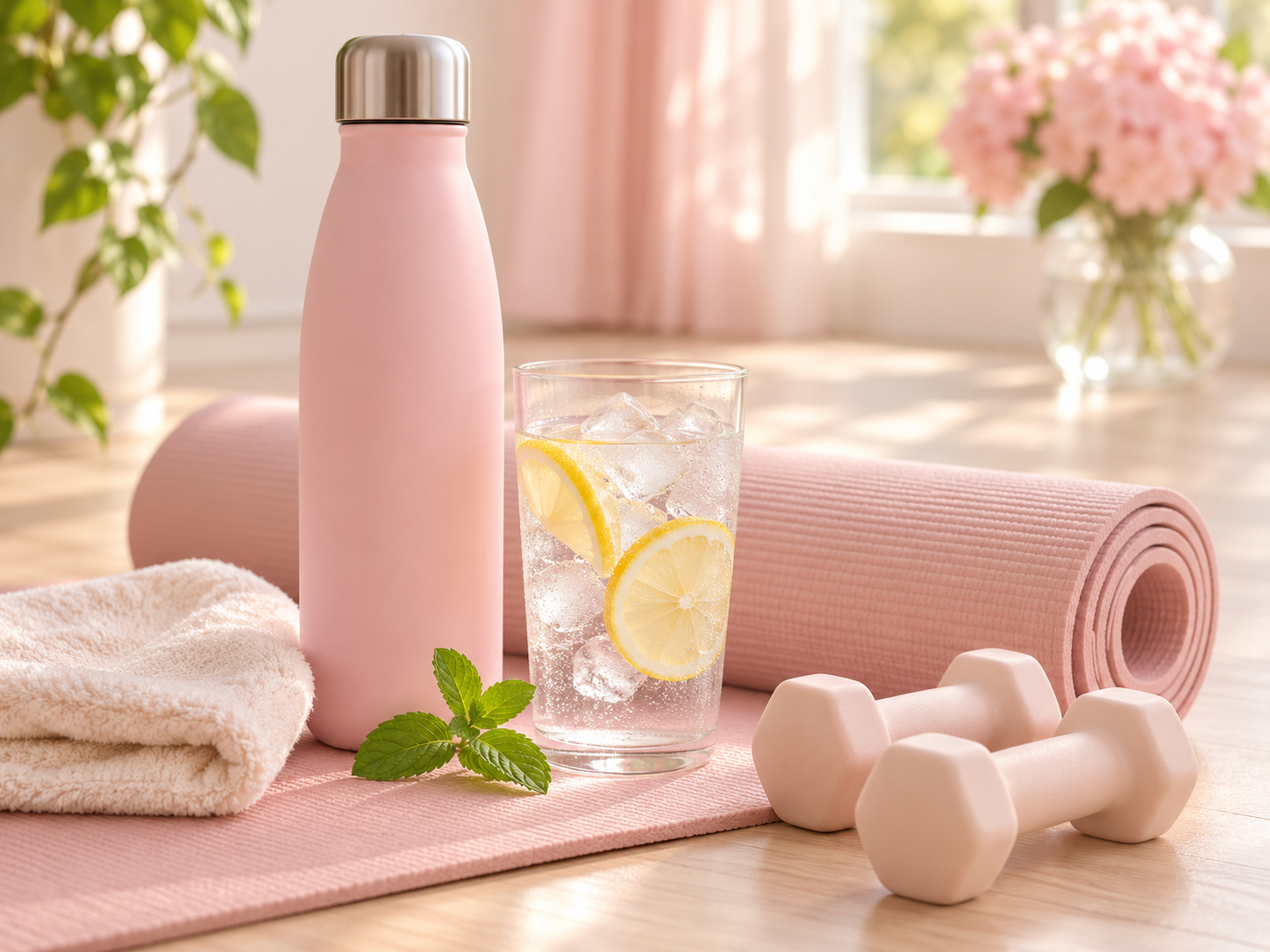
Somewhere along the way, hydration turned into a competition. Giant jugs with motivational time stamps. Challenges to drink a gallon a day. Influencers chugging water between every set. It’s easy to come away thinking that if you aren’t drinking constantly, you’re doing it wrong.
The truth is simpler and a lot more forgiving. Your body is very good at managing water. Most of the time, thirst, regular meals and a water bottle nearby do the job. But when you work out, especially for longer or in the heat, a little knowledge goes a long way.
This guide covers how much water you need on an ordinary day, what to drink before, during and after exercise, how to find your personal sweat rate, and the signs that you’re getting too little or too much. No gallon jug required.
The quick answer
- ⏰BeforeStart hydrated
Drink normally through the day, plus a glass or two of water a few hours before you exercise.
- 🏃♀️DuringUnder an hour? Water to thirst
For most workouts under an hour, sip water when you’re thirsty. Longer or hotter sessions need a plan.
- 🥤AfterReplace what you lost
Drink and eat normally. After a big sweaty session, aim for about 16 to 24 ounces per pound lost.
- 💧CheckListen to your body
Pale yellow urine and not feeling thirsty are good signs you’re on track.
Your daily baseline
Before we talk workouts, let’s talk about an ordinary day. The U.S. National Academies of Sciences, Engineering, and Medicine set adequate daily fluid intake at about 11.5 cups (2.7 liters) for women and 15.5 cups (3.7 liters) for men. That number includes everything: water, other drinks and the water in your food.
Food does more than you’d think. About 20% of daily fluid intake usually comes from food, and the rest from drinks. Take that out and it works out to about 9 cups of beverages a day for women. Fruits, vegetables, soups, yogurt and oatmeal all count.
So where did “8 glasses a day” come from?
In 2002, Dartmouth physiologist and kidney specialist Heinz Valtin searched for the science behind the “drink at least eight 8-ounce glasses a day” rule. He found no scientific studies supporting it, and surveys of healthy adults suggested such large amounts weren’t needed. The rule may trace back to a 1945 recommendation of about one milliliter of water per calorie of food, which also noted that much of that water comes from food.
Eight glasses isn’t harmful for most people. It just isn’t a magic number. Your needs go up and down with your size, the weather, your activity and whether you’re pregnant or breastfeeding.
| Life stage | Total water a day | From drinks (about) |
|---|---|---|
| Women 19+ | 2.7 liters | 2.2 liters, about 9 cups |
| Pregnancy | 3.0 liters | 2.3 liters, about 10 cups |
| Breastfeeding | 3.8 liters | 3.1 liters, about 13 cups |
| Men 19+ | 3.7 liters | 3.0 liters, about 13 cups |
These are National Academies adequate intakes for healthy people in a temperate climate. They don’t include extra fluid for exercise or heat.
Why water matters when you exercise
When you work out, your body heats up. Sweat is how you cool down, and every drop of sweat is water (and some salt) leaving your body. Lose too much without replacing it, and things start to feel harder.
A joint position paper from the Academy of Nutrition and Dietetics, the American College of Sports Medicine and Dietitians of Canada notes that sweat losses of more than 2% of body weight, particularly in hot weather, can impair thinking and aerobic performance. For a 150-pound woman, 2% is about 3 pounds of sweat.
You might notice it as:
- Workouts feeling harder than usual at the same effort
- Headaches or feeling foggy afterward
- Feeling dizzy when you stand up
- Getting tired or overheated faster
That’s why the American College of Sports Medicine’s goal for drinking during exercise is to prevent losing more than 2% of body weight from fluid, and to avoid big swings in electrolytes. Not to drink as much as possible. Just to avoid falling too far behind.
Before you work out
The ACSM says the goal of drinking before exercise is to start your workout normally hydrated, with normal electrolyte levels. For most people, that just means drinking normally through the day.
- A few hours before: Drink a glass or two of water (roughly 12 to 16 ounces) about 2 to 4 hours before you exercise, especially before a long or hot workout. That gives your body time to absorb what it needs and pee out the rest.
- Right before: A few sips is plenty. No need to chug a bottle at the gym door.
- First thing in the morning? If you work out right after waking, have a glass of water when you get up. You’ve gone hours without drinking.
- Check your pee: Pale yellow is a good sign you’re ready to go.
During your workout
This is where most of the confusion lives. The honest answer: it depends on how long, how hard and how hot.
- Under 30 minutesMost people don’t need to drink during the workout. Hydrate before and after.
- 30 to 60 minutesSip water when you’re thirsty. Keep a bottle nearby.
- 60 to 90 minutesDrink regularly, in small sips. Consider electrolytes if you’re sweating a lot.
- Over 90 minutesHave a plan: fluid, electrolytes and carbohydrate. Your sweat rate helps here.
- Hot or humid dayDrink more often, slow your pace and add electrolytes for longer sessions.
- Hot yoga or spinBring a full bottle and sip between flows or songs.
For longer workouts, the ACSM notes that drinks with electrolytes and carbohydrates can offer benefits over plain water in some situations. Want help choosing? Our Liquid I.V. vs. LMNT vs. DripDrop guide breaks down what’s in each.
Small sips beat big gulps. Drinking a few mouthfuls every 15 to 20 minutes is easier on your stomach than downing a whole bottle at once, especially when you’re running or jumping.
Find your personal sweat rate
Here’s the thing about general advice: people sweat very differently. The ACSM recommends customized fluid plans because sweating rates and sweat salt vary so much between people, and notes that you can estimate your sweat rate by weighing yourself before and after exercise.
If you’re training for something long, like a half marathon, it’s worth trying once or twice.
- Weigh yourself before. Use the bathroom first, then weigh yourself with minimal clothing.
- Work out for about an hour. Choose a typical workout in typical weather.
- Track what you drink. Note how many ounces you drank during the session.
- Weigh yourself after. Towel off and weigh again, wearing the same thing.
- Do the math. Each pound lost is about 16 ounces of fluid. Add what you drank, then divide by the hours you exercised.
An example
Say you weigh 140 pounds before and 138 after a 2-hour workout, and you drank 16 ounces along the way. That’s 2 pounds lost (32 ounces), plus 16 ounces you drank, for 48 ounces total. Divide by 2 hours and your sweat rate is about 24 ounces per hour. That’s roughly how much you’d need to replace per hour in similar conditions. Many people aim to replace most of it, not necessarily every drop, during exercise.
Your sweat rate changes with the weather, your fitness and how hard you go, so a summer test won’t match a winter one.
A gentle note about the scale. If weighing yourself brings up stress, old habits or hard feelings, skip this test entirely. Thirst, urine color and how you feel are great guides on their own. Your hydration doesn’t need a number.
After you work out
The ACSM’s goal after exercise is to replace any fluid and electrolyte deficit. For most everyday workouts, that just means drinking water and eating your next meal or snack. Food contains both water and sodium, which helps you hold onto fluid.
After a long, sweaty session, a common guideline is to drink about 16 to 24 ounces (2 to 3 cups) of fluid for every pound lost, spread out over the next four to six hours. The extra beyond 16 ounces accounts for the fact that you’ll pee some of it out.
- Pair water with food. A meal with some salt and carbohydrate helps you rehydrate and refuel.
- Milk and smoothies count. They bring fluid, protein and carbs together.
- Fruit is hydrating. Watermelon, oranges, berries and grapes are mostly water.
- Spread it out. Sipping over a few hours works better than chugging a liter at once.
Hydration by workout type
Different workouts make different demands. Here’s how to think about water for the most common ones:
- 🏋️♀️StrengthLifting and dumbbell workouts
Usually lower sweat than cardio. Keep a bottle nearby and sip between sets. A short home session like our 20-minute dumbbell workout rarely needs more than a few sips.
- 🚶♀️WalkingWalks and stroller walks
For most walks under an hour, drink before and after. On hot days or longer routes, bring a bottle, and one for the kids too.
- 🏃♀️RunningRuns and races
Short runs need little or nothing. Long runs need a plan, including electrolytes and carbs past about an hour.
- 🚴♀️Indoor cardioSpin, HIIT and dance
Indoor rooms get hot and sweat doesn’t evaporate as easily. Bring a full bottle and sip during breaks.
- 🧘♀️YogaRegular and hot yoga
Regular yoga needs little during class. Hot yoga can mean heavy sweating, so start hydrated and sip when you can.
- 🏊♀️SwimmingPool and open water
You still sweat in the water, you just don’t notice. Keep a bottle on the pool deck and drink between sets.
A simple hydration routine
You don’t need an app, a giant jug or a strict schedule. Tying water to things you already do works well for most people:
- Morning: A glass of water when you wake up, before or with your coffee.
- With meals: A glass of water or another drink with breakfast, lunch and dinner.
- Before a workout: A glass a couple of hours before, plus a few sips right before you start.
- During a workout: Sips when you’re thirsty, or on a plan for longer, hotter sessions.
- After a workout: A glass or two with a snack or meal.
- Afternoon: Refill your bottle once around mid-afternoon, a common time to forget.
- Evening: Taper off an hour or two before bed if night trips to the bathroom wake you up.
That’s it. Adjust for heat, longer workouts, pregnancy or breastfeeding, and let thirst fill in the gaps.
Signs to watch
You don’t need an app to track your hydration. Your body gives you useful clues:
- 🟡Urine colorPale yellow is the goal
Dark yellow or amber suggests you need more fluid. Completely clear all day may mean you’re overdoing it.
- 👄ThirstA reliable signal
For healthy adults, thirst is a pretty good guide. Older adults may feel it less and need to drink more on purpose.
- 🥵EnergyHow you feel
Headaches, fatigue and dizziness after workouts can be signs you’re running low.
- 🌬️Morning checkConsistency
If you regularly wake up very thirsty with dark urine, try drinking a bit more through the day.
Yes, you can drink too much
The Mayo Clinic notes that drinking too much water is rarely a problem for healthy, well-nourished adults, but athletes occasionally drink too much while trying to prevent dehydration during long or intense exercise.
When you drink a lot of plain water during long, sweaty efforts, it can dilute the sodium in your blood. That’s called hyponatremia, and in serious cases it can be dangerous. A study of the 2002 Boston Marathon found that 13% of finishers tested had it, and among women, 22%. Longer finishing times and drinking frequently were risk factors.
This is mostly a concern for long events like marathons, triathlons and long hikes, not a regular gym session. But the lesson applies everywhere: drink to thirst, not to a challenge. The ACSM also advises against drinking more fluid than you need to replace your sweat losses.
Special situations
Pregnancy
Fluid needs go up during pregnancy, to about 3.0 liters of total water a day, including about 10 cups from drinks. If you’re exercising while pregnant, drink regularly, avoid overheating and follow your provider’s guidance about exercise intensity and heat.
Breastfeeding
Breastfeeding raises needs even more, to about 3.8 liters of total water a day, including about 13 cups from drinks. Many moms find it easiest to keep a big water bottle wherever they nurse or pump and sip each time. If you’re getting back into exercise after baby, our post on postpartum exercise covers where to start.
Hot weather and hot classes
Heat and humidity make you sweat more. Drink more often, start your workout well hydrated, slow down, and consider electrolytes for anything over an hour. Give your body a week or two to adjust to hot weather before going all out.
Cold weather
You still sweat in the cold, and the dry air makes you lose water through breathing. You may just feel less thirsty. Keep sipping, and try warm drinks like tea.
Getting older
Thirst can become less reliable with age. If you’re in midlife and beyond, it helps to drink on a loose routine, like a glass with each meal and a bottle during workouts, rather than waiting until you feel thirsty.
Health conditions
If you have heart failure, kidney disease or another condition, or take medications like diuretics, your doctor may give you specific fluid limits. Follow their advice over any general guideline, including ours.
Heat safety: know the signs
Dehydration and heat can add up to heat illness. Here’s what the CDC says to look for:
- Heat exhaustionWhat it looks like
Heavy sweating, cold and clammy skin, a fast and weak pulse, nausea, muscle cramps, tiredness, dizziness, headache or fainting.
What to doStop exercising, move somewhere cool, loosen clothes, use cool wet cloths and sip water. Get medical help if you throw up, symptoms get worse or they last more than an hour.
- Heat strokeWhat it looks like
A body temperature of 103°F or higher, hot and red skin, a fast and strong pulse, headache, dizziness, nausea, confusion or passing out.
What to doCall 911 right away. It’s a medical emergency. Move the person somewhere cooler and cool them with wet cloths or a cool bath. Don’t give them anything to drink.
What counts as water?
More than you think. Mayo Clinic notes that milk, juice and herbal tea are mostly water, and that even caffeinated drinks like coffee can contribute to your daily intake. So your morning latte isn’t working against you.
- Water, still or sparkling. The simplest choice. Try our infused water ideas if plain gets boring.
- Milk and unsweetened plant milks
- Coffee and tea, in normal amounts
- Smoothies and soups
- Water-rich foods like watermelon, cucumber, oranges, strawberries, lettuce and yogurt
- Sports or electrolyte drinks for long or very sweaty workouts
Sugary drinks like soda and energy drinks count as fluid too, but they come with a lot of sugar, so they aren’t the best everyday choice. Alcohol is different. It can make you pee more, so it isn’t a great post-workout drink.
Bottles we like
The best water bottle is the one you’ll actually carry. These links go to general Amazon searches so you can compare, and we don’t earn anything from them.
-
An insulated bottle
For the gym and everyday
Cold water is more appealing, and an insulated bottle keeps it icy for hours. A straw lid makes sipping easy between sets.
Look for: 24 to 32 ounces, a leak-proof lid and something that fits your cup holder.
-
A handheld running bottle
For runs and walks
A soft bottle with a hand strap lets you carry water without thinking about it. Great for walk club and long runs.
Look for: 12 to 20 ounces with a small zip pocket for keys.
-
A hydration vest
For long runs and hikes
Holds soft flasks or a bladder close to your body, so nothing bounces. Ideal for sessions over 90 minutes.
Look for: A women’s fit, front pockets for flasks and room for your phone and snacks.
Myths
- Myth #1What you’ve heard
“Everyone needs exactly eight glasses a day.”
The truthThere’s no scientific basis for one universal number. Needs vary, and food and other drinks count, too.
- Myth #2What you’ve heard
“If you’re thirsty, you’re already dehydrated.”
The truthFor healthy adults, thirst is a useful early signal, not an emergency. Drink when you feel it.
- Myth #3What you’ve heard
“Coffee dehydrates you.”
The truthCoffee and tea in normal amounts contribute to your daily fluid intake.
- Myth #4What you’ve heard
“More water is always better.”
The truthDrinking far more than you sweat during long events can dilute your blood sodium. More isn’t always better.
- Myth #5What you’ve heard
“You need electrolytes for every workout.”
The truthFor most workouts under an hour, water is enough. Electrolytes help most with long, hot or very sweaty sessions.
Your turn
This week, try one simple habit: fill a water bottle when you wake up and keep it where you can see it. Notice your thirst and your urine color after workouts. That’s your personal hydration plan, no tracking app required.
Hydration doesn’t have to be complicated or competitive. Start your workouts hydrated, sip when you’re thirsty, replace what you lose after long sweaty sessions, and let food do some of the work. Save the bigger plan for long runs and hot days.
And if you’d like friends to sweat with, from walk clubs to strength circles, we’d love to have you. Bring your water bottle.
Sources
- American College of Sports Medicine (2007): Position stand on exercise and fluid replacement
- Today’s Dietitian: Academy of Nutrition and Dietetics, ACSM and Dietitians of Canada position paper on nutrition and athletic performance
- Mayo Clinic: Water, how much should you drink every day?
- National Academies: Dietary Reference Intakes for water
- Dartmouth Medical School: Professor finds no scientific evidence for “8 x 8”
- The Dartmouth: Origins of the 8 x 8 recommendation
- TrueSport: How to calculate sweat rate
- USA Cycling: Why and how to calculate sweat rate
- Human Kinetics: Individualizing your hydration plan
- New England Journal of Medicine (2005): Almond et al.: Hyponatremia among Boston Marathon runners (summary)
- CDC: Heat-related illness, what to look for and what to do
- CDC: Heat-related illness poster
Product links are general Amazon searches, and we don’t earn anything from them. This article is for general information and isn’t medical advice. If you have a health condition, are pregnant or take medications that affect fluids, follow your doctor’s guidance.
- Hydration
- Workouts
- Running
- Sports nutrition
- Heat safety
Find your strength. Find your girls.
Tell us a little about where you are right now. We’ll reply within two business days with walk clubs, circles and coaching to help you move more and feel good doing it.
Questions
Good questions.
How much water should I drink during a workout?
For most workouts under an hour, sip water when you’re thirsty. For longer or hotter sessions, drink regularly in small sips, and use your sweat rate to guide how much. Many people need somewhere around 16 to 32 ounces per hour in long, sweaty workouts, but it varies.
How much water should women drink a day?
The National Academies set about 2.7 liters (11.5 cups) of total water a day for women, including water from food. That’s about 9 cups from drinks. Needs go up with exercise, heat, pregnancy and breastfeeding.
How do I calculate my sweat rate?
Weigh yourself before and after about an hour of exercise. Each pound lost is about 16 ounces. Add what you drank during the workout and divide by the hours exercised. That’s your approximate hourly sweat rate.
How much should I drink after a workout?
For everyday workouts, drink normally and eat a meal or snack. After long, sweaty sessions, a common guide is 16 to 24 ounces for every pound lost, spread over the next few hours.
Can you drink too much water while exercising?
Yes, mostly during long events. Drinking far more plain water than you sweat can dilute your blood sodium, a condition called hyponatremia. Drink to thirst, and include electrolytes during long efforts.
Does coffee count toward hydration?
Yes. Caffeinated drinks like coffee and tea can contribute to your daily fluid intake when you have them in normal amounts.
 Nutrition
 Nutrition