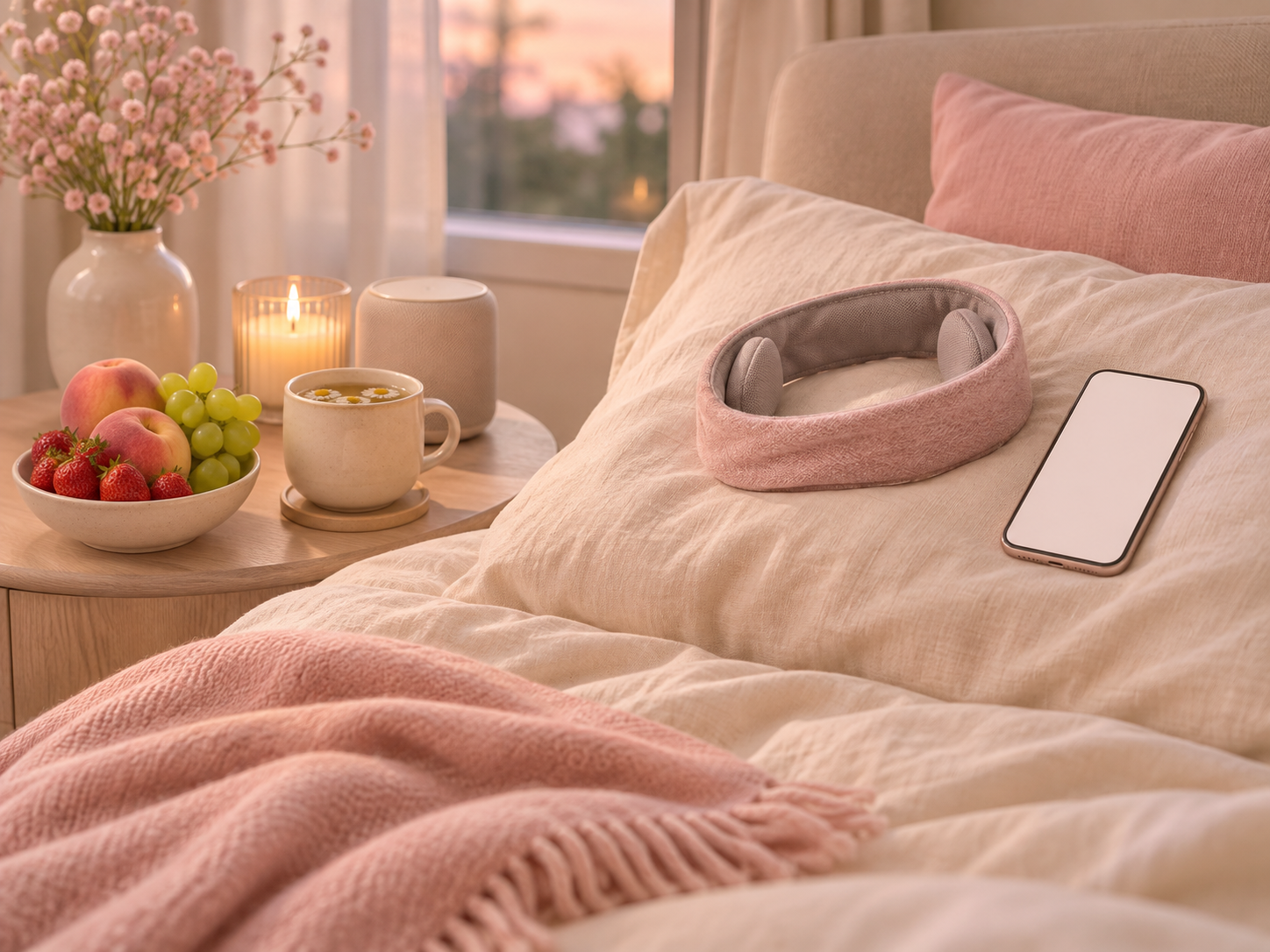
Some nights your body is exhausted but your brain won’t clock out. The to-do list keeps scrolling. You replay a conversation from three days ago. You check the clock and do the math on how many hours you have left. Sound familiar?
For a lot of people, the fix isn’t silence. It’s the right kind of sound: something soft, slow and steady enough to give a busy mind somewhere gentle to rest. That’s where sleep music comes in, and it’s why we want to share one of our favorite finds: Sleep Fruits Music.
This post is a little different from our usual. It’s part recommendation, part sleep guide. You’ll find Sleep Fruits right here to play, what the research actually says about music and sleep, how to build a calming wind-down routine, how to use sleep sounds safely around babies, and the bigger sleep habits that make music work even better. We aren’t sponsored by Sleep Fruits, and we don’t earn anything from any links in this post. We just think it’s lovely.
Meet Sleep Fruits Music
Sleep Fruits Music is a Netherlands-based project that makes calm, downtempo and ambient music, the kind of soft, wordless soundscapes designed to help you relax, focus or drift off. Music profiles describe it as blending ambient textures, captivating melodies and gentle beats to lull listeners into a state of calm and reflection.
There’s also a sister project, Ambient Fruits Music, with a similar dreamy sound, and releases like “Deep Sleep and Baby Sleep,” a two-hour collection made for winding down. If you find a track you love, it’s worth exploring the rest of the catalog to build a small rotation of favorites, so bedtime never feels stale.
What we love about it:
- 🌙LongAll-night mixes
Long videos, like the 10-hour “Calm Ambient Sounds,” mean no ads or abrupt endings jolting you awake mid-dream (depending on your app settings).
- 🎵SoftNo lyrics, no surprises
Mostly wordless, slow and smooth, so there’s nothing to latch onto or sing along with.
- 🍓SweetGentle and cozy
The vibe is warm and dreamy, not cold or eerie, which makes it easy to keep on in the background.
- 📱EasyFree to find
Available on YouTube and Spotify, so you can save it wherever you already listen.
Press play
Watch and listen on YouTube
Start here if you want a long, uninterrupted session. “Calm Ambient Sounds 10 Hours” is perfect for falling asleep, focusing or a slow Sunday morning.
Follow on Spotify
Prefer Spotify? Follow Sleep Fruits Music to save tracks and albums to your own sleep playlist, and download them for offline listening if your plan allows.
Quick tip: On YouTube, ads can interrupt free playback, and the playlist may roll into other videos when one ends. If ads or autoplay wake you up, try Spotify, download tracks for offline listening, or turn off autoplay before bed.
Why sleep music can actually help
This isn’t just a vibe. There’s real research behind music for sleep.
A 2022 Cochrane review, one of the most rigorous types of research summaries, looked at randomized trials of music listening for adults with insomnia. It found a beneficial effect of music on sleep quality. Across 10 studies that measured sleep quality, music probably led to a large improvement compared with no treatment or usual care, and the authors rated that evidence as moderate quality.
The same review was honest about the limits. Three studies with objective sleep measures showed music may not improve things like how fast people fall asleep or total sleep time compared with no treatment. So music seems to help people feel like they sleep better, even if lab measures don’t always show big changes. For many of us, feeling more rested is the whole point.
Research in older adults points the same way. A 2021 review in the Journal of the American Geriatrics Society found that adults 60 and older living at home slept better when they listened to music for 30 minutes to an hour at bedtime, and that calm music worked better than rhythmic music. Benefits were greater when people kept it up for more than four weeks.
- 😴QualityBetter rated sleep
Studies suggest music can improve how well people feel they slept.
- 🧘♀️CalmA gentle off switch
Calm music may help slow breathing and give racing thoughts something soft to follow.
- 🔇MaskingCovers background noise
Steady sound can soften traffic, snoring partners or a noisy house.
- 📅RoutineA sleep cue
Playing the same music nightly can become a signal to your brain that it’s time to rest.
What makes music sleepy
Not all music is sleep music. The studies above mostly used calm, sedative music. Here’s what to look for:
- Slow tempo. Research on older adults describes calming music as having a slow tempo of about 60 to 80 beats per minute and a smooth melody.
- No lyrics. Words pull your brain into listening and thinking. Instrumental or ambient tracks are easier to tune out.
- Few surprises. No sudden drops, loud crescendos or sharp sounds that could startle you awake.
- Steady volume. Music that stays at an even, low level all the way through.
- Something you like. If a track annoys you, it won’t relax you, no matter how “scientific” it is. Choose what feels soothing to you.
That’s exactly why ambient projects like Sleep Fruits work well for so many people: they’re slow, wordless, smooth and long.
Music, white noise or rain? Choosing your sound
Sleep music is just one option. Different sounds suit different people, and it’s worth experimenting to find your favorite.
- 🎶Ambient musicSoft and melodic
Slow, wordless music like Sleep Fruits. Great if silence feels too loud and you want something gently pleasant to follow.
- 💨White noiseSteady hiss
Like a fan or static. Good at masking sudden noises, though some people find it harsh.
- 🌧️Pink or brown noiseDeeper and softer
Lower, rumbly versions of white noise that many people find more soothing. Research on these is still early.
- 🌊Nature soundsRain, waves, forest
Familiar, cozy sounds. Watch for tracks with sudden thunder or bird calls that could startle you.
- 📖Sleep storiesCalm narration
Slow, boring-on-purpose stories. Helpful if your mind needs gentle words to follow instead of your own thoughts.
- 🥂Mix and matchLayer them
Some people like ambient music with soft rain underneath. There’s no wrong combination if it helps you rest.
Build your own sleep playlist
If you like variety, build a short, dependable playlist of your own. A few tips:
- Start with a few long tracks rather than many short ones, so there are fewer transitions.
- Keep the mood consistent. Avoid shuffling an upbeat track in between slow ones.
- Listen during the day first. Make sure nothing jumps out with a sudden sound or change in volume.
- Name it clearly, like “Sleep,” so it’s one tap away at night.
- Download it if your app allows, so a weak signal or ad doesn’t interrupt.
How to use sleep music well
- Keep it quiet. Set the volume just loud enough to hear, softer than a normal conversation. You should be able to hear yourself think, but not every word of the neighbor’s TV.
- Use a speaker, not earbuds, if you can. A small speaker across the room is gentler on your ears than earbuds all night. If you need headphones, choose soft sleep headphones and keep the volume low.
- Set a timer. Many apps let you set a sleep timer for 30 to 60 minutes, matching what was studied. Or play it all night if waking to silence bothers you.
- Silence your phone. Turn on Do Not Disturb, dim the screen, and put the phone face down or across the room once the music is going.
- Pick your playlist ahead of time. Scrolling for the perfect track at midnight wakes you up. Save one or two go-to mixes.
- Give it a few weeks. Research in older adults found bigger benefits after more than four weeks. Consistency helps music become a cue.
A simple 30-minute wind-down routine
Sleep music works best as part of a routine. Here’s a gentle one to try:
- 30 minutes beforeDim the lights and start your Sleep Fruits mix on low. Put devices on Do Not Disturb.
- 25 minutes beforeWash your face, brush your teeth and change into something soft.
- 20 minutes beforeMake tomorrow easier: lay out clothes, pack the diaper bag or jot down your to-do list so it’s out of your head.
- 15 minutes beforeGentle stretches or a few slow breaths: in for four, out for six.
- 10 minutes beforeRead a few pages of a paper book, journal, or just lie down and listen.
- Lights outLet the music play. If thoughts pop up, notice them, then bring your attention back to the sound.
Looking for a calming book to read during wind-down? Our reading list for women has plenty of gentle picks.
If you still can’t fall asleep
Some nights the music plays and sleep still doesn’t come. That’s normal. A few things that may help:
- Don’t watch the clock. Turn it away from you. Counting hours left usually makes it harder to relax.
- Get up after a while. If you’ve been awake for what feels like 20 minutes, sleep experts often suggest getting up, going somewhere dim and doing something calm, like listening to music on the couch, until you feel sleepy again.
- Write down the worries. Keep a notepad by the bed. Getting thoughts on paper can stop them from looping.
- Focus on the sound. Gently bring your attention back to the music each time your mind wanders, like a mini meditation.
- Rest still counts. Lying quietly with your eyes closed isn’t the same as sleep, but it’s more restful than worrying about not sleeping.
More than bedtime: other ways to use it
- 💻WorkFocus sessions
Wordless ambient music can make a great background for deep work or studying.
- 🧘MindMeditation and breathing
A soft soundtrack for a 10-minute meditation or a few minutes of breathing.
- 🛀Self-careBath time
Turn a quick bath into a mini spa night.
- ✈️TravelPlanes and hotels
Familiar sleep music can make an unfamiliar room feel more like home.
- 😴RestPower naps
Set a 20-minute timer and let the music carry you into a short rest.
- 🌿CalmStressful moments
Five minutes of calm music in the car before walking into a hard meeting or appointment.
For tired new moms
If you’re in the newborn season, “just get more sleep” is about the least helpful advice there is. But sleep music can still help you make the most of the rest you do get.
- Fall back asleep faster. After a night feed, soft music can give your mind something to settle on instead of worrying.
- Nap when you can. A short playlist can signal your brain that it’s rest time, even in the middle of the afternoon.
- Calm night feeds. Very quiet ambient music during feeds can make 3 a.m. feel a little cozier for both of you.
- Ask for help. If a partner or family member can take one feed, protect that block of sleep with music, an eye mask and your phone out of reach.
Sleep loss and new motherhood are hard. If you’re feeling isolated, our post on new mom loneliness might help you feel less alone. And if exhaustion comes with persistent sadness, anxiety or hopelessness, please talk with your doctor, or call or text the National Maternal Mental Health Hotline at 1-833-852-6262.
Sleep sounds for babies: use them safely
Many parents use white noise or soft music to help babies sleep. That can be fine, but volume and distance matter a lot for little ears.
A 2014 study in Pediatrics tested 14 infant sleep machines at maximum volume. All 14 exceeded 50 dBA, the recommended noise limit for infants in hospital nurseries, when measured close to where a baby would be. Even from about 2 meters away, all but one could still exceed that limit. The researchers recommended placing machines as far from the baby as possible, at low volume, and for a short time.
- Keep it across the room, never in or on the crib.
- Keep the volume low, about the level of a soft shower or quiet conversation, never loud.
- Use a timer if your device has one, so it doesn’t play at full volume all night.
- Skip the phone in the crib. Keep phones and cords out of the sleep space.
- Follow safe sleep basics: baby on their back, on a firm flat surface, with no pillows, blankets or bumpers in the crib.
- Ask your pediatrician if you have questions about sleep sounds for your baby.
Sleep through every season
Women’s sleep often shifts with the seasons of life. Sleep music can be a steady, comforting tool through all of them.
- Your cycleSome women notice lighter or more restless sleep in the days before their period. A consistent wind-down routine can make those nights easier.
- PregnancyDiscomfort, heartburn and bathroom trips can break up sleep. Soft music can help you settle back down. Ask your provider about any sleep concerns.
- New motherhoodSleep comes in pieces. Music can help you fall back asleep faster between feeds and make the most of naps.
- PerimenopauseNight sweats and waking at 3 a.m. are common. A cool room, light layers and calm music by the bed can help. Talk to your doctor if sleep changes are affecting your life.
- Busy seasonsWork deadlines, caregiving or grief can make it hard to switch off. Familiar sleep music can be a small, reliable comfort when everything else feels unsettled.
Whatever season you’re in, poor sleep isn’t a personal failing. It’s worth caring for, and worth asking for help with.
Beyond the music: sleep habits that help
Music is a lovely tool, but it works best alongside healthy sleep habits. Adults need at least seven hours of sleep per night, according to the American Academy of Sleep Medicine, and a 2026 CDC report found that roughly 30.5% of U.S. adults slept less than seven hours on average in 2024.
A few habits that make a real difference:
- Keep a regular schedule. Going to bed and waking up at about the same time, even on weekends, helps your body clock.
- Get morning light. A walk outside in the morning helps set your rhythm. Bonus points if it’s with a friend or a stroller.
- Move during the day. Regular physical activity is linked with better sleep. Just finish intense workouts a few hours before bed if they leave you wired.
- Watch caffeine timing. Try to keep coffee and caffeinated drinks to earlier in the day.
- Be thoughtful with alcohol. It can make you sleepy at first but tends to disrupt sleep later in the night.
- Make your room sleepy. Cool, dark and quiet. Blackout curtains and an eye mask help.
- Park the phone. Screens before bed keep your brain engaged. Let the music be the only thing playing.
- Hydrate earlier. Drink well through the day and taper off in the evening to cut down on midnight bathroom trips. Our guide to how much water you need covers daily needs.
Sleep gear we like
You don’t need anything fancy to enjoy sleep music. But a few simple tools can make it more comfortable. These links go to general Amazon searches, and we don’t earn anything from them.
-
Sleep headphones
For side sleepers and shared rooms
Soft headband-style headphones are flatter and more comfortable than earbuds when your head is on a pillow.
Look for: A soft, washable band and a thin speaker. Keep volume low.
-
A small bedside speaker
Easier on your ears
A compact speaker on the nightstand or dresser fills the room softly, without anything in your ears all night.
Look for: Bluetooth, a sleep timer and a low minimum volume.
-
A silk or contoured eye mask
For naps and early sunrises
Blocks light for daytime naps, travel and summer mornings. Pairs perfectly with soft music.
Look for: Soft fabric and an adjustable strap.
-
Blackout curtains
For a darker room
Helpful for night-shift workers, nap times and kids’ rooms during long summer evenings.
Look for: Thermal blackout panels sized to cover the window edges.
When to talk to a doctor
Sleep music is a great helper, but it isn’t a treatment for sleep disorders. Talk with your doctor if:
- You regularly have trouble falling or staying asleep for several weeks.
- You snore loudly, gasp or stop breathing during sleep, or wake up with headaches. These can be signs of sleep apnea.
- You feel very sleepy during the day, even after a full night in bed.
- Your legs feel uncomfortable or jumpy at night.
- Poor sleep comes with low mood, anxiety or hopelessness.
- You’re relying on sleep medications or alcohol to fall asleep.
For ongoing insomnia, doctors often recommend cognitive behavioral therapy for insomnia (CBT-I), which can be very effective. Music can still be part of your wind-down while you work on the bigger picture.
If sleepless nights come with feeling hopeless or thoughts of harming yourself, please reach out. Call or text 988 any time. New and expecting moms can call or text the National Maternal Mental Health Hotline at 1-833-852-6262, 24/7.
Myths
- Myth #1What you’ve heard
“You need complete silence to sleep well.”
The truthSome people sleep best in silence, but research suggests calm music can improve sleep quality for many people with sleep trouble.
- Myth #2What you’ve heard
“Any music will do.”
The truthCalm, slow music worked better than rhythmic music in studies of older adults. Wordless and steady is best.
- Myth #3What you’ve heard
“Louder white noise works better for babies.”
The truthInfant sleep machines can get loud enough to be a hearing concern. Keep them low and across the room.
- Myth #4What you’ve heard
“Sleep music fixes insomnia.”
The truthIt can help, but ongoing insomnia deserves a conversation with your doctor about proven treatments like CBT-I.
- Myth #5What you’ve heard
“It should work the very first night.”
The truthSome benefits grow over time. In older adults, listening for more than four weeks showed bigger improvements.
Your turn
Tonight, try a one-week sleep music experiment. Save a Sleep Fruits mix, set it on low 30 minutes before bed, and put your phone on Do Not Disturb. Each morning, rate your sleep from 1 to 10. After a week, see what changed.
Good sleep isn’t a luxury. It’s the foundation for your mood, energy, patience and health. And sometimes, the simplest tools help the most: dim lights, a soft playlist and a few minutes to let the day go.
If you want women around you who take rest as seriously as everything else, from new mom circles to morning walk clubs, we’d love to have you. Sweet dreams.
Sources
- Viberate: Sleep Fruits Music artist profile
- AllMusic: Sleep Fruits Music, Calm Ambient Sounds
- Cochrane (2022): Music for insomnia in adults
- Jespersen et al. (2022): Listening to music for insomnia in adults (abstract)
- Journal of the American Geriatrics Society (2021): Music and sleep quality in older adults (summary)
- Health in Aging Foundation: Does listening to calming music at bedtime help you sleep?
- American Academy of Pediatrics (2014): Infant sleep machines and hazardous sound pressure levels (summary)
- Sleep Review: Infant sleep machines may produce hazardous sound levels
- ABC30: CDC report finds nearly one-third of U.S. adults not getting enough sleep
We aren’t sponsored by Sleep Fruits Music and don’t earn anything from any links in this post. Product links are general Amazon searches. This article is for general information and isn’t medical advice.
- Sleep
- Sleep music
- Self-care
- Relaxation
- New moms
Find your strength. Find your girls.
Tell us a little about where you are right now. We’ll reply within two business days with circles, walk clubs and coaching to help you rest, move and feel more like yourself.
Questions
Good questions.
What is Sleep Fruits Music?
Sleep Fruits Music is a Netherlands-based project that makes calm, downtempo and ambient music for sleep, relaxation, focus and meditation. You can find it on YouTube and Spotify.
Does listening to music help you sleep?
Research suggests it can. A 2022 Cochrane review found music likely improves sleep quality in adults with insomnia, though effects on objective measures like total sleep time were less clear.
What kind of music is best for sleep?
Calm, slow, wordless music tends to work best. Studies describe calming music as around 60 to 80 beats per minute with a smooth melody. Most importantly, choose something you find soothing.
Is it okay to sleep with music on all night?
For most adults, low-volume music from a speaker is fine. Many studies used 30 to 60 minutes at bedtime, so a sleep timer is a good option. If you use headphones, keep the volume low.
Is white noise safe for babies?
It can be used safely if you keep it low and across the room, never in the crib. A 2014 study found infant sleep machines can get loud enough to be a hearing concern at close range. Ask your pediatrician if you have questions.
How long should I listen to sleep music before bed?
Many studies used 30 to 60 minutes at bedtime. In older adults, benefits were greater when people kept it up nightly for more than four weeks.
 Our story
 Community