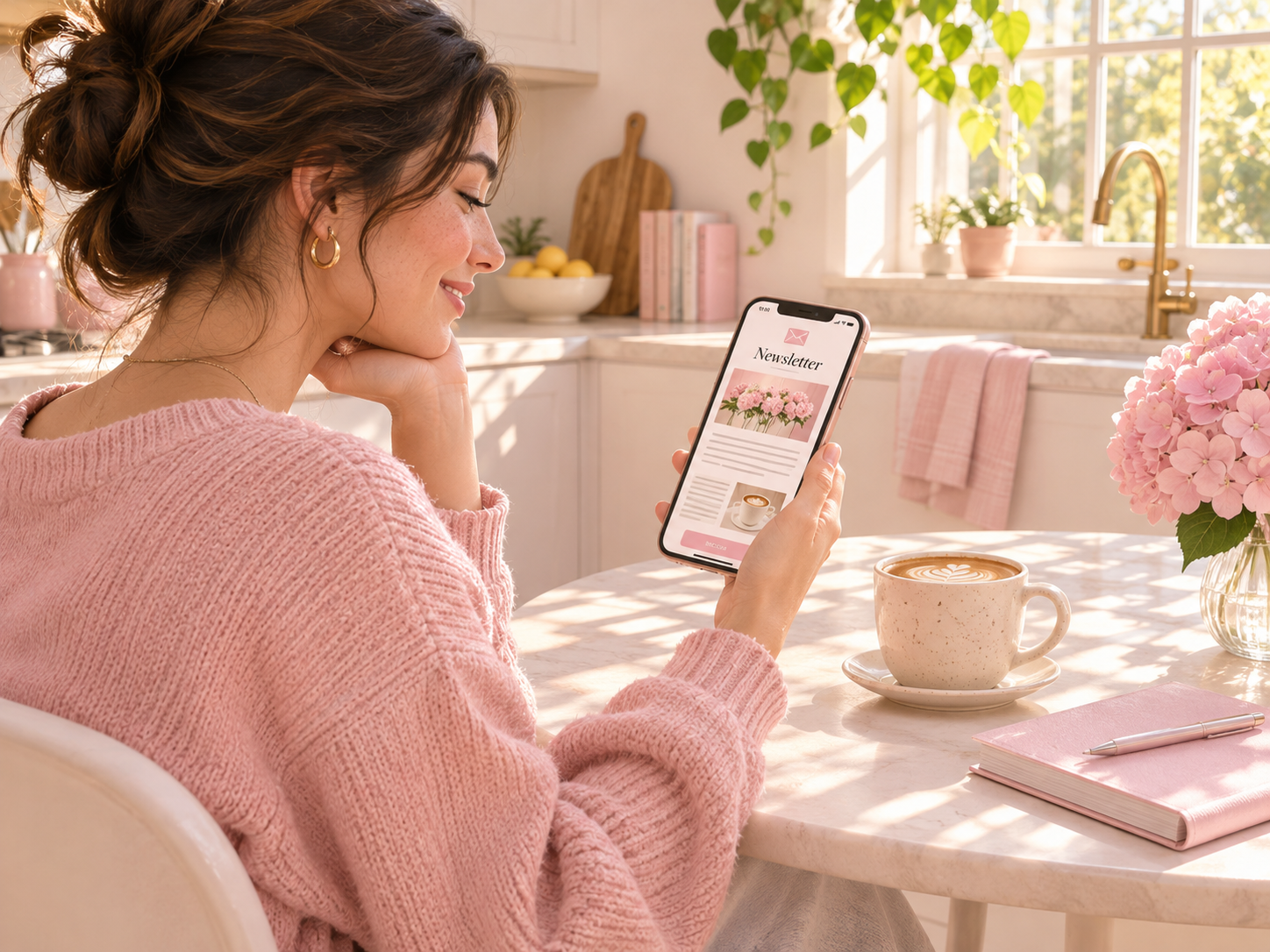
Your feed is loud. Your inbox doesn’t have to be. The right newsletters feel less like more email and more like a smart friend checking in: a calm explanation of the news, a doctor cutting through health myths, a recipe for tonight or a few lines that make you feel less alone.
Here are the best newsletters written for women, from daily news briefings and data-driven parenting advice to strength training, money, midlife style and pure joy. Every one was still publishing in 2026.
None of these picks are sponsored, and we don’t earn anything if you subscribe. Prices and subscriber numbers come from each newsletter’s own site or recent coverage and can change. We’re health coaches, not doctors or financial advisors, so health and money newsletters are a starting point, not personal advice.
Why newsletters are worth your inbox
Social media is built to keep you scrolling. A newsletter ends. You read it, you close it and you get on with your day. That simple difference is why so many women have turned to newsletters for news, health information and community.
- 🧘No endless scrollCalmer than a feed
A newsletter arrives, gets read and is done. No algorithm deciding what makes you angry next.
- 👩💻Doctors, journalists, authorsWritten by real experts
Many of the best are written by OB-GYNs, economists, editors and authors who answer to readers, not an algorithm.
- 💬Comments and threadsBuilt-in community
Many newsletters have comment sections, chats and live events where readers swap advice.
- 🌱Every stageMade for your season
Whether you’re pregnant, deep in toddlerhood, in perimenopause or retired, there’s a newsletter written for exactly where you are.
Newsletters have also become a home for women’s media as magazines shrink. A 2026 roundup of women’s health newsletters from Rescripted noted that SELF closed after 47 years and that legacy outlets are cutting their health desks, while many trusted voices now write independently on Substack.
How we picked
- Written by or for women: each one speaks to women’s lives, health, work, money or joy.
- Still publishing: every newsletter on this list sent new issues in 2026.
- Worth your time: well written, well sourced where it matters and genuinely useful.
- A free way in: every pick has a free version or free issues, so you can try before you pay.
- A range of voices: news, culture, health, motherhood, money, midlife and food.
The best newsletters for women
Tap a category to filter. Each pick includes a suggestion for where to start.
- News & the day
1.📰The Daily Skimm
Written by theSkimm. The morning news, explained in plain language with a focus on what it means for your life, work, money and health. It’s one of the biggest newsletters for women, with more than 5.9 million subscribers.
Start with: Read it with your coffee for a week. If you like the format, theSkimm also has weekly newsletters on health, money and shopping.
Subscribe → - News & the day
2.☕Wake-Up Call
Written by Katie Couric Media. Katie Couric’s daily morning rundown of the must-know news, mixed with health, culture and lifestyle stories and a few good deals.
Start with: Skim the top story, then scroll to the health and wellness section, which often covers women’s health topics like menopause.
Subscribe → - News & the day
3.☀️The Sunday Paper
Written by Maria Shriver. A weekly mix of news, inspiration, health and spirituality from journalist Maria Shriver, built around rising “above the noise.” Its paid membership adds the newsletters Be Healthy and Be Lit.
Start with: Start with Maria’s weekly “I’ve Been Thinking” essay, then the “News Above the Noise” roundup.
Subscribe → - News & the day
4.🍽️Feed Me
Written by Emily Sundberg. A daily newsletter about business, media, food and culture, told through the lens of a well-connected New Yorker. Funny, gossipy and surprisingly useful for anyone curious about how brands and industries really work.
Start with: Read a few free issues and the comment section, which is half the fun.
Subscribe → - Culture & big ideas
5.💌The Ann Friedman Weekly
Written by Ann Friedman. A Friday email Ann Friedman has written every week since 2013: smart links, funny observations and her signature pie charts. It’s like getting a note from your most interesting friend.
Start with: Sign up on a Thursday and see if it becomes your Friday ritual.
Subscribe → - Culture & big ideas
6.🧠Culture Study
Written by Anne Helen Petersen. Deeply reported essays, interviews and community threads about work, burnout, parenting, small towns and the culture that surrounds us. Culture Study now lives on Patreon.
Start with: Look for her essays on work and burnout, the topic she’s best known for.
Subscribe → - Culture & big ideas
7.💭Maybe Baby
Written by Haley Nahman. Essays, an advice column and her famous “15 things I consumed this week” lists, all about modern life, pop culture and how we feel about both. She has written more than 700 issues.
Start with: Start with her favorite-things roundups, then try an advice column.
Subscribe → - Health & body
8.🩺The Vajenda
Written by Dr. Jen Gunter, OB-GYN. An OB-GYN and bestselling author fact-checks women’s health claims, from menopause hormone therapy to protein trends and supplement marketing. It has more than 128,000 subscribers.
Start with: Read her deep dives on menopause hormone therapy, then her reality checks on viral wellness trends.
Subscribe → - Health & body
9.🔥Hot Flash by ParentData
Written by Dr. Gillian Goddard. A weekly newsletter from Emily Oster’s ParentData about navigating your health and hormones in the post-reproductive years, written by Dr. Gillian Goddard.
Start with: Pick the issue closest to your biggest question right now, whether that’s sleep, hot flashes or hormone therapy.
Subscribe → - Health & body
10.💪She’s a Beast
Written by Casey Johnston. A newsletter about being strong physically, mentally and emotionally, including her long-running “Ask a Swole Woman” column. Casey is the author of A Physical Education and the beginner program LIFTOFF: Couch to Barbell.
Start with: Start with her beginner-friendly posts on why strength training gets a bad rap.
Subscribe → - Health & body
11.🍞Burnt Toast
Written by Virginia Sole-Smith. A newsletter and podcast that pushes back on diet culture and fatphobia, with practical advice on food, bodies and raising kids who feel good in theirs.
Start with: Try an episode of the Burnt Toast podcast or her essays on parenting and food.
Subscribe → - Motherhood
12.📊ParentData
Written by Emily Oster. Economist Emily Oster translates research on pregnancy and parenting into calm, data-based answers, with a team of expert writers. The newsletter has hundreds of thousands of subscribers.
Start with: Search the archive for the question keeping you up at night, from sleep training to screen time.
Subscribe → - Motherhood
13.🧽In Pursuit of Clean Countertops
Written by Sara Petersen. A sharp, funny newsletter about motherhood, feminism and momfluencer culture, and why so many of us feel pressure to have a picture-perfect home.
Start with: Read anything in her “Momfluenced” series if you’ve ever compared your kitchen to Instagram.
Subscribe → - Money & work
14.💰HerMoney
Written by Jean Chatzky. A free, twice-weekly newsletter with money tips, saving strategies and answers to readers’ questions from financial journalist Jean Chatzky. More than 100,000 women read it.
Start with: Send in a question of your own. Jean answers reader questions personally.
Subscribe → - Midlife & aging
15.👗Girls of a Certain Age
Written by Kim France. Style advice, shopping picks, pop culture and opinion for women over 40, from the founding editor in chief of Lucky magazine. It has more than 20,000 subscribers.
Start with: Start with her Friday wrap-up for a taste of everything.
Subscribe → - Midlife & aging
16.⏳Oldster Magazine
Written by Sari Botton. Essays, interviews and questionnaires about what it means to age at every stage of life, from your 20s to your 100s. It has more than 56,000 subscribers.
Start with: Read a few of the Oldster questionnaires, then answer the questions for yourself.
Subscribe → - Food & joy
17.🍝A Newsletter
Written by Alison Roman. Recipes, stories and unsolicited advice from the bestselling cookbook author. It was once the most popular food newsletter on Substack and now lives on her own website.
Start with: Pick one recipe this week and make it on a weeknight.
Subscribe → - Food & joy
18.✍️For Dear Life
Written by Maggie Smith. A newsletter about writing and the other things that make this life dear, from the poet behind “Good Bones” and the host of The Slowdown podcast. It has more than 44,000 subscribers.
Start with: Read it slowly on a Sunday morning. It’s especially lovely if you journal.
Subscribe →
Quick picks by mood
Not sure where to start? Find the line that sounds like you.
A newsletter for every season of life
What you need from your inbox changes as your life does. Here’s a simple way to match newsletters to the season you’re in right now:
- 🤰ParentDataPregnant or newly postpartum
Evidence-based answers to the questions that keep you up at night, without the panic spiral of late-night Googling. Pair it with our guide to postpartum depression vs. the baby blues.
- 🍪Clean Countertops, Burnt ToastRaising little kids
Writers who make you laugh about the mess, question the pressure to be perfect and help you raise kids with a healthy relationship to food.
- 💼Feed Me, Culture Study, HerMoneyBuilding a career
Smart takes on work, money, burnout and the business world, written for women who want to understand how it all works.
- 🌡️The Vajenda, Hot FlashPerimenopause and beyond
Doctors who explain hormones, menopause therapy and the latest research clearly and without fear-mongering.
- 🌟Oldster, Girls of a Certain AgeReinventing at any age
Honest, funny, stylish writing about getting older and refusing to disappear.
- 🌿For Dear Life, A NewsletterNeeding a soft place to land
Poetry, recipes and small pleasures for weeks when you need comfort more than information.
Free vs. paid: what you actually get
Most newsletters on this list use a “freemium” model: some issues are free, and a paid subscription unlocks more. Here’s what paying usually adds:
- More issues: extra weekly posts, deep dives or the full archive.
- Community: comment sections, subscriber chats, live Q&As and events.
- Extras: bonus podcasts, recipes, guides or discounts.
- Support for the writer: many of these women earn their living from paid subscriptions.
A good rule: read the free version for a month. If you find yourself looking forward to it, or forwarding it to friends, that’s a sign a paid subscription is worth it. Many Substack newsletters also offer a free trial, and several let you gift a subscription, which makes a thoughtful present. Our guide to subscription boxes for women has more gift ideas that keep giving.
If your budget is tight, you don’t need to pay for anything to get real value. The free versions of every newsletter on this list are worth reading on their own, and many writers make a few of their best paid posts free each month. When you do decide to pay, think of it less like a subscription and more like buying a book from a writer you love: a small way to keep her work going.
A few specifics, as listed on their sites in 2026: Feed Me costs $80 a year, The Sunday Paper’s PLUS membership costs $72 a year and ParentData offers a 14-day free trial of its paid tier.
Reading health and money newsletters wisely
Health and money newsletters can be incredibly helpful, especially ones written by doctors and financial experts. They can also accidentally fuel anxiety or overconfidence. A few habits help:
- Check who’s writing. A doctor, a journalist and someone sharing her own experience can all be worth reading, but they’re different kinds of sources.
- Look for links. Good health and money newsletters show their sources so you can read the research yourself.
- Notice what’s for sale. Sponsored products, supplements and affiliate links aren’t bad, but they should be clearly labeled.
- Be wary of absolutes. “Every woman should” or “never eat” is a sign to slow down.
- Check how you feel after reading. The best newsletters leave you informed, calmer or inspired, not anxious or ashamed.
A newsletter is a great place to learn the right questions. Your doctor or financial professional is the place to get answers about your own situation.
How to keep your inbox calm
The goal is a few newsletters you love, not a pile of unread email that makes you feel behind. Rescripted’s advice is refreshingly practical: almost nobody reads twelve newsletters, so pick two or three that match where you are right now.
- 📁InboxGive them a folder
Set up a filter so newsletters skip your main inbox and land in one “Reading” folder you open when you have time.
- 📱Substack and moreTry a reading app
Many of these live on Substack, so the Substack app can collect them in one feed, away from your work email.
- ⏰RitualPick a reading time
Sunday morning coffee, a lunch break or the school pickup line. A set time turns a cluttered inbox into a treat.
- ✂️Less is moreKeep it to two or three
Start small. You can always add more once your favorites become a habit.
- 👋Seasons changeUnsubscribe without guilt
If a newsletter stops serving you, let it go. Your needs will change, and the archive will still be there.
- 📨Share itForward the good ones
Send a great issue to a friend. It’s an easy way to start a conversation and stay connected.
How to find more newsletters you’ll love
Once you have a few favorites, finding more is easy. A few places to look:
- Follow the recommendations. Many Substack writers list the newsletters they read on their own page. If you love a writer, chances are you’ll love who she reads.
- Browse the charts. Substack publishes top lists by category, including parenting, culture, food and health, which are a quick way to see what other readers love.
- Ask your friends. “What newsletters do you actually open?” is a great group-chat question, and the answers are usually better than any algorithm.
- Notice who your favorite writers quote. When a newsletter you trust links to another writer again and again, give that writer a try.
- Check in on your needs. Every few months, ask yourself what you want more of: news, comfort, health information, money help or fun. Then adjust.
Try a one-week newsletter reset
If your inbox is already overflowing, start with a quick reset before adding anything new:
- UnsubscribeFrom five emails you never openClear
- Pick twoFrom this list that fit your seasonChoose
- Make a folderSo they skip your main inboxOrganize
- Check inKeep what you looked forward toReflect
The goal isn’t to read more. It’s to make the things you do read feel worth it.
Thinking about starting your own?
Many of the newsletters on this list started small, with one woman writing about something she cared about. Haley Nahman has written that she created Maybe Baby on a lark, without doing any research on which platform to use. Sari Botton launched Oldster in 2021 when, in her words, it was more of an idea than an actual magazine. Today both have loyal communities of readers. If you have something to say, a newsletter is one of the simplest ways to start:
- Pick a focus. The best newsletters are about something specific, even if it’s “the things I’m thinking about this week.”
- Choose a schedule you can keep. Weekly or every other week is plenty to start.
- Use a free platform. Substack, Ghost, beehiiv and others let you start for free.
- Write like you talk. Readers subscribe to a voice, not a brand.
- Share it with ten people. Every big newsletter started with a handful of readers.
If you’d like help getting your writing found, Ritner Digital, the digital marketing practice behind Pink in Progress, helps with content strategy and making your work easier to discover in search.
More ways to keep learning
If you’d rather listen than read, our list of the best podcasts for women over 40 pairs perfectly with a walk. If you’re craving something offline, try our guide to hobbies for women. And if you love supporting women behind the work, browse our list of women-owned brands worth supporting.
The best newsletter is the one you actually look forward to opening. Pick one this week, read it with your coffee and see how it feels.
Sources
- Rescripted (2026): The best women’s health email newsletters
- theSkimm: Newsletters and subscriber counts
- Katie Couric Media: Wake-Up Call
- Maria Shriver’s Sunday Paper: Membership tiers
- Axios (2025): Emily Sundberg expands Feed Me
- Feed Me (2026): Pricing note
- Ann Friedman: The Ann Friedman Weekly
- Reletter: Culture Study moves to Patreon
- Maybe Baby: Five years of emailing you
- Oldster Magazine (2021): Welcome to Oldster Magazine
- Maybe Baby: About Haley Nahman’s newsletter
- The Vajenda: Dr. Jen Gunter’s newsletter
- ParentData: What is Hot Flash?
- Wikipedia: Casey Johnston and She’s a Beast
- Casey Johnston: She’s a Beast
- Burnt Toast: Virginia Sole-Smith’s newsletter
- Brown University: Emily Oster profile
- ParentData: 14-day free trial
- In Pursuit of Clean Countertops: About Sara Petersen’s newsletter
- HerMoney: Newsletter sign-up
- HerMoney (2026): Meet the newsletter that makes your money make sense
- Girls of a Certain Age: Kim France’s newsletter
- UAlbany Magazine: Sari Botton and Oldster
- Texas Public Radio / WBUR (2026): Oldster explores aging at all ages
- A Newsletter: Alison Roman
- Alison Roman: A new home for A Newsletter
- Substack: Top parenting newsletters
- For Dear Life: Maggie Smith’s newsletter
- Poetry Foundation (2026): Maggie Smith returns to host The Slowdown
This article is for general information and isn’t medical advice. Talk with your doctor or midwife about what’s right for you.
- Newsletters
- Women’s media
- Reading
- Self-care
- Recommendations
Read it. Then talk about it.
Tell us a little about you and your season of life. We’ll reply within two business days with circles where women talk about the things that matter.
Questions
Good questions.
What are the best newsletters for women?
Popular picks include The Daily Skimm for news, The Vajenda by OB-GYN Dr. Jen Gunter for women’s health, ParentData by Emily Oster for parenting, HerMoney by Jean Chatzky for money, Girls of a Certain Age for women over 40 and A Newsletter by Alison Roman for recipes.
What is the best daily news newsletter for women?
The Daily Skimm is one of the most popular, with more than 5.9 million subscribers. Katie Couric’s Wake-Up Call is another daily option that mixes news with health and lifestyle stories.
What is the best women’s health newsletter?
The Vajenda by OB-GYN Dr. Jen Gunter is a trusted pick for evidence-based women’s health. Hot Flash by ParentData covers health and hormones after the reproductive years, and She’s a Beast covers strength training.
Are there good newsletters for moms?
Yes. ParentData by economist Emily Oster offers data-based answers on pregnancy and parenting, and In Pursuit of Clean Countertops by Sara Petersen looks at motherhood and momfluencer culture.
What are good newsletters for women over 40?
Girls of a Certain Age by Kim France covers style and culture for women over 40, Oldster Magazine explores aging at every stage and Hot Flash by ParentData covers midlife health and hormones.
Are these newsletters free?
Every pick has a free version or free issues. Many also offer paid subscriptions with extra posts, archives and community features. For example, Feed Me costs $80 a year and The Sunday Paper PLUS costs $72 a year.
How many newsletters should I subscribe to?
Start with two or three that fit where you are right now. Use a folder or a reading app to keep them out of your main inbox, and unsubscribe guilt-free when one stops serving you.
What is a good money newsletter for women?
HerMoney by financial journalist Jean Chatzky is a free, twice-weekly newsletter with money tips, saving strategies and answers to readers’ questions.
 Life & culture
 Friendship
 Life & culture