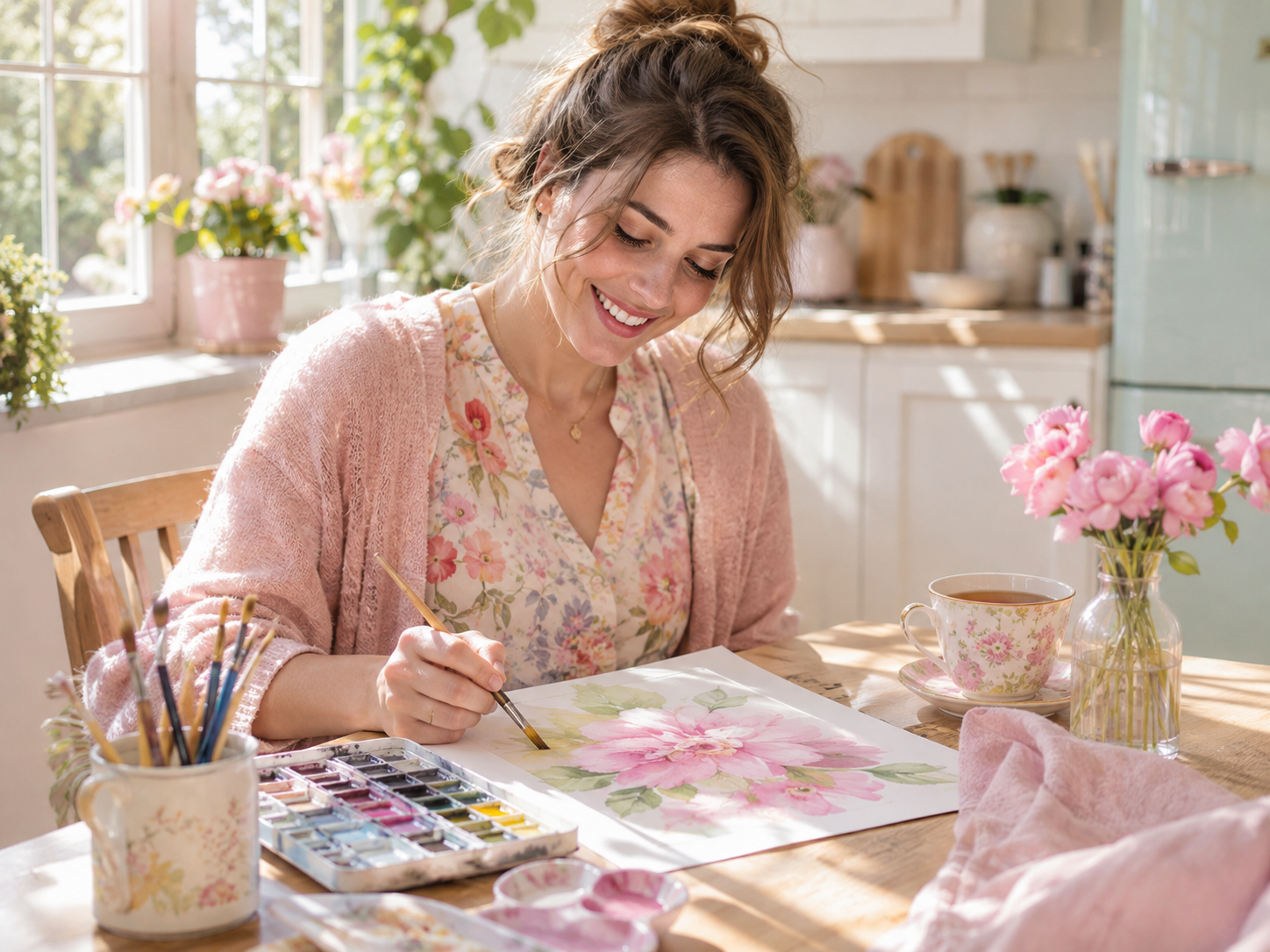
Somewhere between work, kids, caregiving, a diagnosis or a divorce, a lot of women look up and realize they don’t know what they enjoy anymore. Someone asks, “What do you do for fun?” and the honest answer is, “I don’t remember.”
If that’s you, a hobby can be one of the simplest ways back to yourself. Not a self-improvement project, not a side hustle, just something you do because you like it. Here are 30 hobbies to try, sorted by what you might be missing, plus what research says about why they help and how to actually start.
We’re health coaches, not therapists. If losing interest in everything has lasted more than two weeks, or you feel hopeless, please talk to a doctor or counselor. That can be a sign of depression, and it’s treatable. If you’re in crisis, call or text 988.
How women lose themselves
Losing your sense of self rarely happens all at once. It happens a little at a time, as your days fill up with what everyone else needs. And for many women, the math of the week just doesn’t leave much room.
Time-use data backs this up. A Pew Research Center analysis of the American Time Use Survey found that among employed, married adults ages 25 to 64, husbands spend about 28 hours a week on leisure and wives spend about 26, and the gap is wider among parents. An earlier Pew analysis found fathers had about three more hours of leisure time a week than mothers, and that mothers felt more exhausted and stressed during their leisure time. A 2024 report from the Gender Equity Policy Institute found women have 13% less free time than men on average, and mothers spend 2.1 times as much time as fathers on unpaid care and household work.
Other common reasons women lose touch with themselves include:
- 👶SeasonMotherhood
Your days revolve around little people, and your own interests quietly slip away.
- 🩺SeasonIllness or caregiving
Treatment, recovery or caring for someone else takes all your energy.
- 💔ChangeA breakup or divorce
If your hobbies were shared, you might not know which ones were really yours.
- 💼PressureWork that took over
Your job became your identity, and everything else got squeezed out.
- 🕊️LossGrief
The things you used to love can feel pointless or painful for a while.
- 🧳ChangeA move or empty nest
Your routines and community changed, and you haven’t rebuilt yet.
Why hobbies help
Hobbies aren’t just nice extras. Research suggests they’re linked to real benefits for mental health and well-being.
- Adults studiedHobbies linked to better well-being16 countries
- Studies reviewedOn the arts and health, by WHOArts
- Studies combinedGardening linked to better healthGardening
- Knitters surveyedOn calm, happiness and connectionCrafts
Hobbies and well-being
A 2023 study in Nature Medicine pooled data from 93,263 adults 65 and older in 16 countries. Having a hobby was linked to fewer depressive symptoms and higher self-reported health, happiness and life satisfaction. Life satisfaction had the strongest link. Because people were followed for four to eight years, the researchers found hobbies were also linked to later improvements, though an observational study can’t prove cause and effect.
The arts and health
A 2019 World Health Organization scoping review synthesized results from more than 3,000 studies and found a major role for the arts in preventing ill health, promoting health and helping manage illness across the lifespan.
Gardening
A meta-analysis of 22 studies found gardening was linked to a wide range of benefits, including less depression and anxiety, lower body mass index and higher life satisfaction, quality of life and sense of community.
Knitting and crafts
In a survey of more than 3,500 knitters published in the British Journal of Occupational Therapy, many reported feeling calmer and happier after knitting. A separate study from the University of Gothenburg found knitting helped people with mental health challenges unwind and gave them structure and an identity as a knitter.
The common threads: hobbies give you a sense of control, competence and purpose, a break from worry, and often a community. That’s exactly what gets lost when life swallows you up.
Start with what you miss
Instead of picking a hobby because it’s trendy, start with the feeling you miss most. Then match it to how much energy you have right now.
30 hobbies to try
Tap a category to filter the list. Each one includes who it’s good for, a tiny first step and a rough cost ($ = under about $30 to start, $$ = more).
- Create
1.🎨Watercolor painting
Good if: You want something creative that doesn’t have to look perfect.
Start small: Buy a student set and paint one sky or flower a night.
- Create
2.🧶Knitting or crochet
Good if: Your hands are restless and your mind needs quiet.
Start small: Learn one stitch from a free video and make a dishcloth.
- Create
3.🏺Pottery or clay
Good if: You want to get out of your head and into your hands.
Start small: Book a single drop-in wheel class at a local studio.
- Create
4.📝Journaling
Good if: You’ve lost track of what you think and want.
Start small: Write three lines a night: what happened, what you felt, what you want.
- Create
5.📷Photography
Good if: You want to notice beauty in ordinary days.
Start small: Take one photo a day on your phone for 30 days.
- Move
6.💃Dance class
Good if: You miss feeling playful in your body.
Start small: Try a beginner class like salsa, line dancing or barre.
- Move
7.🥾Hiking
Good if: You need fresh air and big views to think clearly.
Start small: Pick a short, easy trail near you and go on a weekend morning.
- Move
8.🏊Swimming
Good if: You want gentle movement that’s easy on your joints.
Start small: Check your local pool’s lap swim or adult lesson times.
- Move
9.🧘Yoga
Good if: You want to reconnect with your breath and body.
Start small: Try a beginner or gentle class, in person or online.
- Move
10.🏓Pickleball
Good if: You want to laugh, compete a little and meet people.
Start small: Look for a beginner clinic or open play at a park or rec center.
- Grow & make
11.🌱Gardening
Good if: You want to watch something grow because of you.
Start small: Start with herbs in a pot on a sunny windowsill.
- Grow & make
12.🍞Bread baking
Good if: You love slow, cozy rituals with a delicious payoff.
Start small: Bake one simple no-knead loaf this weekend.
- Grow & make
13.🪴Houseplants
Good if: You want a small daily ritual of care.
Start small: Choose one easy plant, like a pothos, and learn its needs.
- Grow & make
14.🪡Sewing and mending
Good if: You like practical skills that save money.
Start small: Learn to sew on a button and hem a pair of pants.
- Grow & make
15.🍳Cooking a new cuisine
Good if: Food is how you show love and you’re bored of your rotation.
Start small: Cook one new recipe from a different country each week.
- Learn
16.🗣️A new language
Good if: You dream about travel or want to stretch your brain.
Start small: Practice 10 minutes a day with a free app or library course.
- Learn
17.🎹A musical instrument
Good if: You always wished you’d kept up with piano or guitar.
Start small: Try a ukulele or keyboard and learn three chords.
- Learn
18.📚Book club
Good if: You miss reading and real conversation.
Start small: Join one at your library or bookstore, or start one with two friends.
- Learn
19.🌳Family history
Good if: You want to understand where you come from.
Start small: Interview an older relative and record their stories.
- Learn
20.🎓A class just for you
Good if: You love learning but school always meant pressure.
Start small: Take a community college or online class with no grade attached.
- Connect
21.🤝Volunteering
Good if: You want to feel useful outside your own four walls.
Start small: Give two hours to an animal shelter, food bank or library.
- Connect
22.🎤Choir or singing group
Good if: You love music and want to belong to something.
Start small: Look for a community choir with no audition.
- Connect
23.🎲Game nights
Good if: You miss easy, laughing-out-loud fun with friends.
Start small: Host one board game night and ask everyone to bring a snack.
- Connect
24.🍽️Supper club
Good if: You love food and want regular time with friends.
Start small: Pick a monthly date and rotate who hosts.
- Connect
25.🚶♀️Walking group
Good if: You want movement and connection in one.
Start small: Invite two friends for a weekly walk at the same time and place.
- Calm & solo
26.🧩Jigsaw puzzles
Good if: Your mind races and you need something absorbing and calm.
Start small: Start with a 500-piece puzzle and a cup of tea.
- Calm & solo
27.🐦Birdwatching
Good if: You want to slow down and pay attention.
Start small: Hang a feeder or take a slow walk and try to name three birds.
- Calm & solo
28.📖Reading for fun
Good if: You used to love books but haven’t finished one in years.
Start small: Get a library card and read 10 pages before bed.
- Calm & solo
29.✂️Collage and vision boards
Good if: You want to dream again but don’t know what you want yet.
Start small: Cut out images that catch your eye from old magazines.
- Calm & solo
30.🌟Stargazing
Good if: You need perspective and a little wonder.
Start small: Find a dark spot on a clear night and learn one constellation.
How to start (and actually stick with it)
The hardest part of a new hobby is usually the first step. These ideas make it easier.
- Remember: what did you love doing at 10, 16 or 25? Write down anything that comes to mind.
- Pick one: choose a single hobby to try, not five. Curiosity is enough of a reason.
- Shrink it: start with 20 minutes once or twice a week.
- Put it on the calendar, like any other appointment.
- Lower the stakes: a beginner class, a library book or a free video is plenty.
- Bring someone, or go somewhere you’ll meet people who like the same thing.
- Give it four tries, then decide whether to keep going, switch or quit. All three are fine.
The goal isn’t to be good at it. The goal is to remember what it feels like to do something just for you.
Think back to who you were
Your younger self often knows what lights you up. Did you spend hours drawing, swimming, writing stories, playing music or organizing neighborhood games? Those interests might still be in there, waiting for a grown-up version.
Let it be imperfect
Many women stop themselves because they won’t be good right away. But hobbies aren’t performances. A lopsided mug or a wobbly first scarf is a win, because you made time for yourself.
Protect the time
Treat your hobby time like a doctor’s appointment. If you share a home, talk with your partner or family about trading off time so everyone gets a turn.
When something gets in the way
- ⏰Time“I don’t have time.”
Start with 20 minutes. Swap one scrolling session a week, or pair a hobby with something you already do, like a podcast and a walk.
- 💰Money“It’s too expensive.”
Choose free hobbies first: journaling, walking groups, library book clubs, birdwatching and volunteering.
- 😞Guilt“I feel guilty.”
Time for yourself isn’t selfish. Rested, fulfilled women have more to give.
- 🪫Energy“I’m too tired.”
Pick a low-energy hobby like puzzles or reading. Rest can be a hobby, too.
- 😶Unsure“I don’t know what I like.”
That’s the point of trying. Sample a few with zero commitment.
- 👥Nerves“I don’t want to go alone.”
Bring a friend, or join a beginner class where everyone is new.
If exhaustion is the real issue, our post on being too exhausted to work on yourself may help first.
Hobbies on a budget
You don’t need expensive gear to start. Some ways to keep it cheap or free:
- Your library: books, audiobooks, language apps, classes and sometimes even craft kits or musical instruments to borrow.
- Community and rec centers: low-cost classes in dance, pottery, swimming and fitness.
- Free online videos for knitting, drawing, yoga and almost anything else.
- Buy Nothing and swap groups for secondhand supplies, yarn, plants and gear.
- Parks and trails for hiking, birdwatching and walking groups.
- Volunteer roles that double as a hobby, like gardening at a community garden or walking shelter dogs.
Hobbies for different seasons of life
With little kids at home
Choose hobbies that fit into nap time or bedtime, like journaling, reading, knitting or houseplants, or ones you can do with kids, like gardening, baking or nature walks. Trade a weekly hour of solo time with your partner or a friend.
After a diagnosis or during recovery
Gentle, seated or flexible hobbies like watercolor, puzzles, reading or a language app can give you a sense of control and accomplishment when your body is limiting. Check with your care team before starting anything physical. Our post on setting goals after a diagnosis can help.
After a breakup or divorce
This is a chance to find out what you like. Try something you always wanted to do but never did, and look for hobbies with a built-in community.
Empty nest or retirement
With more time, you can go deeper: a choir, a pottery studio membership, a serious garden, a language you practice for travel or regular volunteering.
Permission slips
I’m allowed to do things just because I enjoy them.
Not everything has to be productive or improve you.
I can be a beginner at any age.
Being bad at something new is part of the fun.
My time matters, too.
Twenty minutes for you makes you more present for everyone else.
I can quit a hobby that doesn’t fit.
Trying and moving on is how you find what does.
I don’t need to share it online.
Some things are better kept just for you.
I’m still in here.
The woman you were is waiting for an invitation.
Hobby myths
- Myth #1What you might have heard
Hobbies are a luxury for women with free time.
What’s actually trueEven 20 minutes a week counts. Many hobbies are free and fit into small pockets of time.
- Myth #2What you might have heard
You have to be talented to enjoy a creative hobby.
What’s actually trueEnjoyment and calm come from doing it, not from the result. Nobody has to see your first painting.
- Myth #3What you might have heard
A hobby should turn into a side hustle.
What’s actually trueMonetizing a hobby can drain the joy out of it. It’s fine to keep it just for you.
- Myth #4What you might have heard
It’s selfish to spend time on yourself when you have kids.
What’s actually trueKids benefit from seeing a mom with interests of her own, and you come back more patient and present.
- Myth #5What you might have heard
You’re too old to start something new.
What’s actually trueA large study of adults 65 and older across 16 countries linked hobbies to better well-being. It’s never too late.
- Myth #6What you might have heard
If you quit, you failed.
What’s actually trueTrying hobbies is how you discover yourself. Quitting the wrong one makes room for the right one.
Your turn
You don’t have to find “the” hobby today. Just take one small step this week:
- Write down three things you loved doing as a girl.
- Pick one hobby from the list above that makes you curious.
- Put 20 minutes on your calendar to try it.
- Tell a friend, or invite her along.
For more on reconnecting with yourself, read you’re allowed to find your pink more than once and the problem with turning your life into a self-improvement project.
You haven’t lost yourself for good. She’s still in there, and a little time doing what you love is a great way to say hello again.
Sources
- Mak et al., Nature Medicine (2023): Hobby engagement and mental wellbeing among people aged 65 years and older in 16 countries
- University College London (2023): Hobbies linked to lower depression levels among older people
- Fancourt & Finn, WHO Regional Office for Europe (2019): What is the evidence on the role of the arts in improving health and well-being?
- Soga et al., Preventive Medicine Reports (2017): Gardening is beneficial for health: a meta-analysis
- Riley, Corkhill & Morris, British Journal of Occupational Therapy (2013): The benefits of knitting for personal and social wellbeing in adulthood
- University of Gothenburg: Knitting brings calmness and structure to the lives of people with mental illness
- Pew Research Center (2023): Working husbands have more leisure time than working wives
- Pew Research Center (2013): The leisure gap between mothers and fathers
- Gender Equity Policy Institute (2024): The free-time gender gap
This article is for general information and isn’t medical advice. Talk with your doctor or midwife about what’s right for you.
- Hobbies
- Self-discovery
- Creativity
- Self-care
- Women's wellness
Find what you love. Again.
Want help making time for yourself, or a circle of women to try new things with? Tell us what you’re looking for and we’ll reply within two business days.
Questions
Good questions.
What are good hobbies for women who feel lost?
Start with what you miss most. Creative hobbies like watercolor or knitting, movement like dance or hiking, and social hobbies like book clubs or choirs are all good options. Pick one that matches your energy right now.
How do I find a hobby when I don’t know what I like?
Think back to what you loved as a girl or young woman, then sample a few hobbies with zero commitment. Give each one about four tries before deciding.
Do hobbies really help mental health?
Research suggests they can. A 2023 Nature Medicine study of 93,263 adults 65 and older linked hobbies to fewer depressive symptoms and higher happiness and life satisfaction.
What are cheap or free hobbies for women?
Journaling, walking groups, library book clubs, birdwatching, photography with your phone, volunteering, stargazing and reading are all free or nearly free.
How can busy moms find time for hobbies?
Start with 20 minutes once or twice a week, put it on the calendar and trade off time with a partner or friend. Some hobbies, like baking or gardening, can include kids.
What hobbies help with anxiety?
Repetitive, absorbing hobbies like knitting, crochet, puzzles, gardening and coloring can help calm a busy mind. Movement like yoga, walking and swimming may help, too.
What are good social hobbies for making friends?
Book clubs, choirs, dance classes, pickleball, walking groups, supper clubs and volunteering all come with built-in community.
Is it okay to quit a hobby?
Yes. Trying and quitting is how you find what fits. The goal is enjoyment, not commitment for its own sake.
Am I too old to start a new hobby?
No. Research on adults 65 and older across 16 countries linked hobbies to better well-being, and many hobbies welcome complete beginners of all ages.
What if I’ve lost interest in everything?
If you’ve lost interest in almost everything for two weeks or more, talk to a doctor or counselor, since that can be a sign of depression. If you’re in crisis, call or text 988.
 Mind & mood
 Mind & mood
 Mind & mood