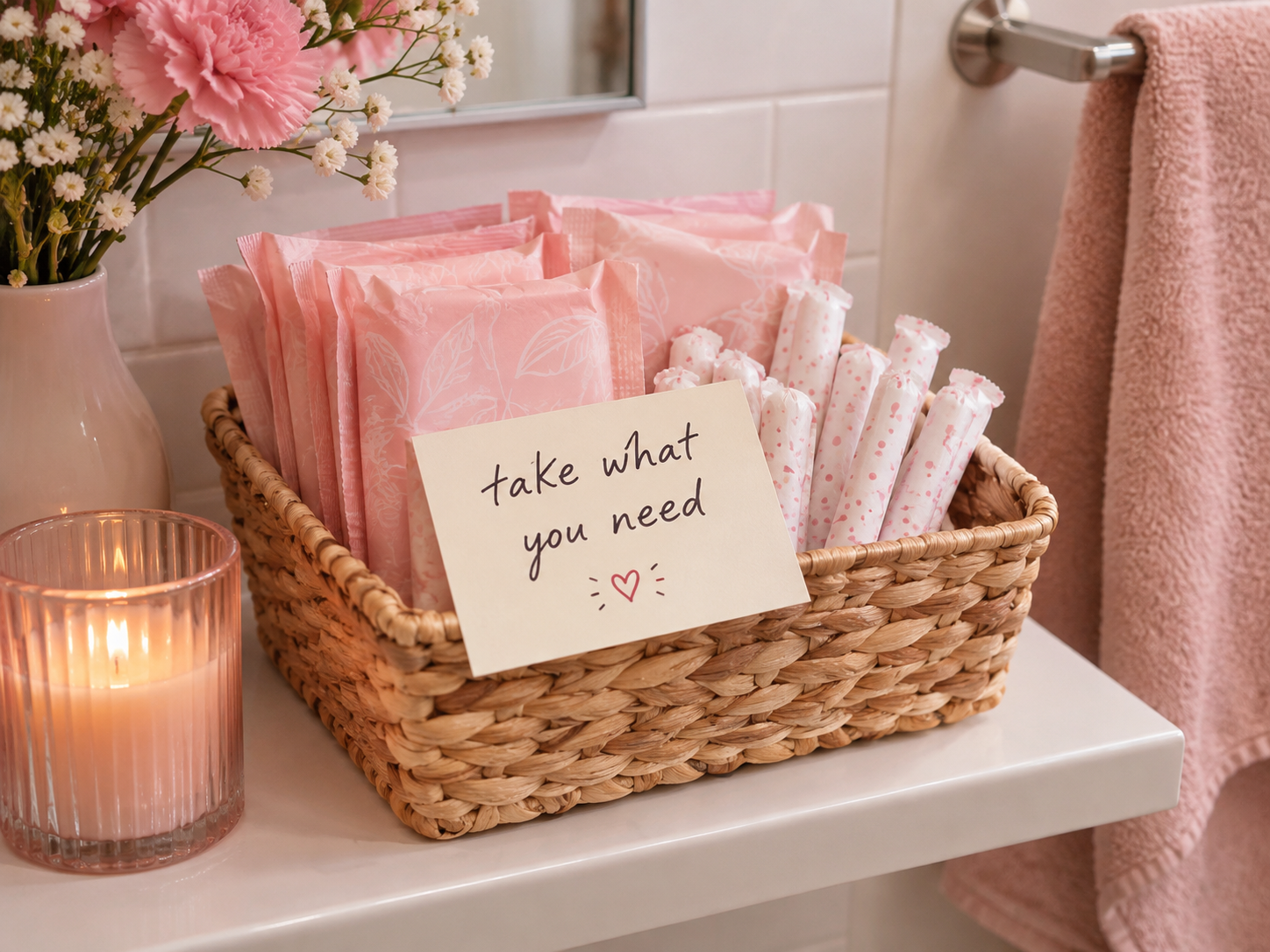
Your period doesn’t wait for payday. If you’ve ever stood in the drugstore doing math, folded toilet paper into a pad or stretched a tampon longer than you should, you’re not alone, and there’s nothing to be embarrassed about. Free period products are out there. The hard part is knowing where to look.
This guide covers where to find free pads, tampons and other period products in the U.S., from a single phone call that can point you to local help to schools, shelters, diaper banks and food pantries. You’ll also find ways to save money if you’re buying your own, simple words to use when you ask and ways to help if you’re in a position to give.
Need products today? Call or text 2-1-1 or visit 211.org and ask about period supplies or basic needs. It’s free and confidential. Laws and programs change often, so we’ve linked each resource to its source. Information was checked in November 2026.
Why this matters
Not being able to afford enough period products has a name: period poverty. And it’s more common than many people realize. Research from U by Kotex found that two in five people with periods in the U.S. have struggled to buy period products. PERIOD., a national nonprofit, reports that nearly one in four students faces the same barrier.
When products run out, people make do with socks, tissue or paper, wear products longer than is safe or stay home from school and work. One national study found that 18% of people had missed work because they didn’t have period products. That’s why free products in schools, shelters and pantries make such a difference.
Period poverty isn’t a personal failing. It can happen after a job loss, a divorce, a medical bill, a new baby or simply a month when everything costs more than it did last year. Many of the women who rely on these programs work full time and are raising families. Using them is exactly what they’re there for, and it frees up money for food, rent and the other things your family needs.
- 📈Struggled to afford them2 in 5
People with periods in the U.S. who have struggled to purchase period products, according to U by Kotex research.
- 📚School laws27 states + D.C.
Have passed laws to expand free period products in schools, as of January 2026, according to PERIOD.
- 💸Still tax them18 states
Still charge sales tax on menstrual products in 2026.
Start here: three quick options
- Call or text 2-1-1Ask for period supplies or basic needs near youToday
- Check the Alliance mapFind a local period supply programOnline
- Ask a food pantryEven if you don’t see products outThis week
If you’re a student, start with your school bathroom or nurse. If you’re staying in a shelter, ask the staff first.
16 places to find free period products
Tap a category to filter. Each resource includes who it’s for, how to get help and a link to learn more.
- Get help today
1.📞Call or text 2-1-1
For: Anyone in the U.S.. 211 is a free, confidential line that connects you with local help for basic needs. The Alliance for Period Supplies recommends it as the first call if you need period products.
How to get it: Call or text 2-1-1, or search at 211.org. Ask about period supplies or basic needs, and check listings for women, girls and families.
Go to 211.org → - Get help today
2.🪓Alliance for Period Supplies programs
For: Anyone in need. A national network of local nonprofits, many run by diaper banks, that collect and give out period supplies. It was created in 2018 by the National Diaper Bank Network with founding sponsor U by Kotex.
How to get it: Use their map of allied programs to find one near you. Some states have several; a few have none yet.
Find a program → - Get help today
3.🍼Your local diaper bank
For: Families, and often anyone. Many diaper banks also stock pads and tampons, and several run their own period supply programs.
How to get it: Search for “diaper bank” and your city, or ask the one closest to you if they know who carries period products.
National Diaper Bank Network → - Get help today
4.🥫Food banks and food pantries
For: Anyone using a pantry. Pads and tampons are among the items pantries often hand out when they have them, since benefits like SNAP can’t be used to buy them.
How to get it: Ask a volunteer, even if you don’t see products on the shelf. They may keep them in back or know where to send you.
Find a food bank → - Get help today
5.⛪Faith-based groups and community centers
For: Anyone. Churches, mosques, synagogues and community centers often keep basic supplies on hand for neighbors in need.
How to get it: If you can’t find another resource, the Alliance for Period Supplies suggests trying local faith-based organizations and food pantries.
Alliance help page → - School & campus
6.🏫School bathrooms and the nurse’s office
For: Students. As of January 2026, 27 states and Washington, D.C., have passed laws expanding access to free period products in schools. Rules vary by state: some cover middle and high schools, some include elementary schools, and some include colleges.
How to get it: Check school restrooms first. If they’re empty, the nurse, counselor or front office usually keeps a supply.
See PERIOD.’s state tracker → - School & campus
7.🎓College campuses
For: College students. Some states require free products on campus. California, for example, requires them at community colleges and its public universities. Many campuses also run basic needs centers or food pantries that stock pads and tampons.
How to get it: Search your school’s website for “basic needs,” “food pantry” or “menstrual products,” or ask the student health center.
California’s law → - Specific situations
8.🏠Homeless and domestic violence shelters
For: Women in crisis. Shelters are a common place to find free products. Groups like I Support the Girls collect bras and period products and distribute them through shelters and other agencies.
How to get it: Ask shelter staff or your case manager. Our guide to organizations helping homeless women lists more support.
I Support the Girls → - Specific situations
9.🧶The Kwek Society
For: Indigenous students and communities. A nonprofit that provides pads, tampons, liners and underwear to Indigenous students and communities in the U.S. and Canada, working through schools and community partners.
How to get it: Ask a school counselor or tribal community program whether they partner with The Kwek Society.
The Kwek Society → - Specific situations
10.⚖️Prisons and jails
For: Incarcerated women. The First Step Act requires the federal Bureau of Prisons to provide tampons and sanitary napkins free of charge, in a quantity that meets each person’s healthcare needs. As of March 2026, 25 states had laws requiring free products for incarcerated people.
How to get it: If you’re supporting a loved one, you can ask the facility about its policy or contact a local advocacy group.
Bureau of Prisons overview → - Public places & work
11.🏛️Government buildings
For: Anyone. Some places now stock free products in public buildings. Washington, D.C., requires them in government-owned and -operated buildings, and Utah passed a law for state-owned buildings in 2023.
How to get it: Look in restrooms at city halls, state offices and public libraries in your area.
Read more → - Public places & work
12.💼Your workplace
For: Employees. A growing number of employers offer free products in restrooms as part of “period positive” workplace efforts, even where it isn’t required.
How to get it: Check the restroom or ask HR. If your workplace doesn’t offer them yet, it’s a fair and simple request.
About period positive workplaces → - Ways to save
13.💳Your HSA or FSA
For: Anyone with a health account. Since the CARES Act in 2020, menstrual products count as qualified medical expenses. You can use pre-tax money in a health savings account or flexible spending account to buy tampons, pads, liners, cups and period underwear.
How to get it: Look for the FSA/HSA-eligible label online, or use your account card at the pharmacy.
How it works → - Ways to save
14.🧾States without a “tampon tax”
For: Shoppers. As of 2026, 18 states still charge sales tax on menstrual products. The rest either exempt them or have no statewide sales tax, which can save a few dollars a month.
How to get it: If you live near a state line, it may be worth stocking up where they’re tax-free.
See the list → - Ways to save
15.♻️Reusable products
For: Anyone who can buy once. Menstrual cups, discs, cloth pads and period underwear cost more up front but can last for years, which lowers the cost per cycle. Some period supply programs give them out, too.
How to get it: Ask local programs whether they offer reusables. Many brands sell starter sizes so you can find a fit.
Tips on reusables → - Ways to save
16.🏷️Store brands and coupons
For: Everyday shoppers. Store-brand pads and tampons work the same for most people and usually cost less. Buying in bulk, using coupons and watching for sales can help, too.
How to get it: Compare unit prices on the shelf tag and stock up when there’s a sale.
More saving tips →
Where to start for your situation
How to ask (without feeling awkward)
Asking for period products can feel uncomfortable, but the people who run these programs hear the question every day. Here are a few simple scripts:
- 💬At a pantry or shelter“Do you have any pads or tampons available?”
Short and direct. Staff often keep products out of sight, so it’s worth asking.
- ☎️When you call 211“I’m looking for free period supplies near me.”
The specialist can search local programs for you.
- 🙋At school“Can I grab a pad from the nurse’s office?”
In many states, schools are required to provide them. You don’t need to explain why.
- 📝At work“Would we consider stocking free products in the restrooms?”
A simple suggestion to HR or your manager can help everyone.
You never owe anyone an explanation of why you need them. Periods are a normal part of health, and products are a basic need.
What you might get (and what to ask for)
Free programs give out whatever they have in stock, which often depends on donations. It’s okay to ask for what works for your body:
- 🧺Most commonPads and liners
Ask for overnight or heavy-flow pads if you need them. Liners are great for light days.
- 🍃Often availableTampons
Ask about absorbency. Using the lowest one you need is safest.
- 🥛Sometimes availableCups and discs
Reusable options that can last years. Some programs offer them along with instructions.
- 🧲OccasionallyPeriod underwear
Absorbent, washable underwear that can replace or back up other products.
If a program only has one type and it doesn’t work for you, ask whether they expect more soon, or call 211 for another option nearby.
Postpartum, perimenopause and heavy periods
Some seasons of life take a lot more product than others, and they can catch you off guard.
- After having a baby, most women bleed for several weeks and need large, heavy-flow pads. Diaper banks that serve new families often have them, and you can ask your hospital before you go home whether they can send extra supplies with you.
- In perimenopause, periods can become heavier or less predictable. If you’re suddenly going through products much faster, keep a small stash in your bag and car, and mention it to your doctor. Our guide to perimenopause symptoms explains what’s normal.
- With very heavy periods, products can get expensive fast. Ask local programs for overnight pads, and talk with a doctor about treatment options and checking your iron.
Build a small emergency stash
Once you find a resource, it helps to set a few products aside so you’re not caught short next month. Keep a couple of pads or tampons in your bag, your car and your desk at work. If a program offers more than you need this month, take what you’ll use and leave the rest for the next person, or ask about their schedule so you can come back when you need to.
Stay safe while you wait
When products are hard to come by, it’s tempting to stretch them. A few things to keep in mind:
- Follow the package directions for how long to wear a tampon, and use the lowest absorbency you need. Leaving a tampon in too long raises the risk of toxic shock syndrome, a rare but serious infection.
- Change pads regularly to protect your skin and prevent irritation.
- If you have to improvise, use something clean and dry, like folded toilet paper or a clean cloth, and change it often. Replace it with a real product as soon as you can.
- Get care right away if you have a sudden high fever, a rash that looks like a sunburn, vomiting or dizziness while using a tampon. Remove it and seek medical help.
If your periods are very heavy and you go through products quickly, talk with a doctor. Heavy bleeding can sometimes cause low iron. Our guide to iron and heavy periods explains what to ask.
For parents of tweens and teens
A first period can arrive at school, at practice or at a sleepover. A little preparation helps:
- Pack a small kit for her backpack: a couple of pads, a spare pair of underwear and a small zip bag.
- Find out what the school offers. Ask whether products are in the restrooms or with the nurse, and tell your daughter where to go.
- Talk about it early and casually. Knowing it’s normal, and that she can always ask, matters more than the perfect speech.
- Tell her it’s okay to ask for help. A teacher, nurse or coach can help in a pinch.
- If money is tight, diaper banks, food pantries and 211 can help families with teens, too.
Why benefits don’t cover pads and tampons
Many families are surprised to learn that SNAP and WIC can’t be used to buy period products, because they’re classified as non-food items. Some lawmakers have proposed changing that, and a few states have looked at their own programs, but for now that rule is the main reason food pantries and period supply banks are so important.
If you have a health savings account or flexible spending account through work, menstrual products have been eligible since the CARES Act in 2020. It’s an easy way to save if you have the option.
How to help
If you’re in a position to give, period products are one of the most requested and least donated items at shelters and pantries. A few ways to help:
- 📦GiveDonate products
Drop unopened packs of pads and tampons at a local diaper bank, food pantry or shelter. Ask what sizes they need most.
- 👥OrganizeHost a drive
Collect products at work, church, school or your next girls’ night. The Alliance for Period Supplies has tools to help.
- 💵FundGive money
Programs can often buy products in bulk at lower cost, so cash goes further than you think.
- 📣AdvocateSpeak up
Ask your school, workplace or city to stock free products in restrooms, or contact your state lawmakers.
- 🎁IncludeAdd them to care packages
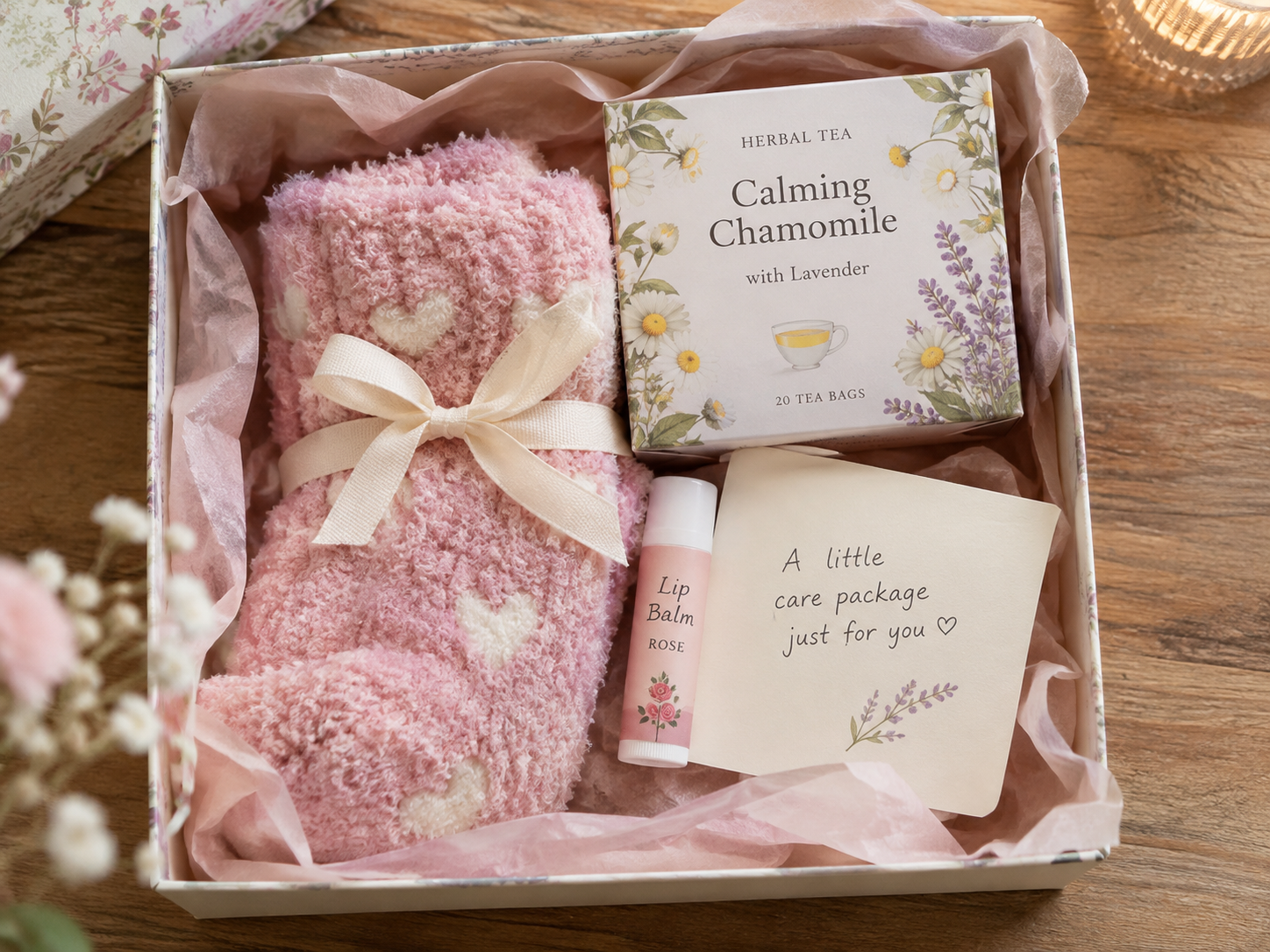
When you put together a care package for a friend going through a hard time, add a pack of pads or tampons. Our list of care package ideas has more.
- 🤝Show upVolunteer
Local programs need help sorting, packing kits and delivering products.
Your turn
Needing help with something as basic as period products can feel embarrassing, but it shouldn’t. Prices go up, paychecks get stretched, and life happens. The programs on this list exist because so many women have been there. Start with one call to 211 or one visit to a local pantry, and keep this page handy for the next time you or someone you love needs it.
Basic needs aren’t a luxury. Share this guide with a friend, a school or a group chat. You never know who needs it.
Sources
- Alliance for Period Supplies: Get help
- Alliance for Period Supplies: Allied programs map
- Alliance for Period Supplies: U by Kotex research on period poverty
- PERIOD. (2026): Access to period products in schools
- PERIOD.: Period poverty
- Frontiers in Reproductive Health (2022): COVID-19 and period poverty in the U.S.
- Aunt Flow (2026): New Jersey requires free period products in schools
- NPR (2021): California requires free tampons in public schools and colleges
- Federal Bureau of Prisons: An overview of the First Step Act
- Network for Public Health Law (2026): Bleeding behind bars
- Cleanlink: D.C. and Utah public building requirements
- GoodRx: Are tampons and menstrual products FSA eligible?
- Consumer Healthcare Products Association: HSA/FSA and the CARES Act
- Sales.tax (2026): 18 states still tax tampons and pads
- Avalara (2026): States that still tax menstrual products
- Change.org: SNAP and WIC and menstrual products
- MIT Solve: I Support the Girls
- Low Income Relief: How to get free period products
- GoodRx: Free tampons and period products
This article is for general information and isn’t medical advice. Talk with your doctor or midwife about what’s right for you.
- Period products
- Menstrual health
- Period poverty
- Resources
- Women’s health
Basic needs. Real support.
Tell us a little about you and your season of life. We’ll reply within two business days with circles where women share resources and show up for each other.
Questions
Good questions.
Where can I get free period products near me?
Call or text 2-1-1 or visit 211.org and ask about period supplies. You can also check the Alliance for Period Supplies map for a local program, or ask a diaper bank, food pantry, shelter or faith-based group.
Do schools have to provide free pads and tampons?
It depends on your state. As of January 2026, 27 states and Washington, D.C., had passed laws to expand access to free period products in schools. Requirements vary by grade level and whether funding is included, so ask your school nurse.
Can I use SNAP or WIC to buy period products?
No. SNAP and WIC benefits can’t be used to buy pads, tampons or other period products because they’re considered non-food items. Food pantries and period supply programs can help fill the gap.
Can I use my HSA or FSA for tampons and pads?
Yes. Since the CARES Act in 2020, menstrual products such as tampons, pads, liners, cups and period underwear are qualified medical expenses for HSAs and FSAs.
Which states still have a tampon tax?
As of 2026, 18 states still charge sales tax on menstrual products. Check the latest list, since several states have bills to remove the tax.
Do prisons provide free period products?
Federal prisons are required by the First Step Act to provide tampons and sanitary napkins for free. Rules for state prisons and local jails vary; as of March 2026, 25 states had laws requiring free products.
What can I use if I don’t have a pad or tampon?
In a pinch, use something clean and dry, like folded toilet paper or a clean cloth, and change it often. Get a real product as soon as you can, and never leave a tampon in longer than the package recommends.
How can I donate period products?
Contact a local diaper bank, food pantry, shelter or Alliance for Period Supplies program and ask what they need. Unopened packs of pads and tampons are almost always welcome, and cash donations can stretch even further.
 Life & culture
 Women’s health
 Friendship