You’re exhausted no matter how much you sleep. You’re cold all the time. Your hair is shedding, your workouts feel twice as hard and you get winded on the stairs. You mention it at your checkup, your blood count comes back “normal” and you’re told it’s probably stress. For a lot of women, the missing piece is iron, and the test that would show it never got ordered.
Iron deficiency is one of the most common nutrient problems in women, and one of the most overlooked. But the answer isn’t to grab a bottle of iron pills and hope for the best. This guide explains how iron deficiency develops, the difference between hemoglobin and ferritin, why heavy periods matter so much, and why iron supplements are something to take with a plan, not blindly.
We’re health coaches, not doctors, and this is general information. Don’t start iron supplements without talking to your doctor and getting tested, and keep iron out of reach of children. Accidental iron overdose is a leading cause of fatal poisoning in kids under 6.
Why iron is a women’s issue
Iron helps your red blood cells carry oxygen around your body. It’s also needed for energy, muscle function, brain function and making some hormones. Your body can’t make iron, so it has to come from food, and you lose some every day, especially through bleeding.
That’s why women of reproductive age need more. The recommended daily amount of iron for women 19 to 50 is 18 mg, more than twice the 8 mg recommended for men and for women over 51. During pregnancy, it jumps to 27 mg.
And many women fall short. A 2023 study in JAMA using national survey data found that about 40% of U.S. females aged 12 to 21 had iron deficiency, and about 6% had iron-deficiency anemia. For most of those with iron deficiency, it hadn’t progressed to anemia, which means a standard blood count would likely have looked normal.
- Daily iron for women 19–50vs. 8 mg for menMore
- Of females 12–21Had iron deficiency in one studyCommon
- WomenHave heavy menstrual bleedingCause
- Daily upper limitUnless a doctor prescribes moreCaution
Low iron happens in stages
Iron deficiency doesn’t happen overnight. Your body keeps iron in storage, mainly as ferritin, and draws on it when intake doesn’t keep up with losses. Anemia is the last stage, not the first.
- Stage 0Healthy stores
Ferritin is in a healthy range and you have iron in reserve.
Usually feels fine - Stage 1Stores running low
Ferritin drops as your body uses its reserves. Hemoglobin is still normal.
May feel tired - Stage 2Iron deficiency
Stores are nearly empty and your body struggles to make healthy red blood cells.
Often missed - Stage 3Iron-deficiency anemia
Hemoglobin falls below normal. Less oxygen reaches your tissues.
Get treated
This is why so many women are told their blood work is fine. A complete blood count (CBC) checks hemoglobin, which only falls once stores are nearly gone. By then, you may have been running on empty for months.
Symptoms that get brushed off
The symptoms of low iron overlap with being a busy, under-slept woman, so they’re easy to dismiss. Pediatric hematologist Angela Weyand, who led the JAMA study, has said that the symptoms of iron deficiency and even anemia are normalized in young women.
- 🪫EnergyFatigue and low energy
Tired even after sleep, or crashing in the afternoon.
- 🥶TemperatureFeeling cold
Cold hands and feet, or chilly when others are comfortable.
- 💨BreathShortness of breath
Getting winded on stairs or during exercise that used to feel easy.
- 💇HairHair shedding and brittle nails
Thinning hair or nails that crack and spoon upward.
- 🧠FocusBrain fog and headaches
Trouble concentrating, irritability or frequent headaches.
- 🧊PicaCraving ice
Chewing ice or craving non-food things like dirt or starch is a classic clue.
- 🏃♀️FitnessWorse workouts
Lower stamina, slower recovery and a faster heart rate during exercise.
- 🦵SleepRestless legs
An uncomfortable urge to move your legs at night has been linked to low iron.
These symptoms can have many other causes too, including thyroid problems, depression, sleep disorders and other vitamin deficiencies. That’s exactly why testing beats guessing. If you notice several of these at once, especially alongside heavy periods, pregnancy or a plant-based diet, that’s a good reason to ask for an iron check rather than waiting it out.
Hemoglobin vs. ferritin
If you’re concerned about iron, it helps to know which tests show what.
- HemoglobinPart of a CBCWhat it measures
The protein in red blood cells that carries oxygen.
What it tells youLow hemoglobin means anemia. But it drops late, so a normal result doesn’t rule out low iron.
- FerritinThe “savings account”What it measures
A protein that reflects how much iron you have stored.
What it tells youUsually the best single test for iron stores. Low ferritin means low iron. It can read falsely high with inflammation or infection.
- Transferrin saturationIron panelWhat it measures
How much of the iron-carrying protein in your blood is loaded with iron.
What it tells youHelpful alongside ferritin, especially if you have inflammation or a chronic condition.
- MCV and other CBC valuesPart of a CBCWhat it measures
The size and color of your red blood cells.
What it tells youSmall, pale red cells can point toward iron deficiency.
The key takeaway: if you have symptoms or risk factors, ask specifically whether your ferritin has been checked. A normal CBC alone doesn’t tell the whole story. University of Michigan researchers noted that routine screenings for young women usually don’t include a ferritin test, so most people with iron deficiency probably don’t know it.
What’s a “normal” ferritin?
This is where things get confusing. Many labs flag ferritin as low only below about 12 to 15 ng/mL. But many experts consider that cutoff too low, because iron stores are already very depleted by then.
The American Gastroenterological Association recommends using a ferritin cutoff of 45 ng/mL instead of 15 to diagnose iron deficiency in people with anemia. In their review, the higher cutoff caught 85% of people with iron deficiency, compared with only 59% at the lower cutoff. For people without anemia, the right cutoff is less certain, and different studies use 25, 30 or higher.
The JAMA study shows how much the cutoff matters. Using a ferritin cutoff of 15, about 17% of young women had iron deficiency. Using 25, it was about 39%. Using 50, it was nearly 78%.
Ferritin can also read falsely normal or high when you have inflammation, an infection or chronic disease, so your doctor may add other tests like transferrin saturation. The bottom line: ask for your actual number and what range your doctor considers healthy for you, rather than settling for “normal.”
Heavy periods: the biggest cause
For women of reproductive age, heavy menstrual bleeding is one of the most common reasons iron runs low. According to the CDC, it affects more than 10 million American women each year, about 1 in every 5.
Many women don’t realize their periods are heavy, because heavy is all they’ve ever known. Here are the signs the CDC lists:
- Changing a pad or tampon in less than 2 hours
- Soaking through one or more every hour for several hours
- Doubling up on pads to control flow
- Getting up at night to change protection
- Periods lasting more than 7 days
- Clots the size of a quarter or larger
- Bleeding through clothes or bedding
- Planning your life around your period
Based on CDC signs of heavy menstrual bleeding. If any sound familiar, it’s worth bringing up with your doctor.
Heavy bleeding can be caused by fibroids, polyps, hormone imbalances, some medications, and bleeding disorders like von Willebrand disease. The CDC recommends testing for a bleeding disorder if you have heavy periods and your gynecologist hasn’t found another cause. The good news is that treatments, from medications to hormonal options to procedures, can make a big difference. Our post on finding your pink after a hysterectomy covers one of the options some women choose.
Treating the bleeding matters just as much as replacing the iron. Otherwise, it’s like trying to fill a bucket with a hole in it.
Other reasons iron runs low
- 🤰PregnancyPregnancy and postpartum
Your blood volume and baby’s needs raise iron requirements, and birth involves blood loss.
- 🥦DietPlant-based diets
Plant iron is absorbed less well. Vegetarians may need almost twice the usual amount.
- 🏃♀️AthletesEndurance exercise
Runners and other athletes can lose more iron through sweat, gut and foot-strike.
- 🍞AbsorptionCeliac and gut conditions
Celiac disease, IBD, H. pylori and weight-loss surgery can reduce iron absorption.
- 💊MedsSome medications
Long-term acid reducers can lower absorption, and blood thinners can increase bleeding.
- 🩸GutHidden blood loss
Bleeding from the stomach or intestines, which needs medical evaluation.
If you’re postmenopausal and develop iron deficiency, that’s an important signal. Without periods, the usual explanation isn’t there, so your doctor will usually look for blood loss from the digestive tract. The AGA recommends upper and lower endoscopy for postmenopausal women with iron-deficiency anemia.
Why not just take a supplement?
It’s tempting to skip the doctor and grab iron off the shelf. Here’s why that’s not a great idea:
- You might not need it. Your fatigue could be thyroid, sleep, mood or something else entirely.
- You could miss the cause. Iron pills can mask bleeding or a gut problem that needs attention.
- Too much iron can harm you. Some people have hereditary hemochromatosis, a genetic condition that causes iron to build up and damage the liver, heart and other organs. About 1 in 300 non-Hispanic white Americans have the gene pattern most linked to it, and many don’t know. The CDC notes that iron supplements can speed up iron buildup in people with hemochromatosis.
- Side effects are common. Constipation, nausea, stomach pain and dark stools are frequent with iron pills.
- It’s dangerous for kids. Accidental overdose of iron-containing products is a leading cause of fatal poisoning in children under 6.
- You won’t know if it’s working without a baseline and follow-up test.
Multivitamins with small amounts of iron are generally fine for most women, but higher-dose iron supplements are best taken with a diagnosis and a plan.
If you do need iron
If testing shows you’re low, your doctor may recommend oral iron, and occasionally IV iron. A few things worth knowing:
- Every other day may work better. Swiss researchers found that iron doses of 60 mg or more trigger a rise in the hormone hepcidin that blocks absorption for about 24 hours. In women with iron-deficiency anemia, fractional iron absorption was 40% to 50% higher on alternate days. A later trial found alternate-day dosing caused fewer stomach side effects.
- Take it with vitamin C or a vitamin C-rich food, and away from coffee, tea, calcium and antacids.
- Expect it to take time. Hemoglobin may improve within weeks, but refilling stores often takes months.
- Plan a recheck so you know when to stop or adjust.
- Ask about IV iron if you can’t tolerate pills, have absorption problems or need to rebuild quickly, such as late in pregnancy.
Never exceed the dose your doctor recommends. The tolerable upper intake level for adults is 45 mg a day from all sources, unless a doctor prescribes more for a diagnosed deficiency.
What a test-and-treat plan can look like
Every situation is different, but a thoughtful plan usually follows a pattern like this:
- Test first. A CBC plus ferritin, and sometimes an iron panel or other tests, gives you a baseline.
- Find the why. Heavy periods, diet, pregnancy, absorption problems or hidden bleeding each need a different fix.
- Treat the cause. That might mean managing heavy periods, treating celiac disease or adjusting medications.
- Replace what’s missing. Oral iron at a dose and schedule your doctor recommends, or IV iron when needed.
- Recheck. Your doctor will usually retest after a couple of months to see whether levels are rising.
- Maintain. Once stores are refilled, iron-rich meals and occasional rechecks help keep them there, especially if heavy periods continue.
If you’ve been taking iron for months and your numbers aren’t budging, that’s a sign to dig deeper, not just to keep taking more.
Iron from food
Food is the foundation, both for preventing deficiency and for keeping stores up once they’re refilled. There are two kinds of dietary iron:
- 🥩Best absorbedHeme iron
Found in red meat, poultry, fish and shellfish. Your body absorbs it more easily.
- 🫘Plant sourcesNonheme iron
Found in beans, lentils, tofu, spinach, pumpkin seeds and fortified cereals and breads.
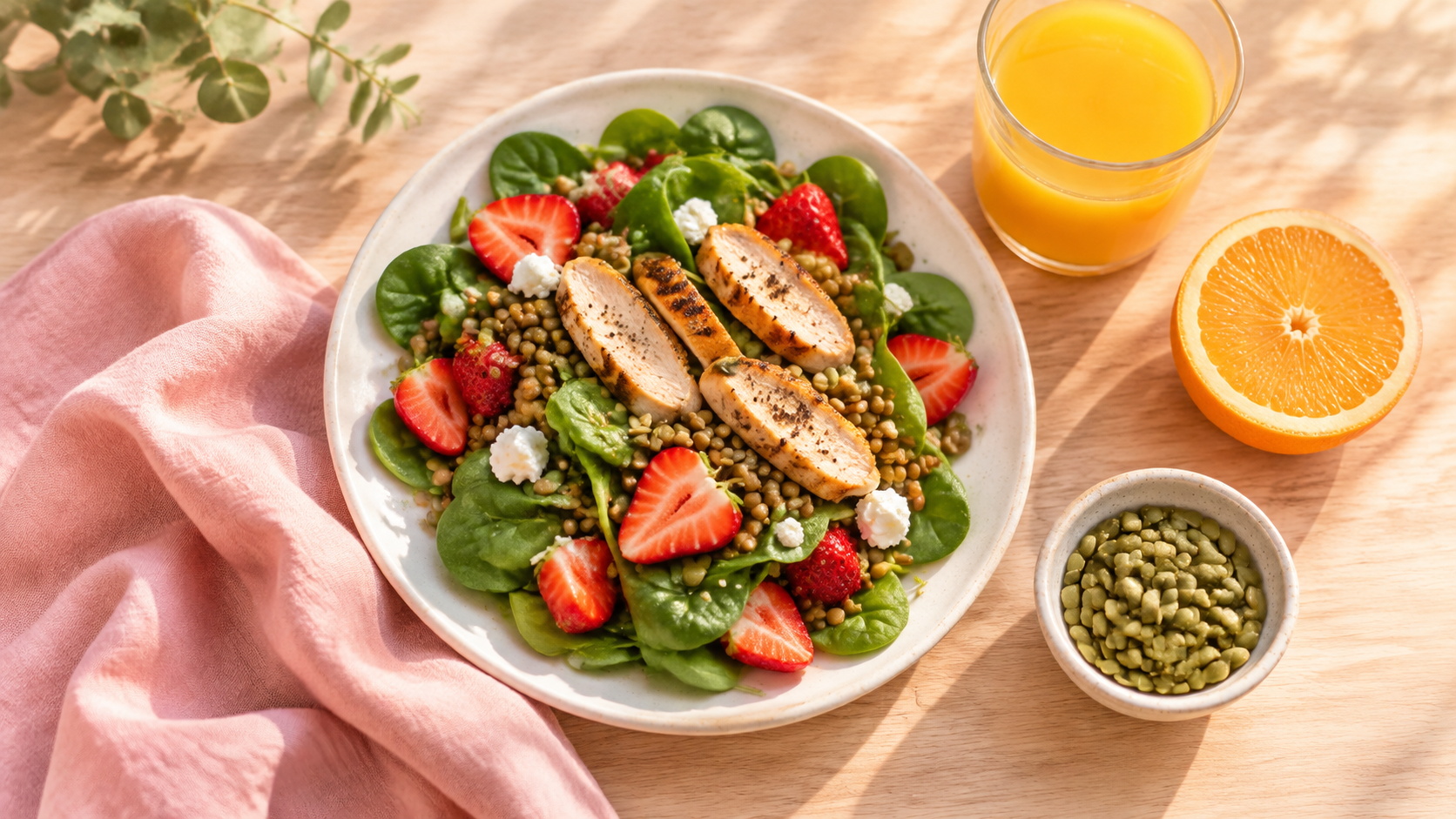
Easy iron-rich ideas: a lentil soup with a squeeze of lemon, a spinach salad with strawberries and chicken, fortified cereal with orange slices, chili made with beans and lean beef, or tofu stir-fry with red peppers and broccoli. Our guide to how much protein women need overlaps nicely, since many iron foods are protein foods too.
What helps and what blocks
- Vitamin C foods with the meal: citrus, strawberries, peppers, tomatoes, broccoli
- Heme iron from meat, poultry and seafood
- Pairing plant iron with a little meat or fish
- Taking supplements away from coffee, tea and calcium
- Cooking acidic foods in a cast-iron pan
- Coffee and tea with meals
- Calcium supplements or lots of dairy at the same time
- Some antacids and acid-reducing medicines
- High-fiber bran and phytates in large amounts
- Taking iron with other minerals like zinc at once
Timing matters. Enjoy your coffee, just not with your iron.
Iron through life’s stages
- Teens and young women: Growth, new periods and dieting can all drain iron. The JAMA study authors suggested routine screening of iron levels in adolescents and young women may be worth considering.
- Pregnancy: Needs jump to 27 mg a day. You’ll likely be screened for anemia, and many prenatal vitamins contain iron. Ask whether your ferritin is being checked.
- Postpartum: Blood loss at birth plus pregnancy demands can leave you depleted. Our post on why the six-week checkup isn’t a finish line covers follow-up worth asking for.
- Perimenopause: Periods can get heavier and more unpredictable before they stop, which can lower iron.
- After menopause: Needs drop to 8 mg a day. New iron deficiency deserves a look for other causes.
Questions to ask your doctor
- Can you check my ferritin, not just my hemoglobin?
- What’s my actual number, and what range are you aiming for with me?
- Could heavy periods be causing this, and what are my options for treating them?
- Should we look for other causes, like celiac disease, a bleeding disorder or blood loss from my gut?
- What type and dose of iron should I take, and how often?
- When should we recheck my levels?
- Would IV iron make sense if pills don’t work or I can’t tolerate them?
Ask for a copy of your results so you can track your numbers over time.
Myths about iron
- Myth #1What you might have heard
If your hemoglobin is normal, your iron is fine.
What’s actually trueHemoglobin drops late. You can be iron deficient, with low ferritin, for a long time before you become anemic. In a national study, most young women with iron deficiency weren’t anemic.
- Myth #2What you might have heard
Everyone tired should take an iron supplement.
What’s actually trueFatigue has many causes. Taking iron without testing can hide the real cause, cause side effects and is risky for people with iron overload conditions.
- Myth #3What you might have heard
More iron is better.
What’s actually trueToo much can upset your stomach and build up in your body. The upper limit for adults from all sources is 45 mg a day unless a doctor prescribes more.
- Myth #4What you might have heard
Heavy periods are just something you live with.
What’s actually trueHeavy bleeding is common but treatable. It’s also one of the top causes of iron deficiency in women.
- Myth #5What you might have heard
You have to take iron every day.
What’s actually trueResearch suggests taking iron every other day may improve absorption and cause fewer stomach side effects. Ask your doctor what’s right for you.
- Myth #6What you might have heard
Vegetarians can’t get enough iron.
What’s actually trueThey can, but plant iron is absorbed less well, so vegetarians may need almost twice the recommended amount and should pair plant iron with vitamin C.
Your turn
Here’s how to start your own iron conversation:
- Track your next period: how long it lasts and how often you change products.
- Jot down symptoms like fatigue, feeling cold, hair shedding or ice cravings, and when they started.
- At your next visit, ask whether your ferritin has been checked and what your number is.
- Add one iron-rich food plus a vitamin C food to a meal this week, like beans with salsa.
- If you take iron, move your coffee or tea at least an hour away from it.
Being tired all the time isn’t just part of being a woman. Ask the question, get the test and treat the cause, not just the symptom.
Sources
- Weyand et al., JAMA (2023): Prevalence of iron deficiency and iron-deficiency anemia in US females aged 12–21 years
- HealthDay via Drugs.com: Iron deficiency common among teens, young women
- University of Michigan Health Lab: Study suggests need for iron tests in teen girls and young women
- EurekAlert / Michigan Medicine: Forty percent of those age 12–21 have iron deficiency
- American Family Physician (2021): Iron deficiency anemia: guidelines from the American Gastroenterological Association
- American Gastroenterological Association (2020): Gastrointestinal evaluation of iron deficiency anemia
- NIH Office of Dietary Supplements: Iron fact sheet for health professionals
- NIH Office of Dietary Supplements: Iron fact sheet for consumers
- Harvard T.H. Chan School of Public Health: Iron: The Nutrition Source
- Centers for Disease Control and Prevention: About heavy menstrual bleeding
- Centers for Disease Control and Prevention: Heavy menstrual bleeding signs and symptoms
- Stoffel et al., Haematologica (2020): Iron absorption from supplements is greater with alternate day than with consecutive day dosing
- von Siebenthal et al., eClinicalMedicine (2023): Alternate day versus consecutive day oral iron supplementation in iron-depleted women
- Centers for Disease Control and Prevention: About hereditary hemochromatosis
- CDC Genomics & Precision Health: Are we ready for population screening for hereditary hemochromatosis?
This article is for general information and isn’t medical advice. Talk with your doctor or midwife about what’s right for you.
- Iron deficiency
- Heavy periods
- Ferritin
- Anemia
- Women’s health
Find your strength. Find your girls.
Tired of being tired? Tell us where you are and what you’re looking for. We’ll reply within two business days.
Questions
Good questions.
What’s the difference between ferritin and hemoglobin?
Hemoglobin is the oxygen-carrying protein in red blood cells, and low hemoglobin means anemia. Ferritin reflects your stored iron. Ferritin drops first, so you can be iron deficient with a normal hemoglobin.
What ferritin level is too low?
There’s no single agreed cutoff. Many labs flag only values below about 12 to 15 ng/mL, but the American Gastroenterological Association recommends a cutoff of 45 ng/mL to diagnose iron deficiency in people with anemia. Ask your doctor what range they consider healthy for you.
Can I be iron deficient without being anemic?
Yes. In a national study of young women, most of those with iron deficiency did not have anemia. Symptoms like fatigue can still occur.
How do I know if my periods are too heavy?
Signs include changing a pad or tampon in less than 2 hours, soaking through one or more every hour for several hours, doubling up, changing overnight, periods longer than 7 days and clots the size of a quarter or larger.
Should I take iron supplements if I’m tired?
Not without testing. Fatigue has many causes, and taking iron you don’t need can cause side effects and is risky for people with iron overload conditions like hemochromatosis.
How much iron do women need?
Women 19 to 50 need 18 mg a day, pregnant women need 27 mg, breastfeeding women need 9 mg and women 51 and older need 8 mg. Vegetarians may need almost twice as much.
Is it better to take iron every other day?
Research suggests alternate-day dosing can improve absorption and cause fewer stomach side effects for many women. Ask your doctor what schedule is right for you.
What helps the body absorb iron?
Vitamin C foods, eating heme iron from meat or seafood and taking supplements away from coffee, tea, calcium and antacids all help.
What is hemochromatosis?
It’s an inherited condition that causes the body to absorb and store too much iron, which can damage the liver, heart and other organs. Iron supplements can make it worse, which is one reason to test before supplementing.
Why would a doctor check my gut for iron deficiency?
In men and postmenopausal women, iron deficiency often comes from hidden blood loss in the digestive tract, so doctors may recommend endoscopy. Conditions like celiac disease can also block absorption.
 Nutrition
 Women’s health
 Mind & mood