Losing your home can happen faster than most people imagine: a rent increase, a job loss, a breakup, a health crisis or leaving an unsafe relationship. If you or a woman you love is facing homelessness right now, you deserve a clear list of who can help. This is that list.
Below you’ll find national hotlines, organizations that provide shelter, housing, essentials, job help and support for moms, veterans and young women, plus a few women-only centers that have led the way. You’ll also find practical tips for getting connected, protecting your health and keeping your kids in school.
We’re health coaches, not a social services agency. If you’re in danger, call 911. If you’re fleeing abuse, see our state-by-state women’s shelter guide. Programs and phone numbers change, so if one doesn’t work, dial 211.
If you need help tonight
- Shelter, food & local servicesDial 211
In most of the U.S., 211 connects you with a local specialist who can help you find emergency shelter, food and other services. It’s free and confidential.
- Fleeing abuse · 24/7National DV Hotline
1-800-799-7233 or text START to 88788
- Veterans · 24/7Homeless Veterans Call Center
- Young people · 24/7National Runaway Safeline
- Emotional crisis988 Lifeline
Call or text 988
Women and homelessness by the numbers
HUD’s count of people experiencing homelessness on one night in January 2025 found 745,652 people, a 3.3% drop from the year before and the first overall decline in nearly a decade. But women’s homelessness had been rising fast before that.
- People experiencing homelessnessOn one night in January 20252025
- Were womenIn the 2024 national count2024
- Rise in womenFrom 2023 to 2024, vs. 15% for menRising
- Of newly homeless adultsWere women, in 2023–2024New
In 2024, HUD’s report broke the count down by gender and found 39% of people counted were women. Research from Utah State University’s Utah Women & Leadership Project found women experiencing homelessness rose 19% from 2023 to 2024, compared with 15% for men. An analysis by the National Alliance to End Homelessness found women made up 45% of people newly entering homelessness in 2023 to 2024, up from 31% in earlier years.
The 2025 report didn’t include a breakdown by gender, so newer national numbers for women aren’t available. Families were hit hard, too: in 2024, homelessness among families with children rose 39%, and nearly 150,000 children were homeless on a single night.
Why women’s needs are different
Homelessness is hard for anyone. Women often face some additional challenges:
- 🔐RiskSafety
Women without housing face higher risks of violence and exploitation, so safe, women-only spaces matter.
- 💜CauseAbuse
Leaving an abusive relationship is a common path into homelessness for women and their children.
- 👪FamilyChildren
Many women are trying to keep kids fed, in school and together, often in shelters with limited family space.
- 🩸HealthPeriods
Bras and menstrual products are among the most requested but least donated items at shelters.
- 🩺HealthHealth care
Pregnancy, postpartum care, chronic conditions and mental health often go untreated.
- 🧳PracticalBelongings
Carrying documents, medications and kids’ things without a safe place to store them is exhausting.
That’s why the organizations below include not just shelters, but programs for essentials, jobs, school stability and health.
Types of help to ask for
“Housing help” covers a lot of different programs. Knowing the names makes it easier to ask for exactly what you need:
- 🏡TonightEmergency shelter
A bed for the night or a short stay. Some are women-only or for families, and some have rules about leaving during the day.
- ☕DaytimeDay centers
Drop-in places for meals, showers, laundry, mail, phone charging and case management, even if you sleep somewhere else.
- 🔑MonthsTransitional housing
Temporary housing, often with support services, while you build income and stability.
- 🚚Quick move-inRapid rehousing
Short-term help with deposits and rent to get you into your own place quickly, with support while you settle in.
- 🏠Long termPermanent supportive housing
Ongoing housing with services for people with disabilities or long-term homelessness.
- 🛡️Before it happensPrevention
Emergency rent, utility help or legal aid to keep you from losing housing in the first place.
If you’re about to lose your home
If you haven’t lost housing yet, act early. It’s usually easier to keep a home than to find a new one.
- Call 211 right away and ask about emergency rental assistance, utility help and eviction prevention programs in your area.
- Ask about free legal aid. Many communities have lawyers who help tenants facing eviction, and 211 can point you to them.
- Talk to your landlord about a payment plan, and get any agreement in writing.
- Don’t ignore court papers. Showing up to an eviction hearing can make a big difference.
- Line up a backup plan, like a friend or relative you could stay with briefly, and keep your documents together.
Organizations that help women experiencing homelessness
Tap a category to filter the list. Every organization here is free to contact, and most can refer you to local programs if they can’t help directly.
- Nationwide
☎️211
Free, confidential line that connects you with local emergency shelters, food, rent help and other services. Available in most of the U.S.
Dial 211 or visit 211.org → - Nationwide · 24/7
💜National Domestic Violence Hotline
If abuse is part of why you’re without a safe home, advocates can help you find a domestic violence shelter and plan for safety.
1-800-799-7233 · text START to 88788 → - Every county
🏠Your local Continuum of Care
The local network that runs homeless services and coordinated entry in your area. 211 can tell you how to reach yours.
Find it through 211 → - Nationwide
🏠HUD local housing help
HUD lists homeless shelters, housing counselors and public housing agencies by state.
See USA.gov emergency housing → - Nationwide
🛡️The Salvation Army
Runs emergency and transitional shelters in many cities, including women’s and family shelters, plus confidential domestic violence programs in some locations.
Women’s shelters → - 45 states & D.C.
🌸YWCA
Local YWCAs offer emergency shelter, transitional and long-term housing and domestic violence services. YWCA calls itself the largest network of domestic violence providers in the country.
Find services → - U.S. & Canada
🔍DomesticShelters.org
Free ZIP code search for domestic violence shelters, with filters for language and pets.
Search shelters → - Affiliates nationwide
👚I Support the Girls
Collects and gives out bras, underwear and menstrual products to women experiencing homelessness or distress through local affiliates and partner shelters.
Find an affiliate → - Nationwide
📱Lifeline (FCC)
A federal program that lowers the monthly cost of phone or internet service for people who qualify. A phone is often the key to jobs, benefits and staying safe.
Learn about Lifeline → - Every state
🍎SNAP, WIC & Medicaid
Food, nutrition and health coverage programs you may qualify for without a permanent address. Shelters and 211 can help you apply.
Ask 211 or your shelter → - 140+ affiliates
👗Dress for Success
Free professional clothing for interviews and new jobs, plus career coaching, résumé help and interview prep. Many affiliates work by referral from shelters.
Find an affiliate → - Nationwide
💼American Job Centers
Free job search help, training and résumé support through state workforce offices. 211 can connect you to the nearest one.
Ask 211 → - Every school district
🎒Your school district’s McKinney-Vento liaison
Children without stable housing have the right to enroll right away, stay in their school of origin with transportation and get free school meals.
NCHE parent guide → - Seattle area
👪Mary’s Place
Shelter and services for women, children and families, built around the idea that no child should sleep outside. Families with pets are welcome.
marysplaceseattle.org → - Nationwide · 24/7
🎖️National Call Center for Homeless Veterans
Free, confidential help for veterans who are homeless or at risk, and for family members calling on their behalf.
1-877-424-3838 → - Nationwide
🎖️VA programs for women veterans
Includes Supportive Services for Veteran Families (SSVF), which helps with rent, deposits and rapid rehousing. The Women Veterans Call Center is 1-855-829-6636.
VA women veterans page → - U.S. cities
🏠Covenant House
Shelter and services for young people facing homelessness in cities across the U.S.
1-800-999-9999 → - Nationwide · 24/7
📞National Runaway Safeline
Support for young people who have run away, are thinking about it or have nowhere safe to go.
1-800-786-2929 → - Boston
🌸Rosie’s Place
Opened on Easter Sunday 1974 as the first women-only shelter in the U.S. Today it offers emergency shelter, meals, a food pantry, legal help, wellness care and housing and job search support.
rosiesplace.org → - Los Angeles
🌸Downtown Women’s Center
Founded in 1978 on Skid Row, it’s the only organization in Los Angeles focused only on women experiencing homelessness, with a day center, health clinic and supportive housing.
(213) 680-0600 →
The women-only pioneers
Women-only shelters didn’t always exist. Rosie’s Place founder Kip Tiernan saw women dressing as men to get services at Boston shelters and decided they deserved better. On Easter Sunday 1974, she and four volunteers opened Rosie’s Place with $250 from friends, in an empty supermarket in Boston’s South End. It was the first women-only shelter in the United States. Today it serves more than 13,000 women a year.
On the West Coast, the Downtown Women’s Center grew out of a friendship between a homeless woman named Rosa Arzola and social worker Jill Halverson in 1978. It remains focused on ending homelessness for women in Los Angeles, with a day center, a health clinic and permanent supportive housing.
In Seattle, Mary’s Place started as a day center for women in 1999 and grew into family shelters across King County during the recession, when it saw a surge of women with children who had nowhere to go. Its family shelters welcome two-parent families, single parents, extended families and families with pets, and it runs a program for families caring for a critically ill child.
Many cities now have women-only day centers, shelters or programs inspired by models like these. Ask 211 whether there’s one near you.
How to get connected
Start with 211
211 is the fastest door into local help. Specialists can refer you to emergency shelters, transitional housing, rent and deposit help, food and more. In many communities, 211 is also the entry point to the local “coordinated entry” system that matches people to housing programs.
Ask about coordinated entry
Most communities use a coordinated entry process to assess needs and prioritize housing. Being assessed gets you on the list for programs like rapid rehousing and supportive housing, so ask how to get assessed as soon as you can.
Tell them everything that applies
Mention if you’re pregnant, have children, are a veteran, are fleeing abuse, have a disability or are under 25. Each of these can open doors to programs designed specifically for you.
Get a caseworker if you can
A case manager at a shelter, day center or clinic can help you apply for benefits, replace IDs, search for housing and keep track of deadlines. It’s much easier with someone in your corner.
Don’t give up after one no
Shelters fill up, and waitlists are real. Call back, ask for other options and try neighboring areas. Availability changes daily.
Questions to ask a shelter or program
- Do you serve women only, or mixed adults? Are there separate sleeping areas?
- Can my children stay with me? What ages?
- How long can I stay, and do I have to leave during the day?
- Do you have case managers who help with housing, jobs and benefits?
- Is there storage for my belongings? Can I bring my pet?
- Do you provide meals, showers, laundry and hygiene products?
- What do I need to bring, and what if I don’t have ID?
It’s okay to ask. Programs want you to land somewhere that fits.
Things worth keeping close
- Photo ID, even an expired one
- Birth certificate and Social Security card
- Kids’ documents and immunization records
- Medications and a list of prescriptions
- Phone and charger
- Benefits cards and letters
- Pads or tampons and basic toiletries
- Layers, socks and a warm hat
- A list of key numbers on paper
- Copies or photos of documents in a secure email account
Missing documents? Shelters and caseworkers help women replace IDs and records all the time. Don’t let paperwork stop you from asking for help.
Staying safer if you’re unsheltered
If you’re sleeping in a car or outside tonight, a few precautions can help while you work on finding shelter:
- Stay near other women or people you trust when you can, and tell someone where you’ll be.
- Choose well-lit, visible places and keep car doors locked.
- Keep your phone charged at day centers, libraries or shelters, and save key numbers on paper.
- Keep documents and medications on your body or in a small bag you never set down.
- Use day centers for showers, meals, laundry and a safe place to rest.
- Watch for cold and heat. Many cities open warming and cooling centers during extreme weather. Ask 211.
- Trust your instincts. If a situation or offer feels wrong, leave and call 911 if you’re in danger.
If you have children
Keeping kids in school can give them stability when everything else feels uncertain. A federal law called the McKinney-Vento Act protects children and youth without stable housing, including those staying in shelters, motels, cars or doubled up with others. Under the law, eligible students have the right to:
- Enroll in school right away, even without the documents normally required.
- Stay in their school of origin if it’s in their best interest, even after moving.
- Get transportation to and from that school if you request it.
- Receive free school meals.
Every school district has a homeless education liaison. Ask the school office for the “McKinney-Vento liaison,” and tell them about your housing situation so they can help. The National Center for Homeless Education also has a free parent booklet and helpline.
Your health matters, too
When you’re focused on survival, your own health often slides to the bottom of the list. A few things worth protecting:
- Find a health center. Federally funded community health centers and health care for the homeless clinics see patients regardless of ability to pay. Ask your shelter or 211.
- Apply for Medicaid. Not having a permanent address usually doesn’t stop you from applying. A shelter or caseworker can help.
- Keep up with pregnancy care if you’re pregnant, and ask about WIC for food help.
- Protect your sleep where you can, even if it’s short naps in a day center.
- Get mental health support. Many clinics and shelters offer counseling, and 988 is available 24/7.
- Ask for period products and hygiene supplies. Shelters often have them even if they’re not on display.
How to help a woman experiencing homelessness
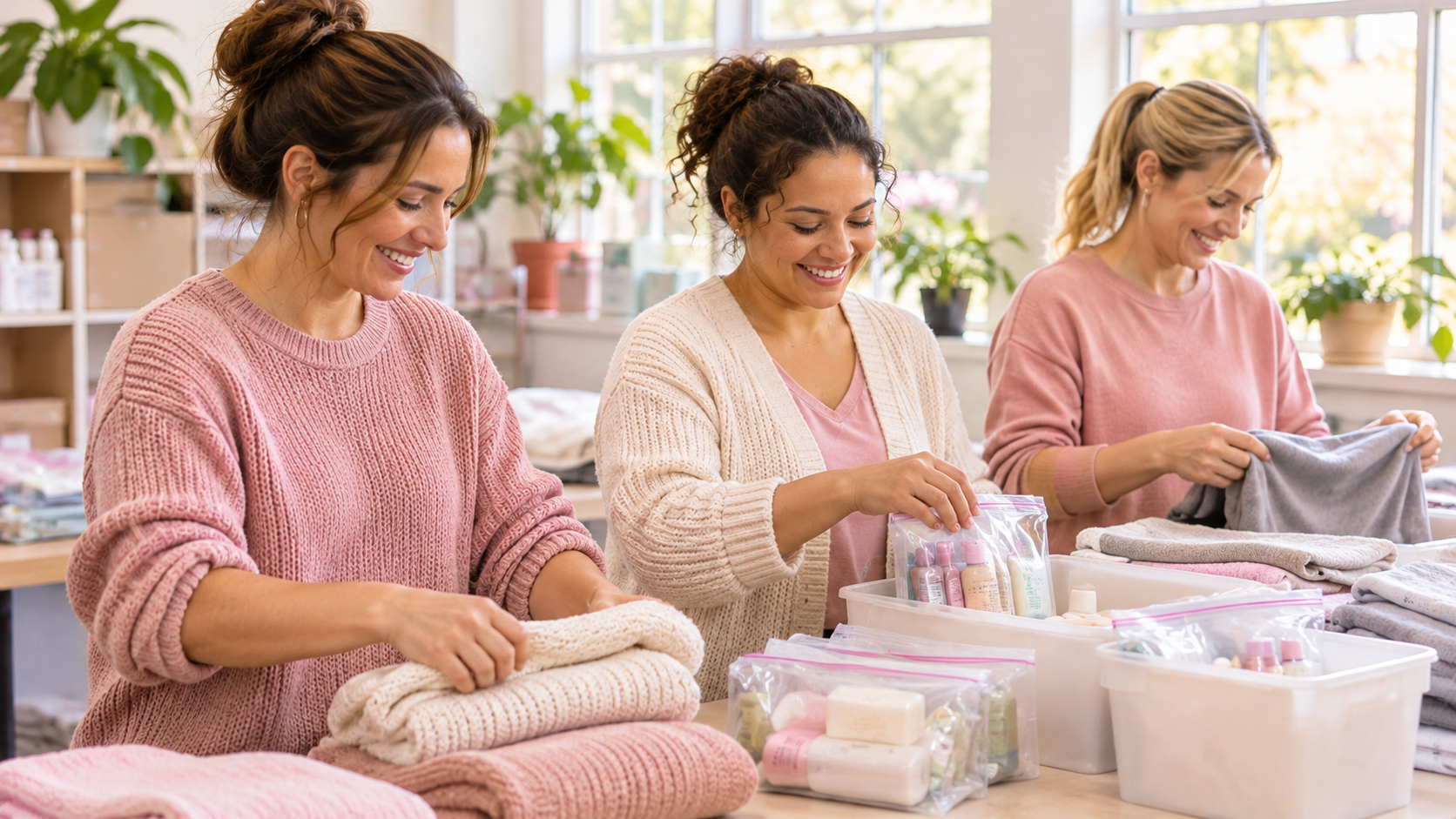
If you want to help, here are ways that make a real difference:
- 👚GiveDonate what’s most needed
New bras, underwear and menstrual products are among the most requested but least donated items. Check your local I Support the Girls affiliate or shelter wish list.
- 👗GiveDonate work clothes
Gently used interview suits and work clothes help women get hired. Local Dress for Success affiliates accept donations.
- 💰GiveGive money
Cash lets shelters buy exactly what they need, from beds to bus passes.
- 🤝TimeVolunteer
Serve meals, mentor, tutor kids or help with résumés at a local women’s center.
- 💬RespectTreat her with dignity
Make eye contact, ask her name and ask what she needs instead of assuming.
- 📣ConnectShare resources
Know the 211 number and your local women’s shelter so you can pass them along.
Myths about women and homelessness
- Myth #1What you might have heard
Homelessness only means sleeping on the street.
What’s actually trueMany women are homeless while staying in shelters, cars, motels or on a friend’s couch. Help exists for all of these situations.
- Myth #2What you might have heard
Women are a small share of people experiencing homelessness.
What’s actually trueIn the 2024 national count, about 39% of people experiencing homelessness were women.
- Myth #3What you might have heard
You can’t get help without ID.
What’s actually trueShelters and caseworkers regularly help women replace documents, and kids can enroll in school right away even without records.
- Myth #4What you might have heard
Your kids will have to change schools.
What’s actually trueUnder the McKinney-Vento Act, children can usually stay in their school of origin, with transportation, if that’s in their best interest.
- Myth #5What you might have heard
Asking for help means you failed.
What’s actually trueRising rents and housing shortages push many women into homelessness for the first time. Reaching out is how you get back on your feet.
- Myth #6What you might have heard
There’s nothing for women veterans.
What’s actually trueThe VA served more than 25,000 homeless women veterans in fiscal year 2023 and runs a 24/7 call center.
Moving forward
Homelessness is a situation, not an identity. With the right support, many women move into stable housing, find work and rebuild their lives. If you’re in it right now, focus on the next step, not the whole staircase: one phone call, one appointment, one safe night.
When you’re ready to think about routines, health and confidence again, our posts on finding your pink more than once and building a care circle are a gentle place to start.
You deserve safety, dignity and a place to call home. Help is out there, and asking for it is a strong first step.
Sources
- National Alliance to End Homelessness (2026): Top 5 takeaways from HUD’s annual report on homelessness
- Housing Finance (2026): National homelessness declines 3.3%
- CalMatters (2026): What the 2025 point-in-time report shows
- Deseret News / Utah Women & Leadership Project: How many women in Utah are experiencing homelessness?
- Statista, citing National Alliance to End Homelessness: More Americans are experiencing homelessness
- NBC News (2024): U.S. homelessness rises 18% amid affordable housing shortage
- USA.gov: Get emergency housing
- 211 / United Way: Get connected to local help
- Rosie’s Place: Our history
- Downtown Women’s Center: Frequently asked questions
- Center for Health Journalism: A safe haven for homeless women on LA’s Skid Row
- Mary’s Place: FAQs
- I Support the Girls: Bras, underwear and menstrual products for women in need
- WSHU (2025): Dress for Success helps women back into the workforce
- YWCA USA: Domestic and sexual violence services
- U.S. Department of Veterans Affairs: Programs to end homelessness among women veterans
- U.S. Department of Veterans Affairs: National Call Center for Homeless Veterans
- National Center for Homeless Education: McKinney-Vento 101
- National Center for Homeless Education (2025): Parent booklet: your child’s school rights
- The Salvation Army USA: Women’s shelters
This article is for general information and isn’t medical advice. Talk with your doctor or midwife about what’s right for you.
- Homelessness
- Women's resources
- Housing help
- Community
- Safety resources
You deserve a place to land.
If you need shelter tonight, please dial 211 first. When you’re ready to rebuild, tell us what you’re looking for and we’ll reply within two business days.
Questions
Good questions.
Where can a homeless woman get help right now?
Dial 211 for local emergency shelter and services. If you’re fleeing abuse, call the National Domestic Violence Hotline at 1-800-799-7233. Veterans can call 1-877-424-3838, and young people can call the National Runaway Safeline at 1-800-786-2929.
How many women in the U.S. experience homelessness?
In HUD’s 2024 national count, about 39% of people experiencing homelessness were women. The 2025 report counted 745,652 people overall but didn’t break the data out by gender.
Are there shelters just for women?
Yes. Many cities have women-only shelters or day centers, such as Rosie’s Place in Boston, which opened in 1974 as the first women-only shelter in the U.S. Ask 211 what’s available near you.
What is coordinated entry?
It’s the process most communities use to assess people experiencing homelessness and connect them to housing programs. Ask 211 or a shelter how to get assessed.
Can my kids stay in their school if we lose our home?
Usually, yes. The McKinney-Vento Act lets eligible children stay in their school of origin, with transportation, and enroll right away without documents. Ask for your district’s McKinney-Vento liaison.
Where can I get free bras and period products?
Many shelters have them. I Support the Girls distributes bras, underwear and menstrual products through affiliates and partner organizations nationwide.
Where can I get free clothes for a job interview?
Dress for Success affiliates provide free professional clothing and career support, often by referral from a shelter or job program.
What help is there for homeless women veterans?
Call the VA’s National Call Center for Homeless Veterans at 1-877-424-3838, 24/7. The VA also runs SSVF and other programs, and the Women Veterans Call Center is 1-855-829-6636.
What if I don’t have ID?
Ask for help anyway. Shelters and caseworkers regularly help women replace IDs and documents, and children can enroll in school without them.
How can I help women experiencing homelessness?
Donate new bras, underwear and period products, give work clothes or money to local programs, volunteer and treat women with dignity.
 Women’s health
 Friendship
 Mind & mood