Driving while pregnant: how to stay safe and comfortable
How to wear your seat belt over a growing bump, how far to sit from the steering wheel, why to leave your airbags on, what the research says about crash risk, tips for longer trips, when to hand over the keys and when you can drive again after birth.
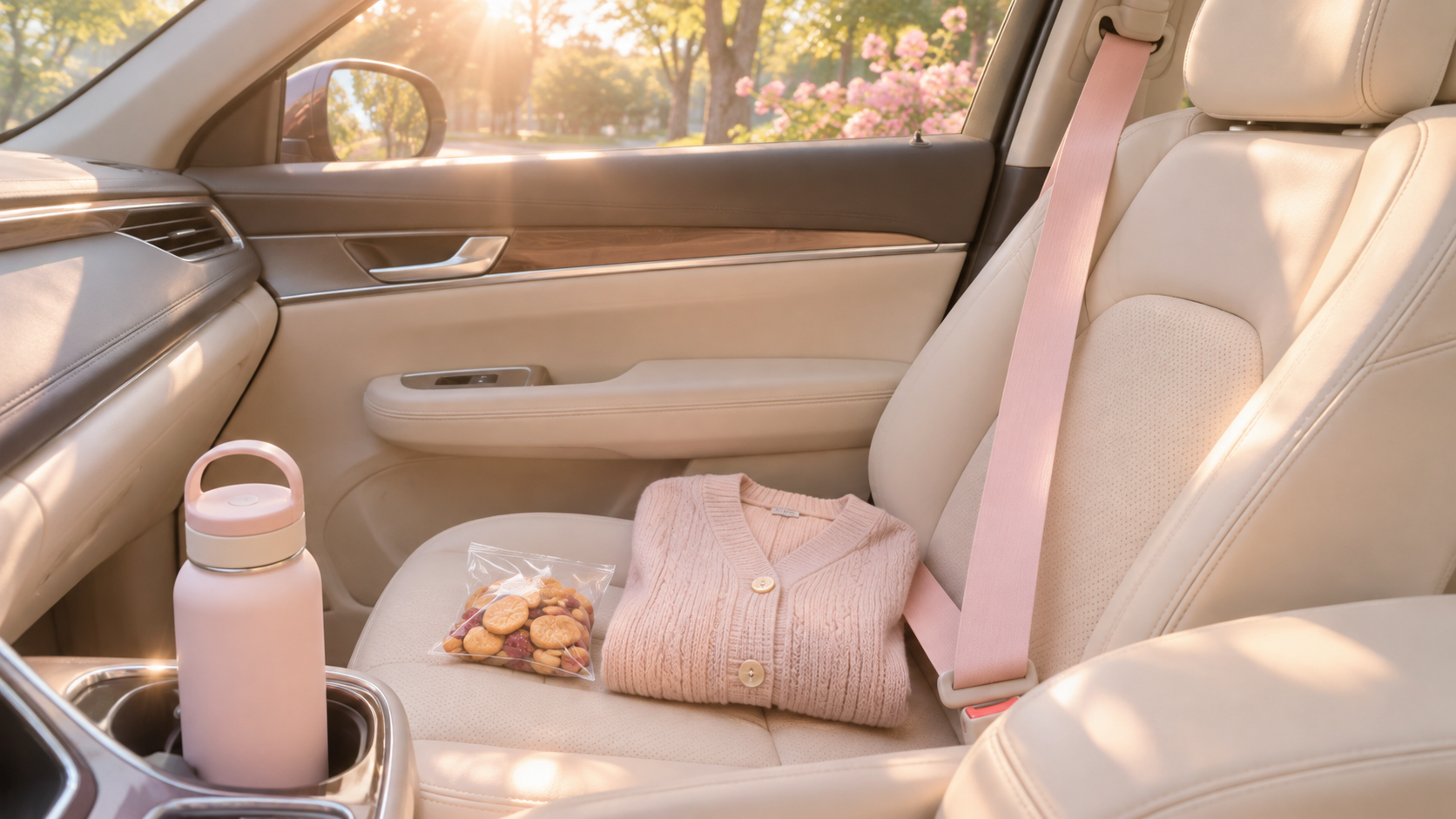
Pregnancy doesn’t stop life from happening. There are still work commutes, grocery runs, prenatal appointments and, if you have older kids, a lot of school pickups. So it’s natural to wonder whether driving is safe, how to wear a seat belt over a growing bump and when it might be time to let someone else take the wheel.
The reassuring news: for most people with a healthy pregnancy, driving is generally safe. A few simple habits, like wearing your seat belt the right way, moving your seat back and leaving the airbags on, go a long way toward protecting you and your baby.
This guide covers all of it, plus what the research says about crash risk during pregnancy, tips for longer drives, what to do after a fender bender and when you can drive again after birth.
A quick note: This is general information, not medical advice. Every pregnancy is different. If your provider has given you any restrictions, or you have questions about your own situation, follow their guidance.
The short answer
- 🚗Can I drive?Usually, yes
Most people can keep driving through a healthy pregnancy, as long as they feel well and comfortable.
- 🧹Seat beltLap belt under the bump
Low across your hips, with the shoulder belt between your breasts and to the side of your belly.
- 📏SeatSit back, about 10 inches
Keep your breastbone about 10 inches from the steering wheel, while still reaching the pedals safely.
- 💥AirbagsLeave them on
Airbags and seat belts work together. Don’t switch them off.
Is it safe to drive while pregnant?
For most people, yes. In the U.S., there are no laws that stop pregnant people from driving, and many providers say you can keep driving as long as you feel comfortable and confident behind the wheel.
That said, pregnancy brings changes that can affect driving: nausea, fatigue, trouble sleeping, dizziness, more trips to the bathroom and, later on, a bump that changes how you fit behind the wheel. None of these mean you need to stop driving. They just mean it’s worth paying a little extra attention to how you feel and how you sit.
Your body is your baby’s first car seat. A properly worn seat belt protects you both.
What the research says
The research on driving during pregnancy has two big takeaways: drive a little more carefully, and always wear your seat belt correctly.
Crash risk rises in the second trimester
A large study published in the Canadian Medical Association Journal in 2014 followed more than half a million women who gave birth in Ontario. The researchers compared each woman’s risk of a serious crash during the second trimester with her own risk in the three years before pregnancy, and found a 42% relative increase.
The researchers think common pregnancy symptoms, like fatigue, nausea, poor sleep and distraction, may play a part. Importantly, the risk dropped again in the third trimester, and even at its peak, it was still lower than the risk for men of the same age. The lead researcher stressed that the findings are not a reason to stop driving, but a reminder to drive more carefully.
Seat belts make a real difference
Motor vehicle crashes are a leading cause of serious trauma during pregnancy. A U.S. study that linked birth records with crash reports found that crashes during pregnancy were associated with higher rates of adverse pregnancy outcomes, and that crashes were especially harmful when drivers weren’t wearing seat belts.
A patient handout from the American Academy of Family Physicians puts it plainly: in a crash, seat belts are the best protection for you and your unborn baby. It notes that four out of five unborn babies who die in car crashes would have lived if their mothers had been wearing seat belts.
How to wear your seat belt while pregnant
Doctors and safety experts agree: wear your seat belt every single time, in every trimester, whether you’re driving or riding. The key is wearing it in the right place.
- Use a lap and shoulder belt. A three-point belt, with both a lap and shoulder strap, offers the best protection.
- Lap belt low, under your bump. Buckle the lap belt below your belly so it fits snugly across your hips and pelvic bone, touching the tops of your thighs.
- Never across or above your belly. A lap belt that rides up over the bump can press on your uterus in a crash.
- Shoulder belt between your breasts. It should cross the center of your chest and collarbone, rest on your shoulder away from your neck, and sit to the side of your belly.
- Never under your arm or behind your back. Even if it feels more comfortable, this removes most of the protection.
- Take out the slack. Pull the belt snug and make sure the webbing isn’t twisted.
A few comfort tips: Bulky coats can push the belt out of position, so take yours off before buckling up, especially in winter. Avoid reclining your seat more than you need to, since that can leave a gap between your shoulder and the belt. And check your belt each time you get in, since it’s easy for the lap belt to slide up as you settle in.
What about seat belt adjusters?
You may see products marketed to pregnant drivers that reroute or reposition the seat belt. Child passenger safety experts at Safe in the Seat caution against them, saying a standard seat belt positioned correctly is fully capable of keeping you safe. If you’re considering one, talk with a certified child passenger safety technician first.
Setting up your seat and steering wheel
As your bump grows, your usual driving position may no longer fit. A few adjustments help keep space between you and the steering wheel.
- Move your seat back. Slide the seat as far back as you can while still comfortably reaching the pedals.
- Aim for about 10 inches. Safety guidance from NHTSA, the National Highway Traffic Safety Administration, recommends keeping at least 10 inches between the center of your chest and the steering wheel.
- Tilt the wheel toward your chest. If your steering wheel adjusts, angle it toward your breastbone, not your belly or your head.
- Sit upright. A comfortable, upright position helps the seat belt fit correctly.
- Keep your belly off the wheel. NHTSA advises avoiding letting your belly touch the steering wheel.
One helpful nuance from the child passenger safety technicians at Safe in the Seat: the 10 inches is measured from the center of the airbag in the steering wheel to your chest, not from the bottom of the wheel to your belly. Being able to press the brake pedal all the way down and grip the wheel with a slightly bent arm matters more than squeezing out an extra inch. If you truly can’t get enough room, NHTSA suggests adjusting the steering wheel or, if possible, having someone else drive.
Should I turn off my airbags?
No. Pregnancy safety guidance is consistent here: leave your airbags on. Airbags are designed to work together with seat belts, not to replace them, and doctors recommend that pregnant people wear their seat belts and keep their airbags switched on.
If your car has an airbag on/off switch, check that it’s set to on. And remember, the airbag protects you best when you’re buckled in and sitting back from the wheel.
Your before-you-pull-out checklist
- SeatMoved back, upright, pedals still easy to reach.
- WheelTilted toward your chest, about 10 inches from your breastbone.
- Lap beltUnder your bump, snug across your hips.
- Shoulder beltBetween your breasts, beside your belly, on your shoulder.
- AirbagsOn.
- CoatOff, so the belt sits flat.
- Snacks and waterWithin reach, so you don’t have to dig for them while driving.
- PhoneSet up for hands-free and put away.
Driving in bad weather
Snow, ice, heavy rain and fog are stressful for any driver, and pregnancy fatigue doesn’t help. On rough-weather days, it’s worth asking whether the trip can wait or whether someone else can drive. If you do need to go, leave extra time, slow down and keep more distance from the car ahead. Keep a charged phone, water, snacks and a warm blanket in the car in winter, in case you’re stuck in traffic. And remember to take off your puffy coat before buckling up, then lay it over you like a blanket so the belt still sits flat and snug.
Pregnancy symptoms that can affect driving
The CMAJ researchers suspected that ordinary pregnancy symptoms might contribute to the rise in crashes. Here’s how to plan around the most common ones:
| Symptom | Why it matters | What helps |
|---|---|---|
| Nausea | Can be sudden and distracting | Keep crackers, water and a bag in the car; pull over if you feel ill |
| Fatigue | Slows reaction time | Avoid driving when you’re very tired; take breaks or ask for a ride |
| Dizziness | Can make driving unsafe | Don’t drive if you feel lightheaded; call your provider if it keeps happening |
| Distraction | “Pregnancy brain” and a busy mind are real | Put your phone away, plan routes ahead and keep the radio low |
| Frequent bathroom trips | Can make you rush | Plan stops and go before you leave |
| Swelling and discomfort | Can make it hard to sit or reach the pedals | Adjust your seat, wear comfortable shoes and take stretch breaks |
Tips for longer trips
Road trips are absolutely possible during pregnancy, with a little extra planning. Many providers consider the middle of pregnancy, between about 14 and 28 weeks, the most comfortable time to travel, but talk with your provider before any long car trip.
- Move often. Pregnancy raises your risk of blood clots, and sitting for long stretches adds to it. Take short walks at least every two hours, and move your legs and change positions while you sit.
- Keep driving days shorter. A HealthyWomen summary of guidance from the American College of Obstetricians and Gynecologists suggests limiting driving to no more than six hours a day.
- Stay hydrated. Bring plenty of water, even though it means more bathroom stops.
- Ask about compression stockings. Your provider can tell you whether they’re a good idea for you.
- Pack snacks. Steady snacks can help with nausea and keep your energy even.
- Share the driving. Switch drivers so you can rest, and ride in the passenger seat when you can.
- Bring your records. Carry a copy of your prenatal records and know where hospitals are along your route, especially later in pregnancy.
Riding as a passenger
The same rules apply when you’re not the one driving. Wear your lap and shoulder belt the same way, and if you’re in the front seat, move it back as far as possible from the dashboard. NHTSA’s guidance for passengers is simple: move your seat back as far as possible and always buckle up.
Riding as a passenger is also a great option on days when you’re feeling tired, nauseated or just not up to it. There’s no prize for doing all the driving.
When to hand over the keys
There’s no set week when you have to stop driving. Instead, pay attention to how you feel and what your provider says. It may be time to let someone else drive if:
- You can’t fit safely. If you can’t reach the pedals and steering wheel while keeping space between your belly and the wheel.
- You feel dizzy, faint or very nauseated. Pull over and get help.
- You’re exhausted. Fatigue slows your reactions.
- You’re on medication that makes you drowsy. Check the label and ask your provider.
- Your provider has given restrictions. For example, with certain high-risk pregnancies or after a complication.
- You think you’re in labor. More on that next.
Getting to the hospital
When labor starts, it’s best not to drive yourself. Contractions are distracting and painful, and things can change quickly. Plan ahead:
- Choose your driver. Line up a partner, friend or family member, plus a backup.
- Do a practice run. Know the route, where to park and which entrance to use, especially at night.
- Install the car seat early. You’ll need it to bring baby home. Many fire stations and certified technicians offer free car seat checks.
- Know when to call 911. If you have heavy bleeding, severe pain or feel the urge to push and can’t get to the hospital safely, call for help.
Our hospital bag checklist has everything else you’ll want ready by the door.
If you’re in a crash while pregnant
Even a minor fender bender can be scary when you’re pregnant. The most important thing to know: get checked, even if you feel fine.
- Call 911 if anyone is hurt. Tell responders that you’re pregnant and how far along you are.
- Get seen, even after a small crash. You can’t judge how serious a crash was by the damage to your car or how you feel right afterward. Some complications, like placental abruption, can show up hours later.
- Call your provider. Let your OB or midwife know what happened. They may want to monitor you and your baby.
Go to the hospital or call 911 if you notice vaginal bleeding or fluid leaking, belly pain or tenderness, contractions or cramping, your baby moving less than usual, dizziness or fainting, or a severe headache. Don’t wait to see if it passes.
If driving makes you anxious
If you feel more nervous behind the wheel since getting pregnant, you’re far from alone. When Cooper Hurley Injury Lawyers surveyed 100 pregnant people for their driving guide, 79% rated their anxiety about driving while pregnant at 5 or higher on a scale of 1 to 10.
A few things that can help:
- Start with the basics. Knowing your seat belt and seat are set up correctly can ease a lot of worry.
- Choose easier routes. Familiar roads, off-peak times and fewer highway merges can make drives calmer.
- Leave extra time. Rushing makes everything feel harder.
- Breathe. A few slow breaths at a red light can bring your shoulders down from your ears.
- Ask for help. It’s okay to ask a partner or friend to drive more often.
If anxiety is showing up in lots of areas of your life, or it’s hard to shake, talk with your provider. You can also call or text the National Maternal Mental Health Hotline at 1-833-852-6262, any time, for free and confidential support. If you’re in crisis, call or text 988.
Driving after birth
After the baby arrives, you may be eager to get back on the road. The right time depends on how you gave birth and how you’re recovering.
After a vaginal birth
Many people feel ready to drive within a few days to a couple of weeks. Wait until you’re comfortable sitting, can move your feet quickly between the pedals, can turn to check your blind spots and aren’t taking medication that makes you drowsy. Check with your provider if you had stitches or a difficult recovery.
After a C-section
A C-section is major surgery, so recovery takes longer. There’s generally no legal waiting period, but many providers ask you to wait until you can twist, look over your shoulder and brake hard without pain, are no longer taking opioid pain medication and have your provider’s okay. For many people, that’s around six weeks, though it varies.
For every new mom
- Watch for drowsy driving. Newborn sleep is real. If you’re running on very little rest, ask for a ride when you can.
- Don’t try to soothe the baby while driving. If your baby is crying and you need to help, pull over somewhere safe.
- Check the car seat. Make sure it’s installed correctly and the harness fits snugly every time.
- Start with short trips. A drive to the pediatrician or a quiet coffee run is a nice way to ease back in.
For more on your recovery, see our guides to postpartum recovery essentials and postpartum exercise and where to start.
Want to read more?
If you’d like to go deeper, Cooper Hurley Injury Lawyers has a thorough guide to driving while pregnant. It covers when you can drive during pregnancy, tips for longer trips and advice on driving after birth, and it includes the results of their survey of 100 pregnant drivers. It’s a nice companion to this post, especially if you’re planning a road trip or feeling nervous behind the wheel.
 Recommended readDriving While PregnantCooper Hurley Injury LawyersWhen to keep driving, tips for longer trips, driving after birth and what 100 pregnant drivers told them in their survey.Read their guide
Myths
- Myth #1What you’ve heard
“Seat belts can hurt the baby, so it’s safer to skip them.”
The truthA correctly worn seat belt is the best protection for you and your baby in a crash.
- Myth #2What you’ve heard
“Turn off your airbags when you’re pregnant.”
The truthLeave them on. Airbags and seat belts work together.
- Myth #3What you’ve heard
“The lap belt should go over your belly to hold the baby in place.”
The truthThe lap belt goes below your bump, low across your hips.
- Myth #4What you’ve heard
“You have to stop driving at a certain week.”
The truthThere’s no set week. It depends on how you feel, how you fit and what your provider says.
- Myth #5What you’ve heard
“If you feel fine after a minor crash, you don’t need to be checked.”
The truthGet checked anyway. Some complications can take hours to show up.
The bottom line
For most people with a healthy pregnancy, driving is generally safe. Wear your lap belt under your bump and your shoulder belt between your breasts, every single time. Move your seat back, tilt the wheel toward your chest and leave your airbags on. Plan around nausea and fatigue, take breaks on long drives and hand over the keys when you’re not feeling your best.
And if you’re ever in a crash, even a small one, get checked. Small habits, done consistently, keep you and your baby as safe as possible on every drive.
Sources
- Cooper Hurley Injury Lawyers: Driving While Pregnant
- NHTSA: If you’re pregnant, seat belt recommendations for drivers and passengers
- American Academy of Family Physicians: Car safety during pregnancy
- Children’s Hospital of Philadelphia: Seat belt safety during pregnancy
- University of Michigan Health: Car safety during pregnancy
- Redelmeier and colleagues: Pregnancy and the risk of a traffic crash (CMAJ, 2014)
- EurekAlert: Pregnancy and serious traffic crashes (CMAJ news release)
- Vladutiu and colleagues: Adverse pregnancy outcomes following motor vehicle crashes (American Journal of Preventive Medicine, 2013)
- Safe in the Seat: Driving while pregnant, seat belts, airbags and the safest driving position
- Safe in the Seat: Pregnancy seat belt adjusters
- Safe in the Seat: What to do after a car crash while pregnant
- NewYork-Presbyterian: Travel during pregnancy
- HealthyWomen: What moms-to-be should know about traveling while pregnant
- Acibadem: When can you drive after a cesarean delivery?
This article is for general information and isn’t medical advice. If you’re pregnant or postpartum and have questions about driving, travel or your recovery, talk with your healthcare provider.
- Pregnancy
- Car safety
- Seat belts
- Travel
- Postpartum
Find your strength. Find your girls.
Pregnant or newly postpartum and looking for support? Tell us a little about where you are, and we’ll reply within two business days with coaching, circles and walk clubs near you.
Questions
Good questions.
Is it safe to drive while pregnant?
For most people with a healthy pregnancy, yes. Wear your seat belt correctly, sit back from the steering wheel and avoid driving when you feel very tired, dizzy or nauseated.
How should a pregnant woman wear a seat belt?
Put the lap belt below your bump, snug across your hips, and the shoulder belt between your breasts and to the side of your belly. Never put either belt across your belly, under your arm or behind your back.
How far should I sit from the steering wheel when pregnant?
Aim for at least 10 inches between the center of your chest and the steering wheel, while still being able to reach the pedals and brake fully. Tilt the wheel toward your chest, not your belly.
Should I turn off my airbags while pregnant?
No. Leave your airbags on. They’re designed to work together with your seat belt.
When should I stop driving during pregnancy?
There’s no set week. Stop if you can’t fit safely behind the wheel, feel unwell or exhausted, your provider recommends it or you think you’re in labor.
How soon can I drive after a C-section?
Usually when you can twist, look over your shoulder and brake hard without pain, are off opioid pain medication and have your provider’s okay. For many people that’s around six weeks.
What should I do after a minor car accident while pregnant?
Get checked at the hospital and call your provider, even if you feel fine. Some complications can take hours to appear.
 New moms
 New moms