Ask a room full of women what to do about UTIs and someone will say “cranberry juice.” It’s advice passed from moms to daughters for generations. But does it actually work? The honest answer is more interesting than yes or no.
Here’s what the research suggests, what it doesn’t, who cranberry seems to help, why the juice in your fridge might not be the best choice and which other prevention strategies have stronger evidence.
We’re health coaches, not doctors, and this is general information. Cranberry is not a treatment for an active UTI. If you have burning, urgency or blood in your urine, call your healthcare provider. If you have fever, chills, back or side pain or vomiting, or you’re pregnant and have any UTI symptoms, get care the same day.
The short answer
Cranberry products may modestly reduce the number of UTIs in women who get them often. They don’t treat a UTI you already have, they don’t seem to help everyone, and sugary cranberry cocktail is probably not the best way to get them.
- In the biggest review8,857 people in a 2023 Cochrane reviewEvidence
- Lower risk of UTIsIn women with recurrent UTIsBenefit
- Women avoid a UTIFor every 16 who use cranberryIn practice
- Effect on an active UTIThat needs a diagnosis and treatmentLimit
Why UTIs are so common for women
If you’ve had a UTI, you’re in very large company. Acute bladder infection is one of the most common infections in women, with a lifetime risk of more than 50%, according to the researchers behind the 2018 water trial. And once you’ve had one, the odds of another go up. They note that about 27% of women have at least one recurrence within six months of a first infection, and among women with a history of UTIs, 44% to 70% have another within a year.
Anatomy is a big part of it. Women have a shorter urethra that sits close to the anus, so bacteria have a short trip to the bladder. Sex, certain kinds of birth control, pregnancy and the drop in estrogen around menopause can all tip the balance too.
American Family Physician defines recurrent UTI as two or more infections in six months, or three or more in a year. If that sounds like you, it’s worth a dedicated conversation with your doctor about prevention, not just treating each infection as it comes.
How cranberry might work
For a long time, people thought cranberry worked by making urine more acidic. Researchers now think the main action is different. According to Cochrane, cranberries contain proanthocyanidins (PACs), substances that can prevent bacteria from sticking to the bladder wall.
Most UTIs are caused by E. coli, which uses tiny hair-like structures to grab on to the cells lining the urinary tract. Lab research has found that cranberry PACs with a special structure, called A-type linkages, show anti-adhesion activity against these bacteria, including antibiotic-resistant strains. If bacteria can’t hold on, they’re more likely to be flushed out when you pee.
That’s a reasonable explanation, but a lab dish isn’t a bladder. What matters is whether people who take cranberry actually get fewer infections.
What the research says
The most thorough look at the evidence is a Cochrane review, updated in 2023. It pulled together 50 randomized controlled trials with 8,857 people, comparing cranberry products with placebo, no treatment or other options.
The main finding for women: in moderate-certainty evidence, cranberry products reduced the risk of symptomatic, culture-confirmed UTIs in women with recurrent UTIs. The risk dropped from about 243 per 1,000 women to about 180 per 1,000, a risk ratio of 0.74. In American Family Physician’s “Medicine by the Numbers,” that works out to an absolute risk reduction of about 6.3%, meaning about 1 in 16 women with recurrent UTIs would avoid an infection by using cranberry.
How to read that
A 26% lower relative risk sounds impressive. In real life, it means cranberry helps some women avoid some infections. It’s a modest, real effect, not a force field. If you get frequent UTIs, it may be worth trying alongside other strategies, but it’s unlikely to be the whole answer on its own.
It’s also worth knowing what the review couldn’t answer. Cochrane didn’t find enough information to say whether cranberry works better or worse than antibiotics or probiotics for preventing more UTIs. So if your doctor suggests a prescription option, that’s not them ignoring cranberry. It’s a different tool, with its own trade-offs, that may fit your situation better.
What guidelines say
The American Urological Association’s guideline on recurrent UTIs in women, updated in 2025, now says clinicians should offer cranberry as an option for prophylaxis. Earlier versions said clinicians “may” offer it. That’s a meaningful vote of confidence, but notice the word “option.” It sits alongside other approaches, not above them.
Who it seems to help (and who it doesn’t)
Cochrane found cranberry products may help prevent symptomatic UTIs in:
- 👩May helpWomen with recurrent UTIs
The group most relevant to most readers. Recurrent usually means two or more UTIs in six months, or three in a year.
- 👧May helpChildren with UTIs
Always talk with your pediatrician before giving supplements to kids.
- 🏥May helpAfter bladder procedures
People at higher risk after an intervention involving the bladder, such as bladder radiotherapy.
But UTIs did not appear to be reduced in:
- Pregnant women. UTIs in pregnancy need close medical care, so talk to your provider rather than relying on cranberry.
- Older adults living in care facilities.
- Adults with neuromuscular bladder problems or incomplete bladder emptying.
If you’ve had just one UTI, there isn’t strong evidence that you need to do anything special to prevent another. Many women never have a second.
What cranberry can’t do
This is the most important part of the post. Cranberry doesn’t treat an active UTI. The research is about prevention: fewer infections over months of use. Once bacteria have set up shop and you have symptoms, drinking cranberry juice won’t clear the infection.
Waiting it out can let a bladder infection spread to the kidneys, which is more serious. If you have symptoms, call your provider. Our guide to what your pee is trying to tell you lists the UTI and kidney infection signs to watch for.
Juice, pills or dried berries?
Studies have used cranberry juice, tablets and capsules. But there’s a catch. Cochrane notes there’s currently no established dose of PACs, no formal regulation of cranberry products by health authorities, and the dose may not even be listed on the package.
That makes shopping tricky. A few things to know:
- Most “cranberry juice” isn’t mostly cranberry. Popular cranberry juice cocktails list about 27% juice on the label.
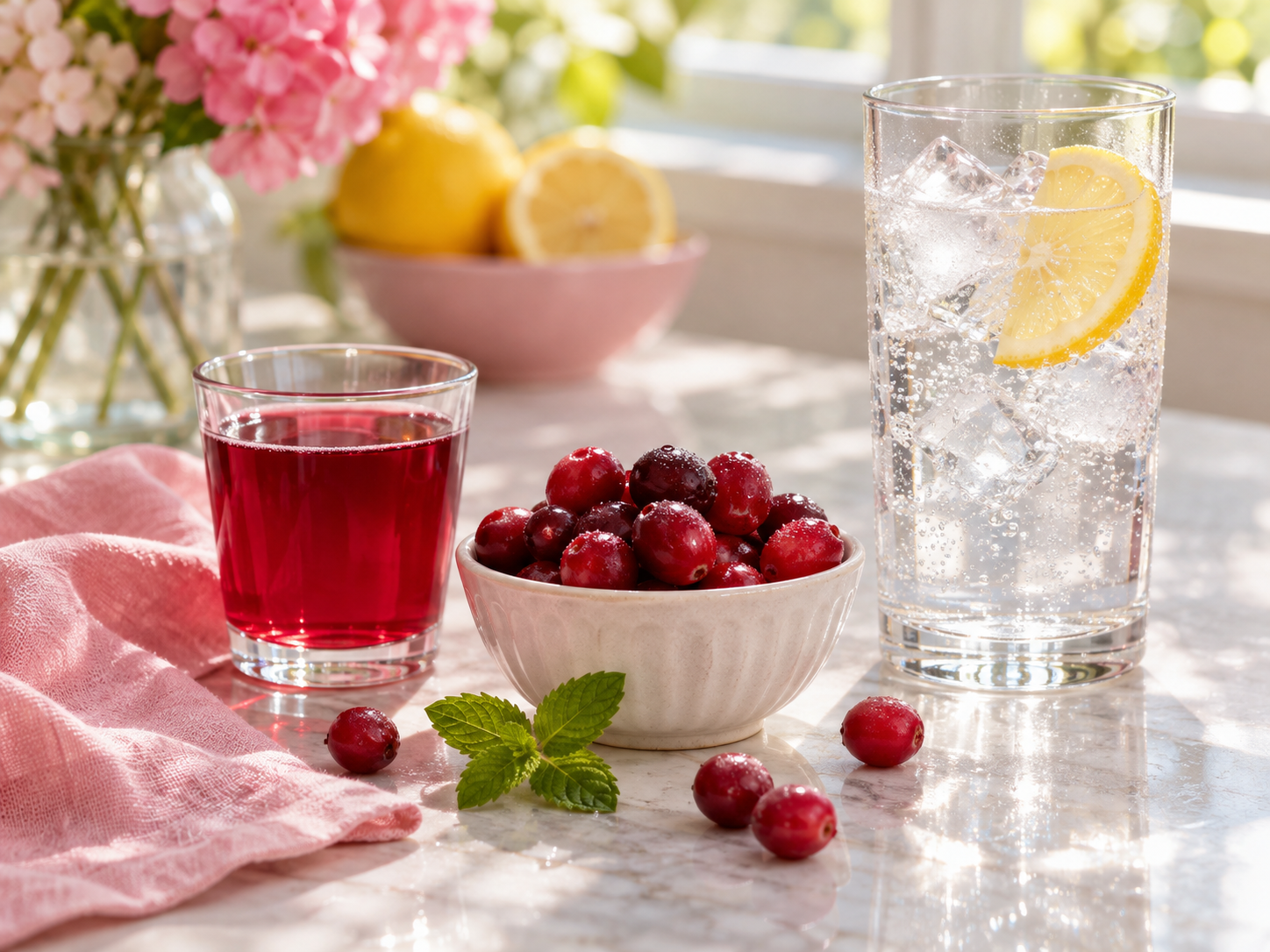
- Pure, unsweetened cranberry juice is very tart. Many people dilute it with water or sparkling water.
- Capsules and tablets avoid the sugar, but quality and PAC content vary. Look for third-party testing, and ask your pharmacist.
- Dried cranberries and cranberry sauce are usually sweetened and haven’t been well studied for UTIs. Enjoy them as food, not medicine.
The National Center for Complementary and Integrative Health notes that the evidence for cranberry juice beverages specifically is “limited and inconsistent.” If you want to try cranberry for prevention, talk with your doctor or pharmacist about which form and how much makes sense for you.
The sugar problem
This is where our nutrition coach hats come on. A typical cranberry juice cocktail has about 110 calories and 25 grams of total sugar per 8-ounce glass, with 23 grams of that added sugar, according to one popular brand’s label. Drinking that every day for UTI prevention adds up fast.
Even 100% cranberry juice has natural sugar. One brand lists about 27 grams of sugar per serving for 100% juice. And light versions often swap sugar for artificial sweeteners, which some women find irritate their bladder.
If you choose juice, try a small amount of unsweetened juice mixed with plenty of water or sparkling water. Bonus: you’re drinking more water, which has its own evidence, as you’ll see below. Our infused water ideas can make that more fun.
Is it safe?
For most people, cranberry in food and drink amounts is safe. In the Cochrane review, few people reported side effects, and the most common was tummy pain. A few cautions:
- Blood thinners. There’s conflicting evidence on whether cranberry interacts with warfarin, according to NCCIH. Memorial Sloan Kettering notes case reports of bleeding, so use should be monitored by a healthcare professional, if not avoided.
- Kidney stones. If you’ve had kidney stones, ask your doctor before taking concentrated cranberry supplements.
- Diabetes. Sweetened juice can raise blood sugar. Capsules or unsweetened juice may be better choices.
- Pregnancy and breastfeeding. Cranberry as food is generally fine, but talk to your provider before starting supplements.
UTI prevention scorecard
Here’s how cranberry stacks up against other common prevention strategies for women with recurrent UTIs. The dots are our plain-language read of the evidence, not a medical rating, so talk with your clinician about what fits you.
- Antibiotic prophylaxisPrescription
A low daily or after-sex dose your clinician prescribes. Effective, but with side effects and resistance concerns.
- Drinking more waterGood evidence
Cut UTIs nearly in half in one trial of women who drank less than 1.5 liters a day.
- Vaginal estrogenAsk your doctor
For women in perimenopause or after menopause. The AUA recommends it when it’s safe for you.
- Cranberry productsModest help
A modest benefit for women with recurrent UTIs. Recommended as an option by the AUA.
- Methenamine hippurateAsk your doctor
A non-antibiotic prescription option the AUA says clinicians may offer.
- ProbioticsUnclear
Evidence is mixed and not strong enough for a firm recommendation yet.
- D-mannoseNot supported
A large 2024 trial found no benefit over placebo.
- Cranberry to treat an active UTIDoesn’t work
Prevention isn’t treatment. An active infection needs a diagnosis and usually antibiotics.
The underrated one: water
Here’s the strategy that doesn’t get nearly enough attention. In a 2018 randomized trial in JAMA Internal Medicine, 140 premenopausal women with recurrent bladder infections who drank less than 1.5 liters of fluid a day were split into two groups. Half added 1.5 liters of water a day to their usual drinks. The other half didn’t change anything.
Over 12 months, the women who drank more water averaged 1.7 bladder infections, compared with 3.2 in the group that didn’t. They also used fewer courses of antibiotics and went longer between infections. The 2025 AUA guideline now says clinicians may offer increased water intake as prevention for women with recurrent UTIs who drink less than about 1.5 liters a day.
That’s about six extra 8-ounce glasses of water a day on top of what you already drink, which is a lot for some women. Start with one extra glass and build up. Our guide to what your pee is trying to tell you explains how to use urine color as a simple hydration check.
Other options to ask about
If you get frequent UTIs, it’s worth a real conversation with your doctor, urologist or urogynecologist. Depending on your situation, they may discuss:
- 💊PrescriptionAntibiotic prophylaxis
A low daily dose or a single dose after sex. Effective, but your doctor will weigh side effects and antibiotic resistance.
- 🌸Perimenopause and afterVaginal estrogen
Falling estrogen changes the vaginal environment. The AUA recommends vaginal estrogen for peri- and postmenopausal women with recurrent UTIs when there’s no reason to avoid it.
- 🧪Non-antibiotic prescriptionMethenamine hippurate
The 2025 AUA guideline added this as an option clinicians may offer.
- 🦠TestingA closer look
Urine cultures with each infection, and sometimes imaging, to check for anything that makes UTIs more likely.
And D-mannose, a sugar sold as a UTI supplement? A 2024 randomized trial of about 600 women with recurrent UTIs found 2 grams a day didn’t reduce suspected UTIs compared with a placebo. The researchers concluded it shouldn’t be recommended for prevention, and the AUA now says D-mannose alone may not be effective.
If you’re in perimenopause and noticing more UTIs, our perimenopause guide covers other changes that can come with falling estrogen.
Everyday habits
These habits aren’t all backed by large trials, but they’re simple, low-risk and commonly recommended:
- 💧HydrationDrink enough water
The best-supported habit on this list, especially if you don’t drink much now.
- 🚽TimingDon’t hold it for hours
Go when you feel the urge so urine doesn’t sit in your bladder.
- 💕IntimacyPee after sex
It may help flush out bacteria pushed toward the urethra.
- ➡️HygieneWipe front to back
Keeps bacteria from the rectum away from the urethra.
- 🧽HygieneSkip douches and sprays
The CDC suggests minimizing douching, sprays and powders in the genital area.
- 🥦Gut healthAvoid constipation
A full bowel can press on the bladder. Our fiber guide can help.
Some women also find that certain birth control methods, like spermicides or diaphragms, seem linked to their UTIs. If you notice a pattern, bring it up with your provider.
If you want to try cranberry
If you get frequent UTIs and your doctor agrees cranberry is a reasonable option, treat it like a simple experiment rather than a forever habit:
- Check with your doctor or pharmacist first. Especially if you take a blood thinner, have had kidney stones, have diabetes or are pregnant.
- Pick one form. A third-party tested capsule, or a small amount of unsweetened juice mixed with water. Skip the sugary cocktail.
- Use it consistently. The studies looked at regular use over months, not a glass here and there when you feel a twinge.
- Track your UTIs. Write down each confirmed infection, the date and any likely triggers. A simple note on your phone works.
- Pair it with water. Add more water at the same time, since that has strong evidence of its own.
- Review after a few months. Bring your notes to your doctor and decide together whether it’s worth continuing or whether to try something else.
And remember the rule: if you feel UTI symptoms starting, cranberry isn’t the plan. Calling your provider is.
Questions to ask your doctor
- Do my infections count as recurrent UTIs, and should we confirm each one with a urine culture?
- Is cranberry a reasonable option for me? Which form, and how much?
- Could anything be making me more prone to UTIs, like my birth control, menopause or how I empty my bladder?
- Would vaginal estrogen or a non-antibiotic prescription make sense for me?
- When would you recommend antibiotic prevention, and what are the trade-offs?
When to call your doctor
- Any UTI symptoms, like burning, urgency, frequent peeing, pelvic pressure or cloudy, bloody or foul-smelling urine.
- Right away if you have fever, chills, back or side pain, nausea or vomiting, which can be signs of a kidney infection.
- The same day if you’re pregnant and have any urinary symptoms.
- If symptoms come back soon after finishing antibiotics.
- If you get UTIs often, to talk about a prevention plan that fits you, including whether cranberry makes sense.
Cranberry myths
- Myth #1What you might have heard
Cranberry juice cures a UTI.
What the research saysNo. Cranberry may help prevent UTIs in some people, but it doesn’t treat an active infection. Burning, urgency or fever means call your doctor.
- Myth #2What you might have heard
Cranberry works because it makes your urine acidic.
What the research saysResearchers now think the main effect comes from proanthocyanidins (PACs) that may stop E. coli from sticking to the bladder wall.
- Myth #3What you might have heard
Any cranberry drink will do.
What the research saysMost grocery store cranberry cocktails are only about 27% juice, with plenty of added sugar. Studies used juice, tablets and capsules, and doses vary widely.
- Myth #4What you might have heard
Cranberry works for everyone.
What the research saysThe benefit showed up for women with recurrent UTIs, children and people after bladder procedures, but not for pregnant women, older adults in care homes or people with bladder emptying problems.
- Myth #5What you might have heard
D-mannose is the natural alternative that works better.
What the research saysA large 2024 placebo-controlled trial found D-mannose didn’t reduce UTIs, and the AUA now says it may not be effective on its own.
- Myth #6What you might have heard
If it’s natural, it can’t interact with my meds.
What the research saysCranberry may interact with the blood thinner warfarin. Check with your doctor or pharmacist before using it regularly.
The bottom line
Cranberry isn’t a myth, and it isn’t a miracle. For women who get frequent UTIs, cranberry products may modestly lower the odds of another infection, and major urology guidelines now list it as an option. But it won’t treat an infection you already have, the sugary cocktail in most fridges isn’t the ideal form, and simple steps like drinking more water have surprisingly strong evidence too.
If UTIs keep interrupting your life, you deserve more than a juice tip. Ask your doctor for a real prevention plan. And if you want help building the everyday habits, like hydration, fiber and not holding it all day because you’re busy taking care of everyone else, that’s what our coaches are here for.
Try this: skip the daily cocktail. Instead, add one extra glass of water to your day this week, then another next week. If you want cranberry too, ask your pharmacist about an unsweetened juice or tested capsule, and check for interactions with any medicines you take.
Sources
- Williams et al., Cochrane Database of Systematic Reviews (2023): Cranberries for preventing urinary tract infections
- Cochrane: Cranberries for preventing urinary tract infections (plain language summary)
- American Family Physician (2024): Medicine by the Numbers: cranberry products for preventing UTIs
- Urology Times: AUA releases amendment to recurrent uncomplicated UTIs in women guideline
- Guideline Central: AUA recurrent UTI guideline: what changed from 2019 to 2025
- American Urological Association: Recurrent uncomplicated urinary tract infections in women: AUA/CUA/SUFU guideline
- Howell, Molecular Nutrition & Food Research (2007): Bioactive compounds in cranberries and their role in prevention of UTIs
- National Center for Complementary and Integrative Health: Cranberry
- Memorial Sloan Kettering Cancer Center: Cranberry: integrative medicine
- Hooton et al., JAMA Internal Medicine (2018): Effect of increased daily water intake in premenopausal women with recurrent UTIs
- JAMA Network via EurekAlert: More water, fewer urinary tract infections in women
- Hayward et al., JAMA Internal Medicine (2024): D-mannose for prevention of recurrent UTI among women
- NIHR Evidence: D-mannose does not prevent urinary tract infections
- American Family Physician (2026): Recurrent UTI in women: diagnosis and management
- CDC: Urinary tract infection basics
- Hooton et al., JAMA Internal Medicine (2018), full text: Background on cystitis risk and recurrence
- Ocean Spray product label: Cranberry juice cocktail nutrition facts
This article is for general information and isn’t medical advice. Talk with your doctor or midwife about what’s right for you.
- UTIs
- Women’s health
- Bladder health
- Supplements
- Hydration
Small habits. Big difference.
Tell us what you’d like to feel better about, from hydration and food to movement and rest. We’ll reply within two business days with coaching and community that make healthy habits feel simple.
Questions
Good questions.
Does cranberry juice prevent UTIs?
It may help a little for some people. A 2023 Cochrane review of 50 trials found cranberry products reduced the risk of UTIs in women with recurrent UTIs by about 26%, meaning about 1 in 16 women would avoid an infection. It didn’t seem to help pregnant women, older adults in care facilities or people with bladder emptying problems.
Can cranberry juice cure a UTI?
No. Cranberry is studied for preventing UTIs, not treating them. If you have UTI symptoms, call your healthcare provider, since an untreated bladder infection can spread to the kidneys.
Are cranberry pills better than juice?
Pills and capsules avoid the sugar in juice, and both were used in studies. But there’s no established dose, and products aren’t formally regulated, so the amount of active PACs varies. Ask your pharmacist about a third-party tested product.
How does cranberry work for UTIs?
Cranberries contain proanthocyanidins (PACs) that may stop E. coli, the most common cause of UTIs, from sticking to the bladder wall, so bacteria are more likely to be flushed out.
Does drinking water prevent UTIs?
In a 2018 trial, premenopausal women with recurrent bladder infections who drank less than 1.5 liters a day and added 1.5 liters of water had about 1.7 infections a year compared with 3.2 in women who didn’t. The AUA now lists increased water as a prevention option.
Does D-mannose work for UTIs?
A large 2024 placebo-controlled trial found 2 grams of D-mannose a day didn’t reduce UTIs in women with recurrent infections, and the AUA guideline says D-mannose alone may not be effective.
Is cranberry safe with blood thinners?
Evidence is conflicting on whether cranberry interacts with warfarin, and there are case reports of bleeding. If you take a blood thinner, talk to your doctor before using cranberry regularly.
Should I drink cranberry juice when pregnant to prevent UTIs?
The Cochrane review didn’t find a benefit for pregnant women. UTIs in pregnancy need medical care, so call your provider with any urinary symptoms and ask before starting supplements.
 Women’s health
 Women’s health
 Nutrition