You’re running to the bathroom every hour. You feel like you never quite empty your bladder. Maybe you leak a little when you sneeze. You’d probably blame your bladder, or your age, or your kids. But there’s a surprising suspect that often gets overlooked: your bowels.
Constipation and bladder problems show up together far more often than chance would explain. The two systems sit side by side, share muscles and nerves and can make each other worse. The good news is that treating constipation can sometimes ease bladder symptoms too. This guide explains how the connection works, what the research says and practical steps to help both.
We’re health coaches, not doctors. Blood in your stool, burning with fever or back pain, being unable to pee, or severe belly pain need prompt medical care. Ongoing bowel or bladder changes are always worth a conversation with your doctor.
Yes, they’re connected
Short answer: yes, constipation can affect your bladder. Doctors have recognized the connection for years, especially in children, where the combination even has a name: bladder and bowel dysfunction. Research in adults, especially women, has found a similar overlap.
Constipation itself is very common. According to the National Institute of Diabetes and Digestive and Kidney Diseases (NIDDK), about 16 out of 100 U.S. adults have symptoms of constipation, rising to about 33 out of 100 adults over 60. Women are more likely to be constipated, especially during pregnancy and after giving birth.
- Of U.S. adultsHave constipation symptomsCommon
- Higher odds of overactive bladderWith fewer than 3 bowel movements a week, one studyLinked
- Of women with leaksAlso had constipation, one studyOverlap
- Strained lessUsing a toilet footstool, one studyEasy fix
NIDDK defines constipation as having fewer than three bowel movements a week, or stools that are hard, dry or lumpy, difficult or painful to pass, or feel like they didn’t fully come out. You can go every day and still be constipated if you’re straining or never feel finished.
Close neighbors in your pelvis
To understand the connection, it helps to picture how crowded your pelvis is.
- Bladder sits at the front of your pelvis, just behind the pubic bone.
- Uterus sits in the middle, between bladder and rectum.
- Rectum sits at the back. When it’s full of stool, it takes up more room and can press forward.
- Pelvic floor muscles form a sling underneath all three and help control both peeing and pooping.
A simplified illustration, not to scale. Close neighbors share space, muscles and nerves.
The bladder and rectum also develop from the same tissue before birth and have closely related nerve supplies. One review in the International Brazilian Journal of Urology noted that given their shared origin and similar nerves, it’s not surprising that bowel and bladder problems so often happen together.
How constipation affects your bladder
There are a few ways a backed-up bowel can cause bladder trouble:
- 💥SpacePressure
A rectum full of stool can press on the bladder, so it feels full sooner and sends the urge to pee earlier.
- 🫗FlowIncomplete emptying
That pressure can also make it harder to empty your bladder completely, leaving urine behind.
- ⚡SignalsShared nerves
The bladder and bowel share nerve pathways, so irritation in one can affect signals to the other.
- 🏋️StrainStraining
Pushing hard to have a bowel movement puts repeated stress on the pelvic floor muscles that also help control your bladder.
- 🔒TensionTight pelvic floor
Some people hold their pelvic floor tight, which can make both pooping and peeing harder to fully finish.
- 🦠UTIsInfection risk
Urine that sits in the bladder gives bacteria more time to grow, which can contribute to UTIs.
Researchers studying children at Boston Children’s Hospital found that stool in the rectum didn’t change how much the bladder could hold, but it did reduce the bladder’s ability to empty, which they said could make children with stool buildup more prone to leaks and UTIs.
What the research says
Several studies have found links between constipation and bladder symptoms in adults:
- Overactive bladder: In a population study of 516 Brazilian women with an average age of about 36, functional constipation was linked to overactive bladder. Having fewer than three bowel movements a week roughly doubled the odds of overactive bladder.
- Incontinence: In a study of 175 women with urinary incontinence presented at the International Continence Society, 68% also had constipation.
- Other urinary symptoms: A study of women with chronic constipation found they were more likely to report incomplete bladder emptying and urinary incontinence than women without constipation.
- Not just women: In a large U.S. study of men, having three or fewer bowel movements a week was linked to waking up to pee at night, incomplete emptying and trouble starting a urine stream.
Most of these studies show an association, not proof that one causes the other. But there’s encouraging evidence that treating constipation can help. In a small study of 52 older adults with chronic constipation and urinary symptoms, relieving constipation significantly improved their urinary symptoms over four months. A review described it as the only prospective study of its kind in older adults, so more research is needed, but the results are promising.
The pelvic floor link
Your pelvic floor muscles support your bladder, uterus and rectum and help control both urine and stool. Pregnancy, childbirth, menopause, chronic coughing, heavy lifting and long-term straining can all affect them.
Chronic constipation and pelvic floor problems often travel together. University of Colorado urogynecologists note that as many as half of people with chronic constipation also have pelvic floor dysfunction. Constipation is also listed among the risk factors for pelvic organ prolapse, where pelvic organs drop and press into the vagina. In one case-control study, women with prolapse had about four times the odds of constipation compared to women without it, and they ate less insoluble fiber.
It goes both ways. Prolapse, especially a rectocele where the rectum bulges into the vaginal wall, can make it harder to empty your bowels, which can lead to more straining. Breaking that cycle often takes treating both the bowel and the pelvic floor.
Pelvic floor physical therapy can help with both bowel and bladder symptoms, including teaching you how to relax your pelvic floor when you go, not just how to strengthen it. If you’ve had a baby, our post on why the six-week checkup isn’t a finish line covers when to ask for a pelvic floor referral.
Constipation and UTIs
In children, the link between constipation and urinary tract infections is well established, and doctors often treat constipation as part of preventing repeat UTIs. Children’s Hospital of Philadelphia notes that it’s important to treat a child’s constipation to improve related bladder symptoms.
In adults the evidence is less direct, but the same logic applies. If your bladder doesn’t empty fully, bacteria have more time to multiply. If you get frequent UTIs, it’s worth mentioning your bowel habits to your doctor. Our posts on whether cranberry prevents UTIs and what your pee is telling you cover other parts of bladder health.
Who’s most affected
Anyone can experience the bowel-bladder connection, but some groups are especially likely to:
- 🤰PregnancyPregnant and postpartum women
Hormones slow digestion, the growing uterus crowds the pelvis and birth affects the pelvic floor.
- 🌸MenopauseWomen in midlife and after menopause
Lower estrogen affects pelvic tissues, and bladder symptoms become more common with age.
- 👵AgeOlder adults
About a third of adults over 60 have constipation symptoms, and urinary symptoms also increase with age.
- 🧒KidsChildren
Holding in stool and pee is common, and constipation often goes unnoticed by parents.
- 💊MedsPeople on certain medications
Some pain medicines, iron supplements and other drugs can cause constipation or affect the bladder.
- 🏃♀️Pelvic floorWomen with pelvic floor problems
Prolapse, weakness or tightness can affect both systems.
Symptom guide: common or get checked?
- If you noticeNeeding to pee more often or more urgently when you’re backed upWhat it may be
A full rectum pressing on the bladder
CommonTreat the constipation and see if bladder symptoms ease
- If you noticeFeeling like your bladder never fully emptiesWhat it may be
Stool pressure or a tight pelvic floor making emptying harder
Mention itTrack it for a week and bring it up with your doctor
- If you noticeLeaking when you cough, sneeze or strainWhat it may be
Pelvic floor weakness, sometimes worsened by straining
Mention itAsk about pelvic floor physical therapy
- If you noticeUTIs that keep coming backWhat it may be
Incomplete bladder emptying, especially with constipation
Get checkedAsk your doctor to look at bowel habits as part of the workup
- If you noticeA bulge, heaviness or pressure in your vaginaWhat it may be
Possible pelvic organ prolapse
Get checkedSee your OB-GYN or a urogynecologist
- If you noticeBurning when you pee plus fever, back pain or chillsWhat it may be
Possible kidney infection
Call todayCall your doctor the same day or go to urgent care
- If you noticeBlood in your stool, unexplained weight loss or severe belly painWhat it may be
Needs medical evaluation
Call todayDon’t wait; see a doctor promptly
- If you noticeCan’t pee at all, or no bowel movement with vomiting and a swollen bellyWhat it may be
Possible urinary retention or bowel blockage
Go nowGo to urgent care or the ER
Fiber and fluids
For many people, the first step is softer, easier-to-pass stools. NIDDK recommends eating more fiber, drinking plenty of water and other liquids, and getting regular physical activity.
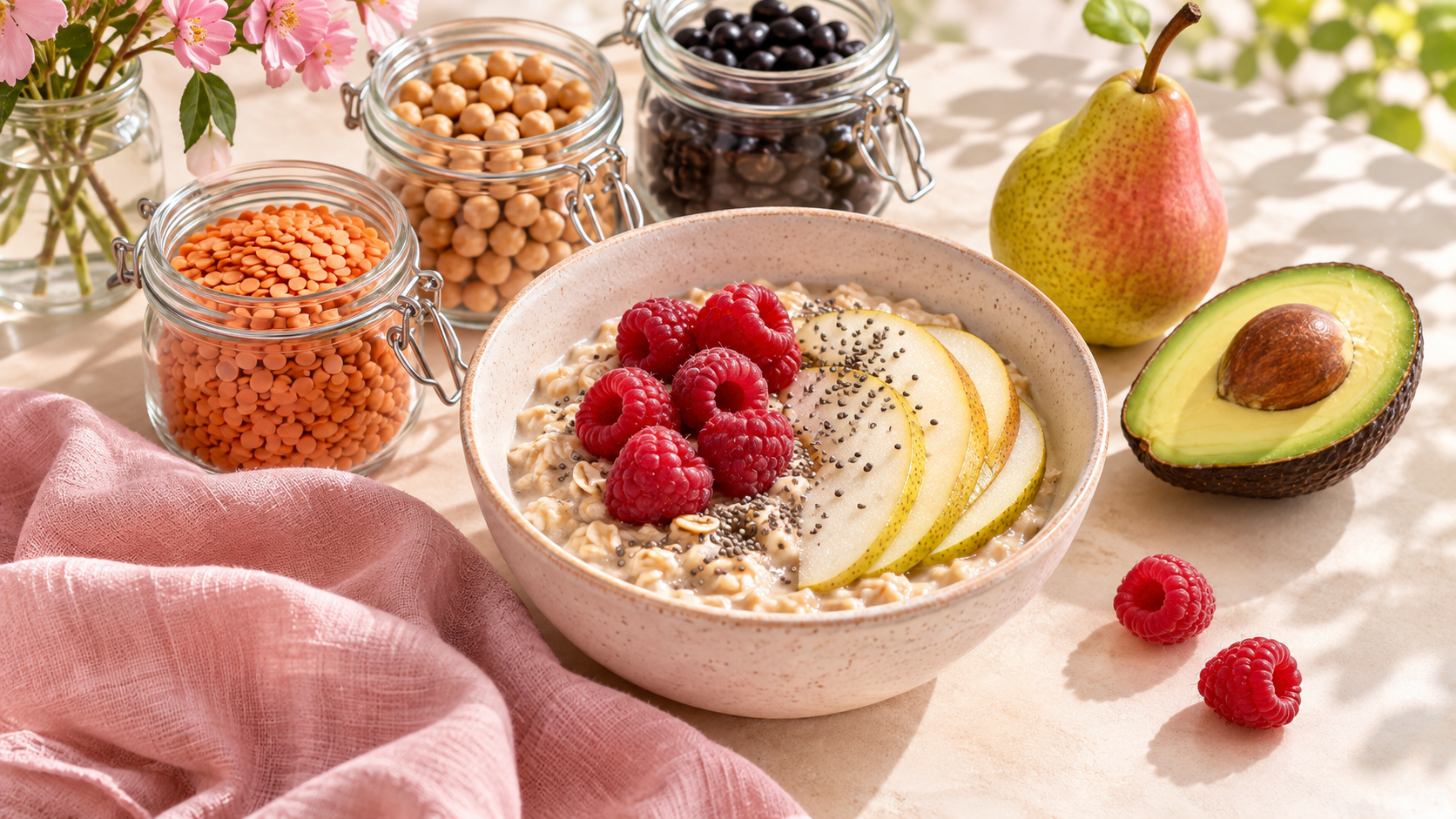
- Add fiber gradually. Fruits, vegetables, beans, lentils, whole grains, nuts and seeds. Going too fast can cause gas and bloating.
- Try prunes or kiwi. Both are often recommended for gentle relief.
- Drink steadily. Spread fluids through the day instead of chugging at once.
- Don’t cut fluids to pee less. It can make constipation worse and urine more concentrated, which may irritate your bladder.
- Watch bladder irritants. Caffeine, alcohol and fizzy drinks can make urgency worse for some people.
- Taper fluids in the evening if you’re getting up at night to pee, rather than cutting back all day.
Our fiber gap guide has easy ways to get more fiber without overhauling your diet.
How you sit on the toilet matters
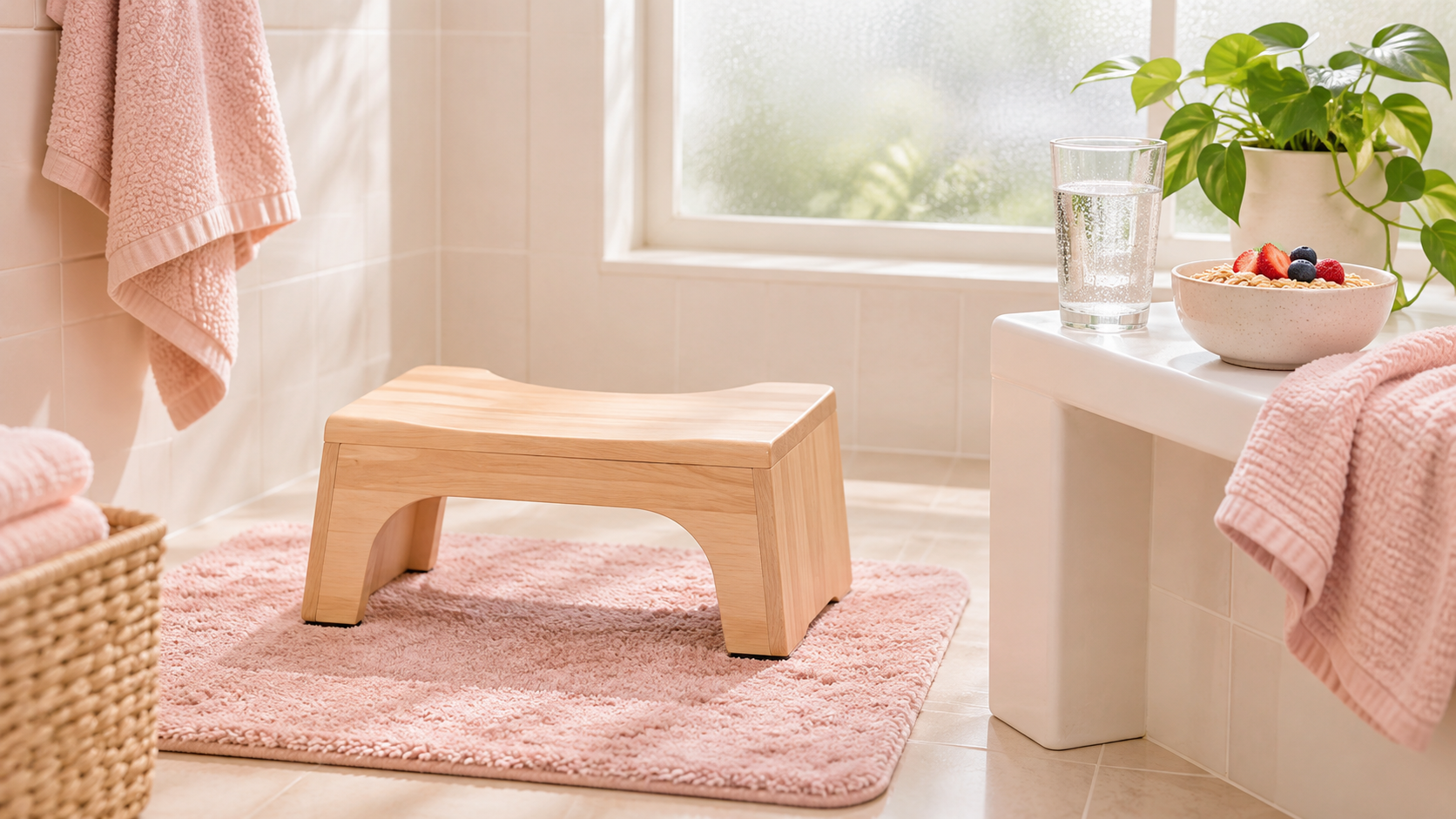
Modern toilets have us sit upright, which creates a bend in the rectum that can make bowel movements harder. Raising your knees with a footstool puts you closer to a squat, which straightens that bend.
In a four-week study at The Ohio State University Wexner Medical Center, 71% of participants had faster bowel movements and 90% reported less straining when using a toilet stool, and two-thirds said they’d keep using one. The study was small, but it’s a cheap, easy thing to try.
- Put your feet on a stool so your knees are higher than your hips.
- Lean forward and rest your elbows on your knees.
- Relax your belly and let it bulge slightly instead of sucking it in.
- Breathe out slowly rather than holding your breath and bearing down.
- Give it a few minutes, but don’t sit and strain for long periods.
The same relaxed position can help you empty your bladder more fully too. Sitting all the way down on the toilet, rather than hovering, lets your pelvic floor relax.
Bathroom habits that help
- ⏰TimingDon’t ignore the urge
Holding it in can make constipation worse. Go when your body tells you to.
- ☕RoutineUse the morning window
Many people’s bowels are most active after breakfast or a warm drink.
- 🚶ActivityMove every day
Walking and other movement help keep your gut moving.
- 🚽BladderDon’t pee “just in case” constantly
Going too often can train your bladder to hold less. Ask your provider about bladder training.
- 📱FocusLeave the phone outside
Long sessions on the toilet encourage straining and can contribute to hemorrhoids.
- 🧘BreathRelax, don’t push
Slow breaths help the pelvic floor let go.
Over-the-counter laxatives or fiber supplements can help some people, but check with your doctor or pharmacist about which type is right for you, especially if you’re pregnant, breastfeeding or on other medications.
Medicines and supplements that can back you up
Sometimes constipation has a simple cause hiding in your medicine cabinet. NIDDK lists certain medicines and dietary supplements among the common causes of constipation. Some can also affect how your bladder works, so it’s worth reviewing them if you have both kinds of symptoms.
- Iron supplements, common during pregnancy and for heavy periods, often cause constipation.
- Calcium supplements can slow things down for some people.
- Opioid pain medicines, including after surgery or a C-section, are a well-known cause.
- Some antidepressants, antihistamines and allergy or sleep aids can cause constipation and can also make it harder to empty your bladder.
- Some bladder medicines for overactive bladder can cause constipation as a side effect, which is another reason to treat both together.
Never stop a prescribed medicine on your own. Instead, bring a list of everything you take, including vitamins and supplements, to your doctor or pharmacist and ask whether any of it could be playing a role. Sometimes a different dose, a different form of iron, or adding a stool softener or fiber supplement is all it takes. Your pharmacist can also help you choose between the different types of over-the-counter constipation remedies, since they work in different ways and aren’t all right for everyone.
Keep a bowel and bladder diary
If you’re not sure whether your bowel and bladder symptoms are connected, tracking them for a week can help. NIDDK suggests recording your bowel movements and stool appearance for several days or weeks before a doctor’s visit.
- Bowel movements: how often, and whether they were hard, normal or loose.
- Straining: did you have to push hard or feel like you didn’t finish?
- Peeing: roughly how many times a day and night, and any urgency.
- Leaks: when they happened and what you were doing (coughing, lifting, rushing).
- Fluids: about how much you drank, and how much was coffee, tea, soda or alcohol.
- Fiber: did you get fruits, vegetables, beans or whole grains today?
- Bladder infections: any burning, cloudy urine or UTI symptoms.
A notes app works fine. Patterns are much easier for your doctor or pelvic floor PT to spot in writing than from memory.
When and where to get help
NIDDK recommends seeing a doctor if constipation doesn’t improve with self-care or lasts a long time, and especially if you have bleeding from your rectum, blood in your stool, continual belly pain or other signs of a medical problem.
Depending on your symptoms, helpful people to see include:
- Your primary care doctor or OB-GYN to start the conversation and rule out other causes.
- A pelvic floor physical therapist for leaking, urgency, straining, pain or prolapse symptoms.
- A urogynecologist or urologist for ongoing bladder symptoms, prolapse or repeat UTIs.
- A gastroenterologist for chronic or severe constipation, or concerning symptoms like bleeding.
- A registered dietitian for help increasing fiber comfortably, especially if you have IBS.
Ask about both systems at the same visit. Bladder and bowel problems are often treated separately, so you may need to connect the dots for your care team. Bringing your diary makes that conversation much easier.
Myths about bowels and bladders
- Myth #1What you might have heard
Your bladder and bowels are separate systems.
What’s actually trueThey sit right next to each other, share pelvic floor muscles and have closely related nerves. Problems in one often show up in the other.
- Myth #2What you might have heard
Drinking less water will help you pee less.
What’s actually trueCutting fluids can make stool harder and urine more concentrated, which can irritate the bladder. Steady, spread-out fluids are usually better.
- Myth #3What you might have heard
Pushing harder helps you go.
What’s actually trueRegular straining can stress your pelvic floor and has been linked to prolapse. Better positioning and softer stools help more.
- Myth #4What you might have heard
Leaking is just part of being a woman, especially after kids.
What’s actually trueIt’s common, but often treatable. Pelvic floor physical therapy and fixing constipation can make a real difference.
- Myth #5What you might have heard
You need to go every day to be regular.
What’s actually trueNormal ranges from about three times a day to three times a week. The bigger signs are hard stools, straining or feeling incomplete.
- Myth #6What you might have heard
Bladder problems always mean a UTI.
What’s actually trueUrgency and frequency can also come from constipation, pelvic floor issues, overactive bladder or bladder irritants like caffeine.
Your turn
If you’ve been dealing with bladder symptoms, try looking at your bowels too. This week:
- Add one serving of fiber a day, like a pear, a handful of berries or half a cup of beans.
- Keep a water bottle with you and sip steadily.
- Put a small stool or step in front of your toilet.
- Start a simple bowel and bladder diary.
- Book a visit, or ask for a pelvic floor PT referral, if symptoms are hanging on.
Your bladder and bowels are neighbors. Take care of one and you’re often helping the other, and none of it is too embarrassing to bring up with your doctor.
Sources
- National Institute of Diabetes and Digestive and Kidney Diseases: Definition and facts for constipation
- National Institute of Diabetes and Digestive and Kidney Diseases: Constipation
- Arquivos de Gastroenterologia (2018): Functional constipation and overactive bladder in women: a population-based study
- International Continence Society (2021): Prevalence of chronic constipation in women with urinary incontinence
- International Urogynecology Journal (2012): Chronic constipation and lower urinary tract symptoms
- Population-based cohort study: Lower urinary tract symptoms and bowel habits in men
- Charach et al., Gerontology (2001): Alleviating constipation in the elderly improves lower urinary tract symptoms
- International Brazilian Journal of Urology (2011): Constipation and LUTS: how do they affect each other?
- Boston Children’s Hospital study: Rectal distension and bladder emptying in children
- Children’s Hospital of Philadelphia: Constipation
- University of Colorado Urogynecology: Constipation due to pelvic organ prolapse
- Arya et al., American Journal of Obstetrics & Gynecology (2005): Pelvic organ prolapse, constipation and dietary fiber intake in women
- MDedge: Raising awareness of pelvic organ prolapse
- The Ohio State University Wexner Medical Center (2019): Research finds toilet stool may solve common bowel issues
This article is for general information and isn’t medical advice. Talk with your doctor or midwife about what’s right for you.
- Bladder health
- Gut health
- Pelvic floor
- Constipation
- Women’s health
Find your strength. Find your girls.
Ready for habits that help your whole body work better? Tell us where you are and what you’re looking for. We’ll reply within two business days.
Questions
Good questions.
Can constipation make you pee more often?
Yes. A rectum full of stool can press on the bladder, making it feel full sooner and causing more frequent or urgent trips to the bathroom.
Can constipation cause urinary incontinence?
It can contribute. Pressure on the bladder and repeated straining can affect bladder control and the pelvic floor. Studies have found constipation is common in women with urinary incontinence.
Can constipation cause UTIs?
In children the link is well established. In adults, constipation can make it harder to empty your bladder completely, which may raise UTI risk. If you get frequent UTIs, mention your bowel habits to your doctor.
Will treating constipation help my bladder?
It may. A small study of older adults found that relieving constipation significantly improved urinary symptoms. It’s worth trying, alongside medical advice.
What counts as constipation?
NIDDK defines it as fewer than three bowel movements a week, or stools that are hard, dry or lumpy, difficult or painful to pass, or feel incomplete.
Does straining cause prolapse?
Chronic constipation and straining are considered risk factors for pelvic organ prolapse. Women with prolapse are more likely to report constipation, and the two can make each other worse.
Should I drink less water if I pee a lot?
Usually no. Cutting fluids can worsen constipation and concentrate urine, which may irritate your bladder. Spread fluids through the day and taper in the evening if nighttime peeing is an issue.
Do toilet footstools really work?
They may help. In an Ohio State study, 71% of participants had faster bowel movements and 90% strained less when using a toilet stool.
Can pelvic floor therapy help both bladder and bowel problems?
Yes. Pelvic floor physical therapists treat leaking, urgency, straining, pain and prolapse, and can teach you how to relax as well as strengthen these muscles.
When should I see a doctor?
If constipation doesn’t improve with self-care, lasts a long time, or comes with bleeding, blood in your stool, ongoing belly pain, weight loss, fever or trouble peeing, see a doctor.
 Women’s health
 Women’s health
 Nutrition