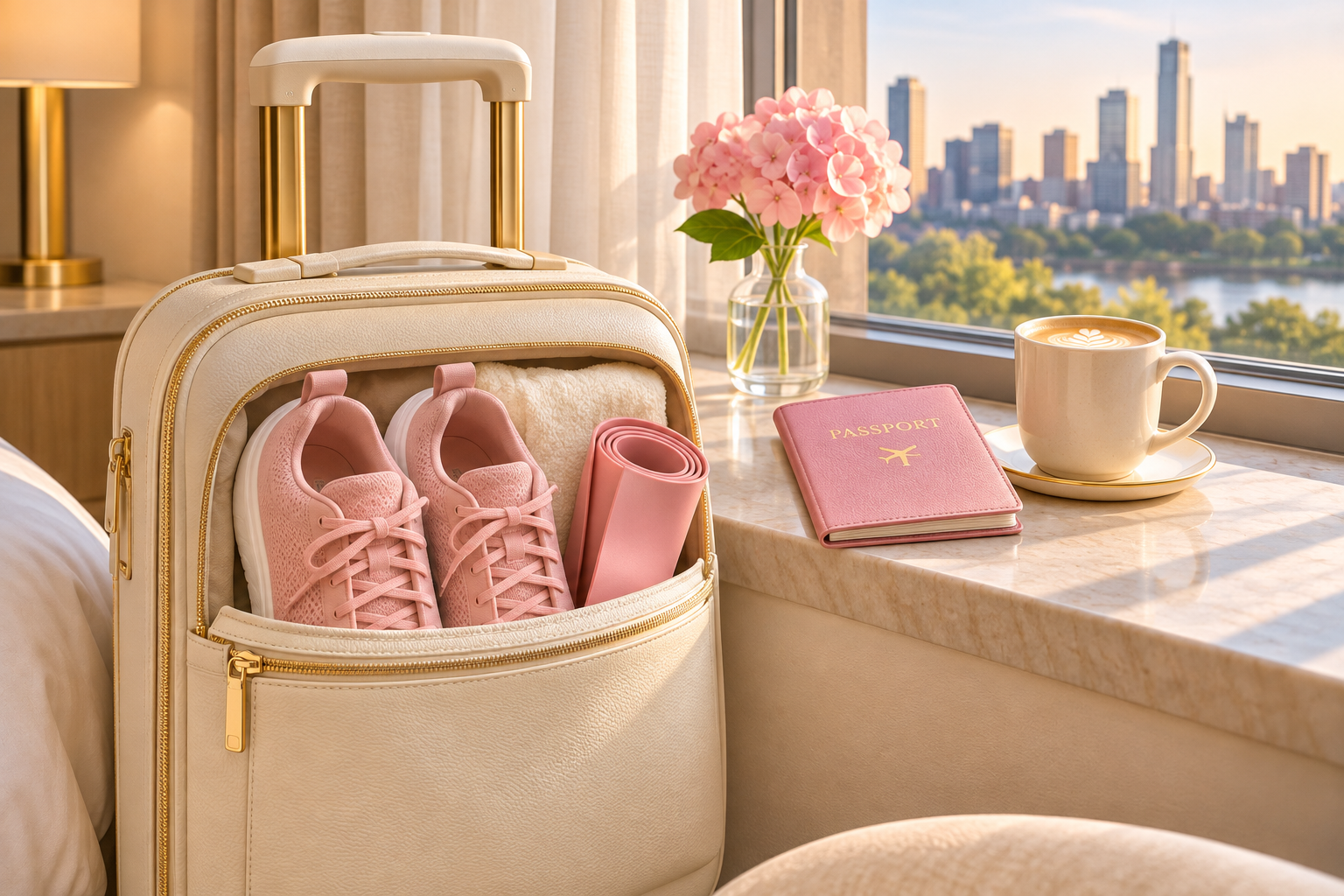
Boarding pass in one hand, coffee in the other, a pair of pink sneakers in your carry-on that you have every intention of wearing. Then the trip happens: early flights, late dinners, back-to-back meetings, a hotel bed that’s a little too comfortable. By the time you’re home, your routine feels like it lives in another time zone.
If you travel for work, you know the feeling. It’s not that you don’t care about your health. It’s that travel takes away the things that usually hold your routine together: your schedule, your gym, your kitchen and your sleep.
This guide is about staying strong anyway. Not perfectly, and not by adding stress to an already full trip, but with a few smart habits that keep you feeling like yourself on the road. We’ll cover what to pack, how to handle long flights and jet lag, a 20-minute hotel room workout, how to eat well between airports and client dinners, and how your coach can plan around your itinerary so you come home feeling better than when you left.
Maintain, don’t build
The single most helpful mindset shift for travel is this: a work trip is a maintenance week, not a building week.
You’re not trying to hit personal records in a hotel gym at 6 a.m. after a red-eye. You’re trying to keep the momentum you’ve built at home, so you don’t have to start over when you get back. That might mean shorter workouts, fewer of them and more walking. That’s not falling off the plan. That’s the plan.
Maintenance also takes pressure off. When the bar is “keep the thread going” instead of “have a perfect week,” a ten-minute band workout before a breakfast meeting feels like a win, not a compromise. And wins are what keep you going.
The research on habits supports this. In a well-known University College London study, missing one opportunity did not significantly impact the habit-building process. What matters most is keeping the thread going, even with something small, and getting back to normal quickly.
And even a little movement helps right away. According to the CDC, a single session of moderate-to-vigorous activity can bring immediate benefits like better sleep quality and less anxiety. Two things every business traveler could use more of.
Before you go
A few minutes of planning before your trip can save you a lot of scrambling once you’re there.
- Look at your calendar and find the gaps. Early mornings, the hour before dinner, a long layover. Put two or three short workouts on your actual calendar like meetings.
- Check the hotel. Is there a gym? A pool? A nearby park or walking path? Some hotels even offer in-room equipment or loaner workout gear.
- Pick an aisle seat on long flights. It makes getting up to move a lot easier.
- Shift your sleep if you’re crossing several time zones. More on this in the jet lag section below.
- Send your itinerary to your coach. If you work with one of our coaches, a quick message with your dates and schedule lets them build a travel plan for you.
- Pack your kit. Keep a small travel fitness kit ready to go so you’re not deciding every trip.
The carry-on kit
You don’t need much. Everything below fits in a small pouch or the side of your carry-on:
- 👟Wear on the planeOne pair of versatile sneakers
Comfortable enough for the airport, supportive enough for a workout or a long city walk.
- 🎗️Weighs nothingA resistance band or two
Turns any hotel room into a gym. Loop bands and a long band with handles cover almost everything.
- 🍋HydrationA refillable water bottle
Fill it after security and keep it with you all day.
- 🍬FuelProtein-rich snacks
Nuts, jerky, protein bars or roasted chickpeas for delayed flights and back-to-back meetings.
- 😴SleepEye mask and earplugs
For the plane and the hotel room that’s never quite dark or quiet enough.
- 👗Packs flatOne workout outfit
Leggings, a sports bra and a quick-dry top. Rinse in the sink if you need to.
On the plane
Long flights are hard on the body: hours of sitting, dry cabin air, salty snacks and broken sleep. A few simple habits make a big difference.
Move every hour or two
Sitting still for a long time isn’t just uncomfortable. On long flights, it can raise the risk of blood clots in the legs. Research reported by NPR found that travelers on flights longer than four hours face a two- to three-fold increase in the risk of a blood clot, though the overall risk for healthy travelers is still low. Certain factors, like hormonal birth control, recent surgery or a history of clots, can raise risk further.
The fix is simple: move. When the seatbelt sign is off, walk the aisle. In your seat, flex and point your feet, roll your ankles and lift your knees one at a time. Avoid sleeping for very long stretches in one position. If you’re at higher risk, ask your doctor before long trips about extra precautions like compression socks.
Hydrate (and go easy on the bar cart)
The CDC’s travel guidance notes that you should stay hydrated and avoid excess alcohol when flying, because dehydration can make jet lag symptoms worse. Fill your bottle after security, drink water with every in-flight drink and enjoy that glass of champagne without making it three.
Eat on your destination’s schedule
If you’re crossing time zones, try to eat and sleep according to where you’re going rather than where you’re leaving. If it’s breakfast time at your destination, have breakfast. If it’s nighttime there, eat lightly and try to rest.
Beating jet lag
Jet lag happens when your body clock is out of sync with local time. According to the CDC, it’s usually easier to adapt after flying west than east, with travelers adjusting about 1.5 hours per day after westward travel and about one hour per day after eastward travel.
The most powerful tool you have is light. Light at the right time helps shift your body clock toward your destination. Here’s a simple cheat sheet:
- LightFlying east
Get bright light in the morning at your destination. Avoid bright light in the evening.
Flying westGet bright light in the afternoon and evening. Avoid bright light early in the morning.
- Sleep before you goFlying east
Shift bedtime earlier for a few days before the trip, if you can.
Flying westShift bedtime later for a few days before the trip, if you can.
- MovementFlying east
A morning walk outside does double duty: light plus movement.
Flying westAn afternoon or early-evening walk outside helps you stay up later.
- CaffeineFlying east
Use it in the local morning, then cut off by early afternoon.
Flying westSkip it first thing if you woke up too early; save it for when you need to push through the afternoon.
A few more tips from the CDC’s guidance: time meals and sleep to your destination, get as much natural light as you can once you arrive, and avoid long-acting sleep aids on the plane. For short trips of a day or two, many travelers find it easier to stay close to their home schedule instead of fully adjusting.
Some frequent travelers use melatonin or other sleep aids. The CDC notes that timed melatonin is one option clinicians may recommend, but please talk to your doctor before taking any supplement or medication, especially if you’re pregnant, breastfeeding or take other medications. That’s outside what a coach should advise on.
The 20-minute hotel room workout
No gym? No problem. All you need is a little floor space and, if you packed it, a resistance band. Do each move below, rest as needed and repeat the circuit three times. That’s about 20 minutes.
- 🏋️♀️12 repsSquats
Feet hip-width, sit back like there’s a chair behind you. Hold a band under your feet to make it harder.
- 💪8–10 repsPush-ups
On the floor, the bed frame or the desk edge. The higher your hands, the easier it gets.
- 🚶♀️8 each sideReverse lunges
Step back, lower gently, push through your front heel. Hold the desk for balance if needed.
- 🎗️12 repsBand rows
Loop the band around a sturdy door handle or your feet. Pull elbows back and squeeze your shoulder blades.
- 🍑15 repsGlute bridges
Lie on your back, feet flat, press your hips up and squeeze. Add a loop band above your knees for more burn.
- ⏱️30 secondsPlank or dead bug
Hold a forearm plank, or lie on your back and slowly extend opposite arm and leg. Choose what feels good for your core.
Make it fit your day
- Short on time? Do one round. Five minutes still counts.
- Feeling great? Add a fourth round or slow down each rep to make it harder.
- Thin walls or a sleeping roommate? Everything above is quiet. No jumping required.
- Postpartum or managing pelvic floor or core concerns? Stick with the versions your coach or pelvic floor physical therapist has cleared for you.
- Feel pain? Stop. A good travel workout should leave you energized, not hurting.
Want more? Our Strong in 20 dumbbell workout works in hotel gyms too.
Making the most of the hotel gym
Hotel gyms range from a single treadmill in a closet to a full fitness center with a view. Whatever you find, a few strategies help you get a good workout in without wasting time figuring it out.
- Go early or late. Hotel gyms are often quietest first thing in the morning and after dinner.
- Look for dumbbells first. A set of dumbbells and a bench is all you need for a full-body session. Swap the bodyweight moves above for dumbbell versions: goblet squats, rows, presses and Romanian deadlifts.
- Use the cardio machine as a warm-up, not the whole workout. Five to ten minutes on the bike or treadmill warms you up, then spend the rest of your time on strength.
- Keep it simple. Pick four or five moves and do them in a circuit. You don’t need to learn new equipment on a work trip.
- Wipe it down. Shared equipment gets a lot of use. A quick wipe before and after is good for everyone.
- No gym at all? Ask the front desk. Many hotels partner with nearby gyms or studios, offer day passes or can recommend a safe walking or running route.
If you’re in a new city with a free morning, consider booking a local class instead. A Pilates, barre or yoga class can be one of the most memorable parts of a trip, and it’s a fun way to see a neighborhood through local eyes.
Moving more on a packed itinerary
Formal workouts are great, but on busy trips, everyday movement often does the heavy lifting. Ideas that fit even the fullest schedules:
- 🌅Early or lateBookend your day
Ten minutes of band work before your first meeting or after your last call. Short beats skipped.
- 🚶♀️Built inWalk to things
Walk to dinner, the client’s office or the coffee shop instead of hopping in a car when it’s safe and practical.
- 🏢SneakyTake the stairs
Hotel stairs, office stairs, airport stairs. Every flight counts.
- 📞MultitaskMake calls walking
Take one phone call a day on foot, around the block or around the hotel.
- 🏖️FunExplore on foot
Got a free hour? Walk somewhere you’ve never been. It’s the best way to see a new city.
- 🏃♀️TreatBook a class
A local yoga, Pilates or barre class can be a highlight of the trip, not a chore.
The Physical Activity Guidelines for Americans recommend that adults aim for at least 150 minutes of moderate activity a week, plus strength training on two or more days. A travel week with two hotel workouts and plenty of walking can get you surprisingly close.
Eating well on the road
Travel food can be the trickiest part: airport terminals, hotel breakfasts, room service and catered lunches. You don’t need a perfect plan. You need a simple formula you can use anywhere.
The anywhere plate
At almost any restaurant, buffet or room-service menu, look for:
- A protein: eggs, Greek yogurt, chicken, fish, steak, tofu or beans.
- Vegetables or fruit: a side salad, roasted vegetables, a fruit cup or berries.
- A carb you enjoy: toast, potatoes, rice, pasta or a great croissant if you’re in Paris.
- Water: a glass with every meal, plus your bottle in between.
Airports and long days
- Pack snacks. Protein-rich snacks keep you from making decisions while starving at the gate.
- Look for grab-and-go basics. Many airport shops now carry yogurt, boiled eggs, hummus packs, fruit and salads.
- Don’t skip meals on meeting-heavy days. Skipping lunch usually leads to a 4 p.m. energy crash and an enormous dinner.
Room service and hotel breakfasts
Hotel breakfasts are a great opportunity. Eggs, yogurt, fruit and oatmeal are almost always on offer. For room service, the anywhere-plate formula works perfectly: a protein, a vegetable side and something you’ll actually enjoy.
And yes, enjoy the local food. Travel is part of life, and food is part of travel. A great meal in a new city isn’t a slip-up. It’s a memory.
Client dinners and drinks
Business dinners are where a lot of travel habits come undone, not because of one meal, but because of four in a row. A few strategies that work without making things awkward:
- Decide before you arrive. “One drink and dessert if it’s amazing” is easier to stick to than deciding on the spot.
- Alternate drinks with water. Nobody notices, and you’ll feel much better in the morning.
- Order the drink you love and sip it slowly. A glass you enjoy for an hour beats three you barely notice.
- Lead with protein and vegetables. Then enjoy the bread basket or pasta without guilt.
- Have a go-to non-alcoholic order. Sparkling water with lime or a mocktail is completely normal at business dinners now.
- Walk afterward if you can. A short walk back to the hotel after a big dinner feels great.
Protecting your sleep
Sleep is the foundation that everything else sits on. When you’re short on sleep, workouts feel harder, cravings feel stronger and patience runs thin. On the road:
- Make the room dark and cool. Close the blackout curtains, use your eye mask and turn down the thermostat.
- Set a wind-down alarm. Thirty minutes before bed, put away the laptop and dim the lights.
- Watch the late caffeine and alcohol. Both can make sleep lighter and more broken.
- Keep the first morning light. A short walk outside in the morning helps reset your clock, especially after eastward flights.
How your coach plans around your trip
This is where coaching really shines. Instead of trying to force your home routine into a travel week, your coach builds a version that fits your trip. Send your itinerary, and you’ll get something like this:
- SundayFly out. Walk the airport, move every hour or two on the plane, light dinner, early-ish bed.
- MondayMorning light walk, 20-minute hotel workout, meetings, walk to dinner.
- TuesdayRest from workouts. Stairs and walking only. Protein at every meal.
- Wednesday20-minute hotel workout before breakfast. Client dinner: one drink, lots of water.
- ThursdayFly home. Stretch at the gate, hydrate, quick walk after landing.
- FridayBack to your normal plan, gently. Check in with your coach about how the trip went.
Your coach can also:
- Swap workouts for hotel-room or hotel-gym versions.
- Adjust nutrition habits for restaurants, airports and client dinners.
- Plan your re-entry so you ease back into your full plan without feeling wiped out.
- Check in mid-trip if you want a little accountability from the road.
Pink Plus members get priority replies and two video calls a month, which many frequent travelers love for quick form checks from a hotel room or a plan review before a big trip. Read more about how 1:1 coaching works.
If you’re a traveling mom
Work travel can come with its own layer of feelings when you have kids at home: guilt, missing them, worrying about the routine falling apart. A few gentle reminders:
- Taking care of yourself on the road is not selfish. A workout or a full night of sleep in a hotel room can be a real gift to a tired mom.
- Plan a connection ritual. A bedtime video call, a postcard or a photo of your hotel view each morning helps little ones feel close to you.
- If you’re pumping, plan breaks into your day and talk with your provider or a lactation consultant about storage and travel tips. Many airports now have private lactation spaces.
- Expect a re-entry day. Kids often need extra cuddles when you get home. Plan an easy evening.
Coming home
The goal isn’t a perfect trip. It’s coming home still feeling like yourself, with your routine close enough to pick right back up. A few walks, a couple of hotel workouts and a lot of water add up.
When you get home, give yourself a day to settle. Unpack your sneakers first, so they’re by the door. Get outside in the morning light. Have a simple, protein-rich meal. Then get back to your normal plan the next day, even if it’s a lighter version.
And if travel is a big part of your life, you don’t have to figure it out alone every time. Our coaches build plans that move with you, through hotel rooms, layovers and time zones, so you can stay strong wherever work takes you.
Sources
- CDC Yellow Book: Jet Lag Disorder
- NPR: Move Around on Long Flights to Prevent Blood Clots
- CDC: Health Benefits of Physical Activity for Adults
- JAMA: The Physical Activity Guidelines for Americans
- University College London: How long does it take to form a habit?
This article is for general information and isn’t medical advice. Talk with your doctor or midwife about what’s right for you.
- Business travel
- Hotel workouts
- Jet lag
- Fitness
- Healthy habits
Stay strong wherever work takes you.
Tell us a little about your schedule and your travel. We’ll reply within two business days with coaching that moves with you.
Questions
Good questions.
How can I stay fit when I travel for work?
Think of travel as a maintenance week. Pack a resistance band and sneakers, schedule two or three short workouts, walk as much as you can, eat a simple protein-plus-produce plate at most meals and protect your sleep.
What’s a good hotel room workout?
Try three rounds of squats, push-ups, reverse lunges, band rows, glute bridges and a plank or dead bug. It takes about 20 minutes and needs only floor space and a resistance band.
How do I reduce jet lag?
Shift your sleep toward your destination before you go if you can, stay hydrated, limit alcohol, eat and sleep on destination time and use light strategically: morning light after flying east, afternoon and evening light after flying west.
Is sitting on long flights dangerous?
For most healthy travelers the risk is low, but long flights can increase the risk of blood clots. Get up and walk when you can, flex your ankles in your seat and talk to your doctor before long trips if you have extra risk factors.
Should I take melatonin for jet lag?
Some travelers do, and the CDC notes it as an option clinicians may recommend. Talk to your doctor before taking any supplement or medication.
Can my coach help with travel?
Yes. Send your coach your itinerary and they’ll adapt your workouts, nutrition habits and recovery around your trip, then help you ease back in when you get home.
Keep reading
 Fitness
 Coaching