Bulgarian split squat: proper form and beginner modifications
How to set up and do a Bulgarian split squat with confidence, the glute and quad muscles it works, how to stop wobbling, what the research says, and easy modifications so you can start wherever you are.
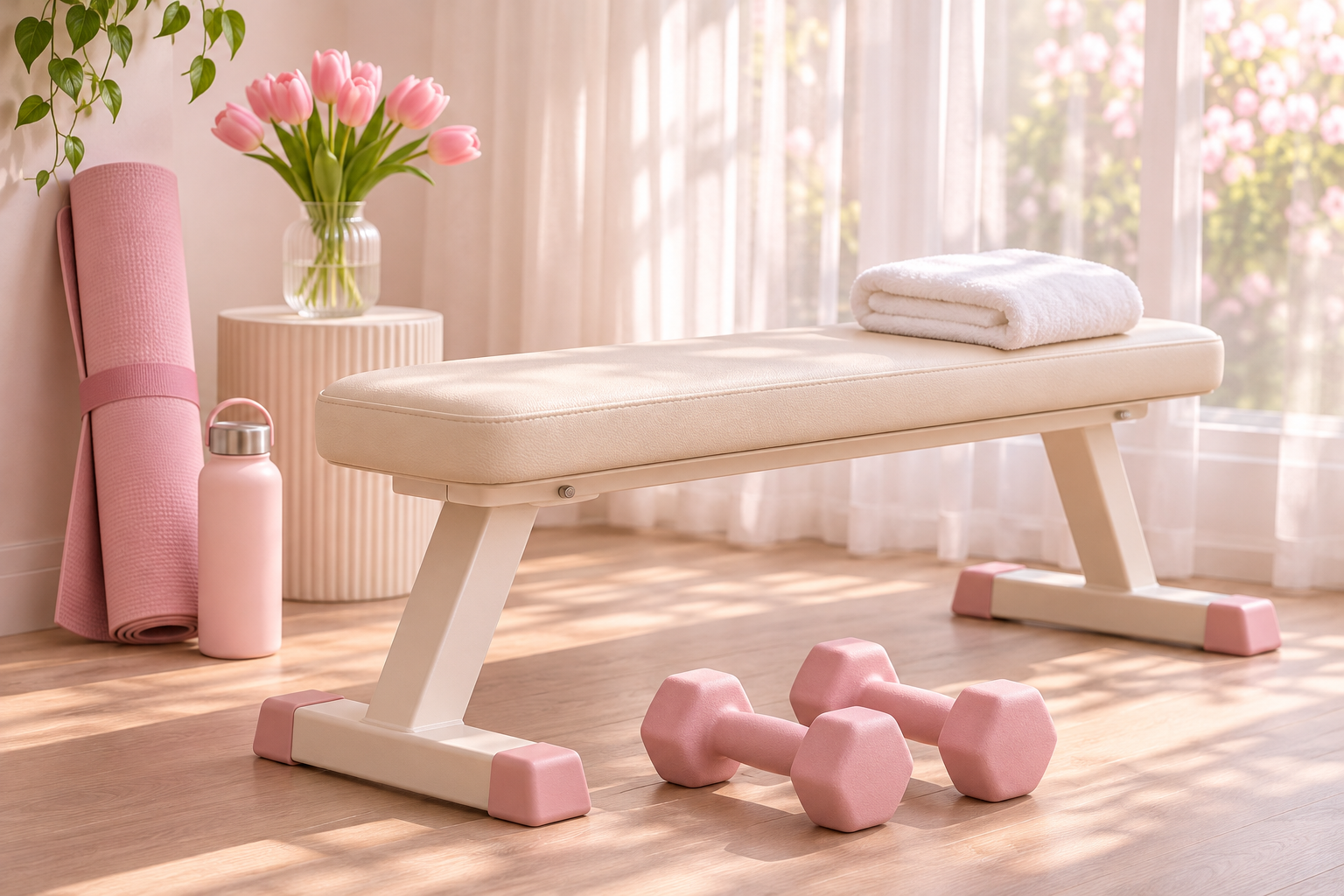
Ask a room full of people who strength train how they feel about Bulgarian split squats and you’ll probably hear a groan, followed by a grudging “but they work.” This is the exercise that leaves your legs shaking, your heart pounding and your glutes reminding you of it on every staircase for the next two days.
It’s also one of the most rewarding moves you can learn. With just a bench or a couch behind you, the Bulgarian split squat trains one leg at a time, builds strong glutes and quads, and challenges your balance in a way two-legged squats don’t. It needs very little equipment and very little weight to feel like real work, which makes it perfect for home workouts.
The secret to loving it, or at least liking it a lot more, is the setup. Most of the wobbling, awkwardness and knee discomfort people feel comes from foot placement and a few small habits. This guide walks you through all of it, plus beginner modifications so you can start exactly where you are.
A quick note: This guide is general fitness information from coaches, not medical advice. If you have knee, hip or back pain, balance problems, or are pregnant or newly postpartum, check in with your healthcare provider or a physical therapist before adding new strength work.
The short answer
- 🦵What it isA split squat, back foot up
Your back foot rests on a bench while your front leg does most of the work.
- 🍑MusclesGlutes and quads
Plus hamstrings, inner thighs, calves and your core for balance.
- 📏Key to successFoot placement
Set your stance first. Most wobbles and knee aches start there.
- 🌱BeginnersStart lower and slower
Begin with a regular split squat or a low step, and hold on to something.
Watch it first
We love this detailed tutorial from fitness coach Jack Hanrahan, who has more than 15 years of coaching experience and creates the Rebuild Training programs. He walks through the setup, the movement, a real-time demo, troubleshooting and a set of quick tips, focusing on common problems like wobbling, weakness and knee pain. It’s longer than a quick clip, and that’s the point: it covers the details that make this exercise click.
A tip: the video has chapters, so you can jump straight to the setup or troubleshooting sections when you need a refresher. Watching once before your workout and once after your first attempt is a great way to connect what you saw with what you felt.
What a Bulgarian split squat is
A Bulgarian split squat is a split squat with your back foot raised on a bench, box, step or couch. You stand in a staggered stance, lower straight down by bending both knees, then push through your front foot to stand back up. Your feet stay in place the whole set, which makes it different from a lunge, where you step in and out.
You’ll also hear it called a rear-foot-elevated split squat, or RFESS for short. Same exercise, more descriptive name.
Raising the back foot changes things in a big way. Because your back leg can’t push as much, your front leg takes over most of the load. Rep Fitness points to research in the Strength and Conditioning Journal suggesting the front leg supports about 85% of the load. That’s why it feels so much harder and wobblier than a regular split squat, and why it builds so much single-leg strength.
One leg at a time, one rep at a time. Wobbly is just strong in progress.
Why it’s worth learning
- Real strength with lighter weights. Because one leg does most of the work, you can challenge your muscles with much less weight than a two-legged squat. A 2014 study found the Bulgarian split squat at about half the load produced muscle activity similar to the back squat at a much heavier load for most of the muscles measured.
- Less load on your back. Since you don’t need a heavy barbell on your shoulders, it’s a great leg builder when you want to go easier on your spine.
- Balance and stability. Standing on mostly one leg trains the small muscles around your hips, knees and ankles, and your core works to keep you steady.
- Evening out left and right. Training each side on its own can show you if one leg is stronger, and gives the weaker side a chance to catch up.
- Everyday life. Climbing stairs, stepping up onto a curb, getting up off the floor and running are all single-leg tasks.
- Home-friendly. All you need is something sturdy to rest your foot on.
How does single-leg training compare to regular squats for building strength? In a 2016 study, 18 young rugby players trained twice a week for five weeks with either back squats or rear-foot-elevated split squats. Both groups improved similarly in strength, sprint speed and agility. The authors concluded that the two approaches may be equally effective. The participants were young male athletes, so it’s a narrow group, but it’s a nice reminder that you don’t need a barbell to build strong legs.
Muscles worked
| Muscle | Where it is | What it does in the split squat |
|---|---|---|
| Quadriceps | The fronts of your thighs | Straighten your front knee to stand you up |
| Gluteus maximus | Your bottom | Extends your front hip, especially from the bottom of the squat |
| Gluteus medius | The side of your hip | Keeps your pelvis level and your knee from caving in |
| Hamstrings | The backs of your thighs | Help extend the hip, more so when you lean forward |
| Adductors | Inner thighs | Help extend the hip and stabilize the leg |
| Calves | Lower legs | Keep your ankle and foot steady |
| Core | Your whole trunk | Keeps you balanced and upright |
| Hip flexors (back leg) | Front of the back hip | Get a stretch at the bottom of each rep |
What the research says
In a study of 11 female athletes, researcher Kevin McCurdy and colleagues compared the rear-foot-elevated split squat with the back squat at the same relative effort. The split squat produced significantly higher muscle activity overall. The quads were still the most active muscles in both lifts, but the split squat put more emphasis on the glutes and hamstrings.
Other research has found the Bulgarian split squat recruits more of the gluteus maximus than the back squat, suggesting it’s a more hip-dominant exercise. So while it definitely works your quads, it’s also one of the best glute builders you can do with a pair of dumbbells.
The setup: get this right first
The setup is where the Bulgarian split squat is won or lost. Take your time here.
- Choose your height. A standard bench is around knee height, which works for many people. If you’re newer, shorter or less mobile in the hips, start with something lower, like a step or a low box.
- Stand in front of the bench. Face away from it, standing about a big step in front of it.
- Place your back foot. Reach one foot back and rest the top of it (your shoelaces) on the bench. Some people prefer to tuck their toes onto the bench instead. Use whichever feels better for your ankle.
- Check your front foot distance. Lower down slowly for a test rep. If your front heel lifts or your knee shoots far forward, step your front foot out a little farther. If you feel a big stretch in your back hip and can’t get down, or you feel unstable, step it back in a little.
- Set your width. Keep your feet about hip-width apart side to side, like standing on two train tracks, not a tightrope. This one change fixes a lot of wobbling.
- Find your balance. Most of your weight should feel like it’s on your front foot, spread across the whole foot from heel to toes.
There’s no single perfect distance because everyone’s legs are different. Once you find a stance that feels good, notice where your front foot lands. Some people count tiles on the floor or use a mark so they can set up the same way every time.
How to do a Bulgarian split squat, step by step
- Get set. With your stance in place, stand tall. Hold dumbbells at your sides, a single dumbbell at your chest, or nothing at all to start.
- Brace. Take a breath and gently tighten your stomach.
- Lower straight down. Bend both knees and let your body drop down, like an elevator, not forward like an escalator. Your back knee travels toward the floor.
- Go to a comfortable depth. Lower until your front thigh is about parallel to the floor, or as deep as you can while staying balanced and pain-free. Your back knee doesn’t need to touch the floor.
- Keep your front foot planted. Your whole front foot stays on the ground, heel down.
- Push up. Breathe out and drive through your front foot to stand back up. Think about pushing the floor away.
- Finish tall. Stand up until your front leg is nearly straight, with your ribs stacked over your hips.
- Do all your reps, then switch. Finish every rep on one side before changing legs. Many coaches suggest starting with your weaker side.
Move slowly, especially as you lower. Taking two or three seconds on the way down builds control and makes balance much easier.
Your quick form checklist
- StanceFeet hip-width apart side to side, not in a straight line.
- Front footFlat and planted, weight across the whole foot.
- Front kneeTracking in line with your toes, not caving inward.
- Back footRelaxed on the bench, doing as little work as possible.
- TorsoTall or slightly leaning forward, but never collapsing.
- HipsLevel and square to the front, not twisting.
- PathStraight down and straight up.
- TempoSlow on the way down, steady on the way up.
Upright or leaning forward?
You’ll see Bulgarian split squats done with a tall, upright torso and with a slight forward lean. Both are correct. They just change which muscles do a little more of the work.
- More upright. Keeping your torso tall tends to put more of the work on your quads.
- Slight forward lean. Hinging your torso forward a bit, with a long back, shifts more emphasis to your glutes and hamstrings. A 2025 study of 21 trained female athletes found that leaning the trunk forward about 40 degrees increased activity in the gluteus maximus and the hamstrings, along with one of the quad muscles.
Stance length plays a role too. A longer stride tends to keep your torso and shin more upright, while a shorter stride often leads to more forward lean. If glutes are your goal, try a slightly longer stance with a gentle forward lean. If you want more quad work, stay taller. Either way, keep your back long and avoid rounding.
Common mistakes and how to fix them
1. Feet in a straight line
Lining up your front and back foot like you’re on a tightrope makes balance much harder. The fix: Set your feet hip-width apart side to side.
2. Front foot too close to the bench
This can make your front heel lift and push your knee far forward, which some people feel in their knee. The fix: Step your front foot out a little farther.
3. Front foot too far away
Too long a stance can strain your back hip and make it hard to lower straight down. The fix: Bring your front foot in until you can drop straight down comfortably.
4. Pushing with the back leg
If your back leg is doing a lot of the work, your front leg misses out. The fix: Keep your back foot relaxed, as if it’s just resting on the bench for balance.
5. Knee caving inward
When your front knee drifts toward the middle, it can stress the knee and means your hip muscles aren’t helping as much. The fix: Lighten the weight and think about keeping your knee in line with your second and third toes.
6. Lunging forward instead of down
Moving forward and back with each rep turns the exercise into a rocking motion. The fix: Think elevator, not escalator. Straight down, straight up.
7. A bench that’s too high
A tall bench can pull your back hip into a big stretch and tilt your pelvis. The fix: Use a lower step or box. Lower is completely fine.
8. Rushing
Fast reps make the wobble worse. The fix: Slow down, especially on the way down.
How to stop wobbling
Almost everyone wobbles at first. It’s your body learning a new balance task, and it improves quickly with practice. Here’s what helps most:
- Widen your stance. Hip-width apart side to side gives you a much steadier base.
- Hold on. Rest one hand on a wall, a rack, a sturdy chair or a counter. There’s no shame in support. You still get great leg work.
- Lower the bench. A smaller step behind you is easier to balance on.
- Pick a spot. Fix your eyes on a point on the floor or wall in front of you.
- Root your whole foot. Feel your big toe, little toe and heel all pressing into the floor.
- Hold the weight differently. Holding one dumbbell at your chest (a goblet hold) is often easier to balance than one in each hand.
- Slow down. Control beats speed every time here.
Beginner modifications
If a full Bulgarian split squat feels like too much right now, that’s okay. These steps build up to it gradually. Start wherever feels challenging but doable, and move to the next step when it feels steady.
| Level | Exercise | Why it helps |
|---|---|---|
| 1 | Supported split squat: both feet on the floor in a staggered stance, holding something for balance | Learn the up-and-down pattern with plenty of support |
| 2 | Split squat to a pillow or pad under your back knee | Gives you a target depth and something soft to aim for |
| 3 | Split squat without support | Builds balance with both feet still on the floor |
| 4 | Reverse lunge | Adds stepping and balance, and is often kinder to knees than forward lunges |
| 5 | Supported Bulgarian split squat with a low step and a hand on the wall | Introduces the elevated back foot with extra help |
| 6 | Bodyweight Bulgarian split squat on a bench | The full movement, no weight |
| 7 | Goblet or dumbbell Bulgarian split squat | Adds load once your form feels steady |
Many coaches suggest getting comfortable with regular split squats before elevating your back foot, especially if balance is a worry. There’s no rush. Each step builds the same muscles.
Making it harder
Once bodyweight Bulgarian split squats feel smooth, you have lots of ways to keep challenging yourself:
- Add a goblet hold. One dumbbell or kettlebell held at your chest.
- Hold dumbbells at your sides. This usually lets you lift a little more.
- Slow the tempo. Lower over three to four seconds, or pause at the bottom.
- Add reps. Work up to the top of your rep range before adding weight.
- Hold weight on one side only. Holding a dumbbell in the hand opposite your front leg adds a fun core and hip challenge.
- Front foot elevated. Placing your front foot on a small plate or step increases how deep you can go. This is more advanced, so save it for later.
Knees, hips and comfort
“Should my knee go past my toes?” is one of the most common questions about any squat. It’s okay for your front knee to travel forward somewhat. What matters more is that your heel stays down, your knee tracks in line with your toes and the movement feels comfortable. If you feel knee discomfort, try stepping your front foot out a little farther, which keeps your shin more upright, and don’t go quite as deep.
A few other comfort tips:
- Ankle discomfort on the bench? Put a folded towel or pad under the top of your back foot, or try tucking your toes instead.
- Big stretch in your back hip? Use a lower step. The bottom of the move stretches the front of your back hip, which can be intense at first.
- Lower back feeling it? Keep your ribs stacked over your hips, brace gently and avoid arching backward at the top.
Stop if you feel sharp pain in your knee, hip or back, pain that lingers or gets worse after training, swelling, a feeling of your knee giving way, or numbness or tingling. Check in with your healthcare provider or a physical therapist before continuing. Muscle burn and soreness a day or two later are normal; sharp or worsening pain is not.
How to choose your weight
Bulgarian split squats are humbling. Many people need much less weight than they expect, and bodyweight alone is plenty at first.
- Start with bodyweight. Do 2 sets of 8 to 10 per leg until it feels steady and controlled.
- Add a light goblet hold. Many women start around 5 to 15 pounds, but there’s no wrong number.
- Check your form. If your balance or knee position falls apart, go lighter.
- Aim for “two or three left.” A good working weight leaves you feeling like you could do two or three more good reps.
- Progress slowly. Add reps first, then weight.
It’s normal for your balance, not your muscles, to be the limit at first. That changes quickly with practice.
How to add it to your week
The American College of Sports Medicine’s 2026 guidelines recommend training all your major muscle groups at least twice a week, and emphasize that the biggest benefit comes from simply doing some strength training at all. Here’s an example of how Bulgarian split squats could fit into your week. Treat it as a sample, not a prescription:
- BeginnerTwo full body days. Split squats or supported Bulgarian split squats: 2 sets of 8 per leg.
- BuildingTwo or three full body days. Bulgarian split squats: 3 sets of 8 to 10 per leg, bodyweight or a light goblet hold.
- StrongerTwo lower body days. One day heavier for 3 sets of 6 to 8 per leg, another day lighter and slower for 3 sets of 10 to 12.
A balanced lower body session might look like this example:
- Romanian deadlift: 2 to 3 sets of 10
- Bulgarian split squat: 2 to 3 sets of 8 per leg
- Glute bridge: 2 to 3 sets of 12
- Calf raises: 2 sets of 12 to 15
- Side plank: 2 rounds per side
Pair it with our Romanian deadlift guide for a strong, balanced leg day. Rest a minute or so between legs, not just between full sets, so your second side gets a fair shot.
Pregnancy and postpartum
The American College of Obstetricians and Gynecologists encourages women with uncomplicated pregnancies to do both aerobic and strength-conditioning exercise before, during and after pregnancy, with their provider’s guidance. Single-leg work can be very useful, but balance shifts as your body changes, so a few adjustments help:
- Get the green light first. Talk with your provider before starting or continuing strength training during pregnancy or after birth.
- Hold on. Use a wall, rack or counter for balance every set as your center of gravity shifts.
- Lower the back foot. A regular split squat with both feet on the floor is often more comfortable later in pregnancy.
- Watch for pelvic discomfort. Some people feel pain at the front of the pelvis with split stances. If you do, shorten your stance, reduce your range or switch to a two-legged move and let your provider know.
- Postpartum, start gently. If you notice leaking, heaviness, pelvic pain or doming along the middle of your belly, a pelvic floor physical therapist can help you progress safely.
Our guide to postpartum exercise and where to start has more gentle first steps.
What you need
You can do Bulgarian split squats with a couch and a little floor space. If you’d like a few tools, here are some options to compare. These are general Amazon searches, not specific product picks. We don’t earn anything from these links.
- A sturdy flat bench at about knee height. Search flat weight benches
- An aerobic step with risers, great for a lower starting height. Search aerobic step platforms
- Dumbbells or a kettlebell for goblet holds. Search dumbbell sets
- A balance pad or folded mat to cushion your back foot or knee. Search exercise knee pads
Myths
- Myth #1What you’ve heard
“If you wobble, you’re doing it wrong.”
The truthWobbling is normal at first. A wider stance, support and practice help a lot.
- Myth #2What you’ve heard
“Your knee should never pass your toes.”
The truthSome forward knee travel is fine. Keep your heel down and your knee tracking over your toes.
- Myth #3What you’ve heard
“You need heavy weights to build strong legs.”
The truthSingle-leg moves let you work hard with much lighter weights.
- Myth #4What you’ve heard
“It’s only a quad exercise.”
The truthIt’s a big glute builder too, especially with a slight forward lean.
- Myth #5What you’ve heard
“Holding on is cheating.”
The truthSupport helps you train your legs harder and safer while your balance catches up.
The bottom line
The Bulgarian split squat is tough, and that’s what makes it so effective. It builds strong glutes and quads one leg at a time, sharpens your balance and needs very little equipment.
Take your time with the setup. Keep your feet hip-width apart, rest your back foot lightly, lower straight down and push through your whole front foot. Start with split squats, a low step or a hand on the wall if you need to, and build up from there. A little wobbly today is a lot stronger next month.
Sources
- Jack Hanrahan Fitness: How To Do Bulgarian Split Squats Correctly (video, 2026)
- Rebuild Training by Jack Hanrahan
- Rep Fitness: The Bulgarian split squat (front leg load research)
- The Prehab Guys: Bulgarian split squats and DeForest (2014) EMG findings
- Performance Menu: Summary of McCurdy rear-foot-elevated split squat research
- Mackey and Riemann, International Journal of Exercise Science (2021): Bulgarian split squat vs back squat
- Aygun-Polat and colleagues, BMC Sports Science, Medicine and Rehabilitation (2025): Trunk position in the Bulgarian split squat
- Speirs and colleagues, Journal of Strength and Conditioning Research (2016): Unilateral vs bilateral squat training
- Cissik: Summary of Speirs unilateral vs bilateral training results
- E3 Rehab: Split squat biomechanics
- Powerlifting Technique: Bulgarian split squat progressions
- Highlands Wellness: Working up to a Bulgarian split squat
- American College of Sports Medicine: 2026 resistance training guidelines
- McMaster University via Medical Xpress: Train all major muscle groups at least twice a week
- ACOG Committee Opinion 804: Physical activity and exercise during pregnancy and the postpartum period
This article is for general information and isn’t medical advice. If you have pain, an injury, a health condition, or are pregnant or postpartum, talk with your healthcare provider or a physical therapist before starting a new exercise.
- Strength training
- Glutes
- Quads
- Balance
- Single-leg training
Find your strength. Find your girls.
Want someone to check your setup and build a plan around your life? Tell us a little about where you are, and we’ll reply within two business days with coaching, circles and walk clubs near you.
Questions
Good questions.
What muscles do Bulgarian split squats work?
They mainly work your quads and glutes, with help from your hamstrings, inner thighs, calves and core. Research suggests they emphasize the glutes more than a regular back squat, especially when you lean slightly forward.
How far should my front foot be from the bench?
About a big step away is a good starting point. Adjust so you can lower straight down with your front heel flat. If your heel lifts, step out farther; if your back hip feels strained, step in a little.
Why do I lose my balance during Bulgarian split squats?
The most common reason is having your feet in a straight line. Set them hip-width apart side to side, slow down, use a lower step and hold on to something until your balance improves.
Should I lean forward in a Bulgarian split squat?
Either is fine. A slight forward lean with a long back puts more emphasis on your glutes and hamstrings, while a more upright torso works your quads more.
What’s an easier alternative to Bulgarian split squats for beginners?
Start with a supported split squat with both feet on the floor, holding a wall or counter. Then progress to an unsupported split squat, a reverse lunge and a Bulgarian split squat with a low step.
How many sets and reps should a beginner do?
A good starting point is 2 sets of 8 reps per leg, twice a week, with bodyweight or a light goblet hold. Build gradually from there.
Keep reading
 Fitness
 Fitness