She spent years training to save lives in the emergency room. Then, at 30, during the final year of her residency, she became the patient fighting for her own. Today, she’s an ICU doctor, a heart transplant recipient and one of the most compelling voices for organ donation in the country.
Meet Dr. Alin Gragossian (she goes by Alin, pronounced “a-LEEN”). Her story is about a lot more than surviving. It’s about listening to your body, honoring the people who make second chances possible and using what you’ve lived through to make medicine more human.
This spotlight is for inspiration and information, not medical advice. If you have symptoms like a cough that won’t go away, shortness of breath or swelling, talk to your doctor. If you have chest pain or trouble breathing, call 911.
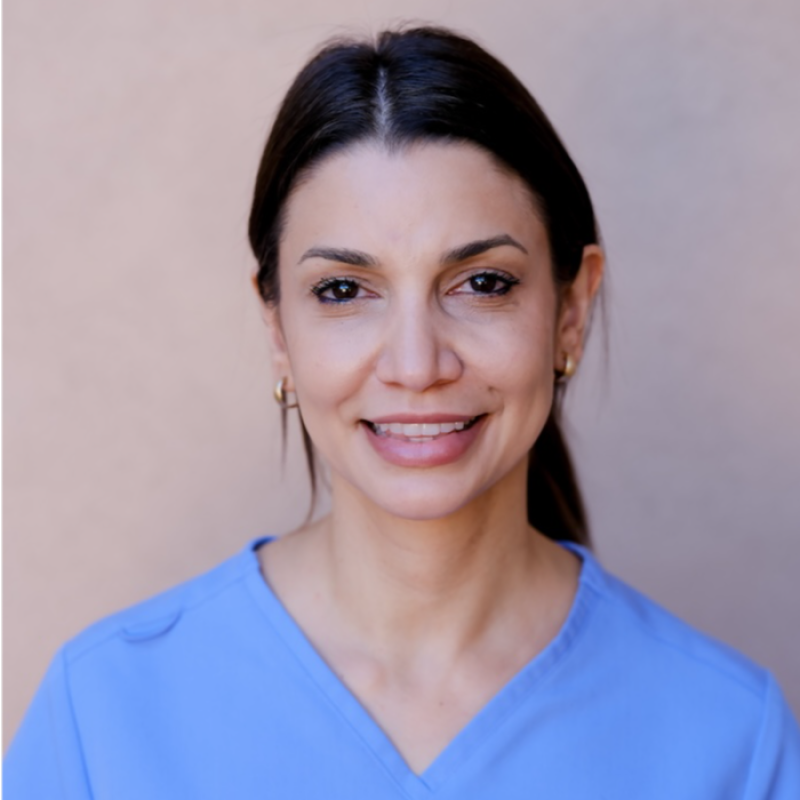
Dr. Alin Gragossian, DO, MPH
Emergency and critical care physician, Physician Lead at Oscar Health and Associate Medical Director at Donor Network West. Heart transplant recipient and advocate. Creator of A Change of Heart and co-host of Both Sides of the Stethoscope.
Meet Dr. Alin Gragossian
Alin is a physician dually trained in emergency medicine and critical care medicine. She grew up in Los Angeles, studied at UCLA, earned a master’s in public health from the University of Southern California and received her medical degree from Lincoln Memorial University in 2016.
On her website, she describes herself as a physician with a rich background in clinical medicine, patient advocacy and public health, who is passionate about sharing her story of survival and resilience and the transformative power of organ transplantation. Her interests reach well beyond medicine, too: stoicism, photography, true crime, road trips, old-school hip hop and the Red Hot Chili Peppers. Among her inspirations are Tupac Shakur and the neurologist and writer Oliver Sacks. Her favorite quote is Oscar Wilde’s “Everything in moderation, including moderation.”
Today, her LinkedIn headline sums up a remarkable range: emergency and critical care physician, Physician Lead at Oscar Health, Associate Medical Director at Donor Network West (the organ procurement organization serving Northern California and Northern Nevada), and heart transplant recipient and advocate. She has also worked as an intensivist, the doctor who cares for the sickest patients in the ICU, including through a tele-ICU company, and has chaired the American Society of Transplantation’s Transplant Community Advisory Council.
Her story
“On December 21, 2018, I almost died.” That’s the first line of Alin’s blog, and it’s where her story turns.
She was a 30-year-old emergency medicine resident in Philadelphia, working long hours and feeling a little rundown. She had a nagging cough. Then, over a couple of days, she started having trouble breathing. Like so many of us, especially women juggling demanding jobs, she brushed it off. Residents are always tired, after all.
When she finally went to the ER for a chest X-ray, Penn Medicine reports, her heart looked enlarged, her heart rate was in the 140s and she wasn’t breathing well. Doctors first thought it might be pneumonia. Her focus was still on her shift the next day.
That night, she went into heart failure. She doesn’t remember much after the rapid response team arrived at her bedside. She was intubated and placed on a ventilator, and her heart kept pumping only because of medications. She was in cardiogenic shock, meaning her heart couldn’t pump enough blood to supply her body.
She was diagnosed with dilated cardiomyopathy, a condition in which the heart’s chambers stretch and enlarge so it can’t pump the way it should. Her condition turned out to be familial, linked to a genetic anomaly in her family. Her family now believes it explains her grandfather’s early death from a heart attack, and she later learned her father was affected too.
She was transferred to the Hospital of the University of Pennsylvania. When medications weren’t enough, the message was one she never thought she’d hear: she needed an urgent heart transplant. Because her condition was so critical, she was placed high on the waiting list, and less than two weeks later she got the call. She received her new heart in mid-January 2019, less than a month after she first went to the ER.
“In about three weeks, I went from a completely normal thirty-year-old to somebody with a heart transplant.”
Dr. Alin Gragossian, Raise the Line podcastAs if that weren’t enough for one year, she returned to work at Hahnemann University Hospital about six months after her transplant, just as the hospital announced it was closing. She had to finish her residency elsewhere, and she did, going on to a critical care fellowship at Mount Sinai in New York City.
Her journey at a glance
- Los Angeles roots
She grows up in Los Angeles, studies at UCLA and earns a master’s in public health from the University of Southern California.
- She becomes a doctor
She earns her osteopathic medical degree (DO) from Lincoln Memorial University and starts an emergency medicine residency.
- Her heart gives out
Weeks of feeling rundown and a nagging cough turn into heart failure and cardiogenic shock. She’s 30, in her final year of residency.
- A new heart
At Penn Medicine, she’s listed for an urgent heart transplant and receives a donor heart in mid-January, less than a month after she first went to the ER.
- She starts writing and goes back to work
She launches her blog, A Change of Heart, returns to residency about six months after surgery and is named one of EMRA’s 45 Under 45 in emergency medicine.
- She starts a podcast
With fellow physician and heart recipient Dr. Colby Salerno, she launches Both Sides of the Stethoscope.
- A leader in donation
She becomes Associate Medical Director at Donor Network West, the organ procurement organization for Northern California and Northern Nevada.
- 40 Under 40
She’s named to the Organ Donation and Transplantation Alliance’s 40 Under 40. She has also chaired the American Society of Transplantation’s Transplant Community Advisory Council.
Her donor and her donor’s family
Every heart transplant begins with a loss. Alin has never lost sight of that.
About four months after her surgery, she received a letter from her donor’s family. The Philadelphia Inquirer described her heart pounding as she opened the envelope. As she put it, she had always known a donor saved her life, but the letter gave that donor a face and a history.
Through her organ procurement organization, Alin exchanged letters with her donor’s mother and later met her and her family in person. Alin has described that meeting as “surreal, beautiful and bittersweet.” She has shared that her donor was a young woman who worked in health care, loved animals and came from a big family.
The Inquirer also reported on how common it is for recipients to feel a mix of guilt and gratitude, and how writing to a donor family can help. A transplant social worker told the paper that while some recipients worry about stirring up a family’s grief, most donor families love hearing that their loved one’s gift made a difference. For Alin, writing to her donor’s family brought peace of mind.
Lessons from “patient school”
Alin likes to say she’s learned a lot from what she calls “patient school,” the lessons you only get by being on the other side of the bed rail. She has said it was an honor to be in her patients’ shoes, and that the patient she became, someone struggling to stay alive, is exactly the kind of patient she wanted to care for.
Across her interviews and essays, a few lessons keep coming up:
- Symptoms aren’t always dramatic. Even a doctor who knew the signs of heart failure mistook her own for everyday ailments.
- Patients hear everything. Being on the receiving end of medical conversations showed her how much words, tone and small kindnesses matter.
- Recovery is emotional, not just physical. Grief, guilt, gratitude and fear of the future are part of healing, and they deserve attention too.
- Prognosis isn’t the whole story. In an essay for The DO, she wrote about being asked about her prognosis all the time, and chose to focus on living rather than waiting.
- Life after transplant can be full. In her words to The Inquirer, life after a heart transplant goes on, and it’s “insanely beautiful.”
Progress without a finish line
One of her more recent reflections gets at something every woman living with a chronic condition will recognize. As doctors, she writes, they’re trained to find the problem and fix it. But there’s no point where she graduates from being a transplant recipient. There will always be medications, labs, appointments and some uncertainty about what comes next.
So she suggests swapping some of medicine’s usual questions (What can we fix? What’s the next step?) for gentler ones: What can’t we change? What uncertainty do we have to accept? What can we still make better? Her conclusion is one we’d love every reader to hold onto: progress doesn’t always mean absolute resolution.
If you’re living with a condition that isn’t going away, that reframe can be a relief. Better counts, even when “cured” isn’t on the table.
Those lessons have made her a sought-after speaker for medical audiences, including Yale’s advanced heart failure conference, where she shared her story as a physician and a patient.
A Change of Heart
After her transplant, Alin started her blog, A Change of Heart, at achangeofhe.art (yes, the web address spells out “a change of heart”). She used it to process what she was going through and to raise awareness about organ donation, research and charities.
The raw honesty of her writing resonated quickly. In 2019, The Inquirer reported her blog was drawing more than 1,200 readers a month. Several of her posts were adapted for national outlets, and her story has since reached audiences on TV, in print and on dozens of podcasts.
Today, her site brings together her blog, her podcast, transplant resources for patients and families and a newsletter.
Both Sides of the Stethoscope
In 2021, Alin teamed up with Dr. Colby Salerno, a cardiologist and fellow heart transplant recipient, to launch Both Sides of the Stethoscope. The podcast explores medicine from both perspectives: as the doctor and as the patient.
Over about 50 episodes, they’ve covered heart disease prevention, pediatric heart transplants, vaccines for people with weakened immune systems, rheumatology, online medical misinformation and interviews with people living long, full lives after transplant, including one guest who’d had his new heart for 31 years. Listeners have praised the show for its insight and honesty, and it’s available on Spotify, Apple Podcasts and Amazon Music.
If you’ve ever felt lost in a medical system or wished your doctor could understand what you’re going through, this show is a great place to start.
Her work today
- 🏥ClinicalEmergency and critical care
She’s trained to care for the sickest patients, including through tele-ICU care that brings specialist support to hospitals remotely.
- 🩺Oscar HealthPhysician leadership
As a Physician Lead at Oscar Health, she brings a clinician’s and a patient’s view to how care is delivered.
- 🫀Donor Network WestOrgan donation leadership
As Associate Medical Director, she has offered clinical guidance, shaped outreach and comforted donor families.
- 🤝American Society of TransplantationPatient voice in transplant
As past chair of the Transplant Community Advisory Council, she helped bring patients’ and caregivers’ perspectives into transplant medicine.
- 🎙️EducationSpeaking
She shares her story with medical schools, hospitals, conferences and community groups across the country.
- 🎧Both Sides of the StethoscopePodcasting
She makes complicated medicine easier to understand, from both sides of the exam table.
The Organ Donation and Transplantation Alliance summed up her approach well when it named her to its 2025 40 Under 40 list: in every setting, from organizational strategy to comforting donor families to speaking to audiences nationwide, she brings authenticity, insight and purpose. Her own words for 2025 were that she wanted to show that empathy belongs everywhere in donation and transplantation.
Making care easier to get
Alin sees the health care system from both sides, and she’s honest about where it creates extra work for patients. In one recent post, she draws a line between having access to health care and being able to easily access it.
On paper, she explains, a patient might have everything: insurance, a transplant center, specialists, medications and follow-up appointments. Then comes the friction. A covered medication that still needs a prior authorization. A specialist whose next opening is months away. A referral the patient has to track down. A portal message answered with “please call instead,” which she admits is a personal pet peeve.
She’s careful to say the system isn’t constantly failing, and she thanks the many people working to make care easier. But she argues friction is a measure we don’t talk about enough. Her challenge to health care leaders: don’t just ask whether patients can access a service, ask how much work it takes them to get it.
If you’ve ever spent a week making phone calls to get one prescription filled, you know exactly what she means. It’s a big reason we think voices like hers belong in rooms where health care decisions get made.
Her take on AI in medicine
When her dad asked her whether AI is going to replace doctors, her answer was no. She points to automated EKG readings, which have existed for years and are genuinely useful, yet still need a clinician to interpret them in the context of the actual patient. Technology can spot patterns, she writes, but clinical judgment means understanding what those patterns mean for the person in front of you.
She’s not anti-technology. She’s excited about AI’s potential to cut administrative work and improve workflows. Instead of only asking whether AI can do a task as well as a doctor, she suggests three better questions:
- Does it actually improve patient outcomes?
- Is it reducing clinicians’ workloads, or just shifting their time to reviewing and correcting AI-generated work?
- If AI is part of a clinical decision, how do we keep accountability clear?
Her bottom line: patients don’t always present like textbook cases, and better technology doesn’t make that uncertainty disappear. AI doesn’t have to replace clinical judgment to make a real difference.
As featured in
Alin’s story has been told by major newspapers, TV stations, medical organizations and podcasts. If you’d like to hear more in her own words, these are a great place to start.
- Patient storyPenn Medicine
“On December 21, 2018, I almost died.”
The hospital where she received her new heart tells her story, starting with the first line of her blog.
Read or listen → - Op-ed · Aug. 2019The Philadelphia Inquirer
Life goes on after a heart transplant, she says. And it’s ‘insanely beautiful.’
Her own essay on returning to work at Hahnemann just as the hospital announced it was closing.
Read or listen → - Health · June 2019The Philadelphia Inquirer
Organ transplant recipients balance guilt and gratitude
A look at the emotional side of transplant, including the letter she received from her donor’s family.
Read or listen → - TV news · 2020CBS News Philadelphia
‘I went into heart failure’
A Heart Month feature on how a persistent cough turned out to be heart failure.
Read or listen → - TV news · 20196abc Action News
Doctor is now the patient, and blogs her transplant experience
How the experience shaped the doctor she wants to be.
Read or listen → - Be Well Philly · Sept. 2019Philadelphia Magazine
“Almost grateful” that she needed a heart transplant
Why she stayed upbeat through a transplant and her hospital’s closure in the same year.
Read or listen → - First person · June 2019The DO
Not waiting around to die: Considering my prognosis after a heart transplant
An essay adapted from her blog for the American Osteopathic Association’s magazine.
Read or listen → - Feature · 2019American Osteopathic Association
A heart transplant survivor, ER doctor champions awareness
Her advice on heart failure symptoms, family history and organ donation.
Read or listen → - First person · 2021Women’s Health
I had heart failure and an emergency heart transplant at 30
Her story in a national women’s health magazine.
Search Women’s Health for this story - Podcast · Feb. 2023Raise the Line (Osmosis)
Lessons from ‘patient school’ that medical school doesn’t teach
What being a patient taught her about being a doctor. A transcript is available.
Read or listen → - Podcast · 2021Parallax (Radcliffe Cardiology)
The journey of Dr. Alin Gragossian
Cardiologist Dr. Ankur Kalra asks about her diagnosis, her new reality and what drives her.
Read or listen → - Podcast · June 2020EMRA*Cast
A Change of Heart
The Emergency Medicine Residents’ Association interviews one of its 45 Under 45 winners.
Read or listen → - Grand rounds · July 2023Yale School of Medicine
My heart transplant story: a physician’s personal experience
She presented her story to Yale’s advanced heart failure conference.
Read or listen → - Profile · July 2023Donor Network West
Dr. Alin Gragossian: Our Transplant Warrior
Her organization introduces its new associate medical director.
Read or listen →
She has also been interviewed on WebMD’s Health Discovered, CardioNerds, Explore the Space, Pulse Check, Every Possible Angle and many more shows. You’ll find more at A Change of Heart.
Honors and recognition
- 🌟Emergency Medicine Residents’ Association45 Under 45 Influencers in Emergency Medicine (2019)
Chosen from more than 400 applications as part of EMRA’s 45th anniversary. She told EMRA she’d added a new goal to her passion for critical care: raising awareness of organ donation.
- 🏆Organ Donation and Transplantation Alliance40 Under 40 (2025)
Recognizing emerging leaders in organ donation and transplantation.
- 🎓Lincoln Memorial UniversityYoung Alumnus of the Year
Honored by her medical school, as listed on her website.
- 🤍Donor Network WestOur Transplant Warrior
Profiled by her organization as a “super advocate” for organ donation and public health.
What she wants women to know about their hearts
Alin’s story is a powerful reminder that heart disease doesn’t only happen to older adults, and that symptoms can be easy to dismiss. In 2019, she told the American Osteopathic Association:
“It’s so important to know that symptoms of heart failure aren’t always dramatic.”
Dr. Alin Gragossian, American Osteopathic AssociationShe also told CBS News that women in general can have different symptoms than men, and that it’s important to understand your body. Her advice, drawn from her interviews:
- Don’t ignore the small stuff. A cough that won’t go away, getting winded more easily, feeling unusually tired or swelling in your legs or belly are worth mentioning to your doctor.
- Learn your family health history. Ask your relatives about heart problems, sudden deaths or early heart attacks. Some heart conditions, like hers, run in families.
- Don’t wait. Talk to your doctor about recurring health issues, even if they seem minor.
- Trust yourself. If something feels off, you’re allowed to ask questions and push for answers.
Common symptoms of heart failure include shortness of breath, coughing or wheezing, fatigue, swelling in the legs, ankles or belly, and a fast or irregular heartbeat, according to the National Heart, Lung, and Blood Institute. Chest pain, fainting or severe trouble breathing are emergencies. Call 911.
Why organ donation matters
Alin is alive because a young woman and her family said yes to donation. That’s why she has dedicated so much of her life to helping others understand it.
- People waitingOn the U.S. transplant waiting listNow
- Someone new is addedTo the list, every 8 minutesAlways
- People die each dayWhile waiting for a transplantDaily
- Lives savedBy one organ donorUp to
According to Donate Life America’s 2025 statistics, more than 100,000 people are on the national transplant waiting list, someone is added every eight minutes and 13 people die each day while waiting. Nearly 60% of those waiting are from multicultural communities. One organ donor can save up to eight lives, and one tissue donor can heal up to 75 more.
One of the most common fears about registering is that doctors won’t try as hard to save you. As an emergency and ICU doctor, Alin has a clear answer:
“Please know that being an organ donor will never impact your quality of care.”
Dr. Alin Gragossian, American Osteopathic AssociationHow to register
- Sign up online at RegisterMe.org or through your state’s registry. It takes a few minutes.
- Say yes at the DMV when you get or renew your driver’s license or ID.
- Tell your family. Let your loved ones know your wishes so they can honor them.
- Learn about living donation. Some people choose to donate a kidney or part of their liver while living. Registering as a deceased donor doesn’t include living donation.
What her story teaches all of us
You don’t have to be a doctor or a transplant recipient to take something from Alin’s journey.
Your body deserves your attention
If a doctor can miss the signs of her own heart failure, any of us can dismiss our symptoms. Taking care of others isn’t a reason to skip taking care of yourself.
Gratitude and grief can live side by side
Alin’s life is a gift that came from someone else’s loss. She holds both. Many women going through big life changes feel two things at once, and that’s okay.
A hard chapter can change your direction
Her transplant didn’t end her medical career. It deepened it. If you’re rebuilding after a diagnosis or a life-changing event, our post on finding your pink more than once is for you.
Your story can help someone else
A blog she started to process her own experience became a resource for patients, families and doctors. You never know who needs to hear what you’ve lived through.
How to support her work
- 🫀TodayRegister as a donor
Sign up at RegisterMe.org or your state registry, and tell your family.
- 🎧Both Sides of the StethoscopeListen
Follow Both Sides of the Stethoscope on Spotify or Apple Podcasts.
- 📖A Change of HeartRead
Visit her blog and transplant resources at achangeofhe.art.
- 👥LinkedInFollow
Follow Dr. Gragossian on LinkedIn for her advocacy and updates.
- 🎙️EventsInvite her to speak
Reach out through her website to bring her story to your school, hospital or organization.
- 📣Spread the wordShare
Share this spotlight, or her story, with someone who needs a reminder to check on their heart.
Thank you, Alin
Thank you, Alin, for turning the hardest chapter of your life into a gift for patients, families and doctors. If you’d like to support her work, register as an organ donor, listen to her podcast and share her story.
To Alin’s donor and her family: thank you. Your gift is still saving lives, one patient, one listener and one reader at a time.
Sources
- A Change of Heart: Dr. Alin Gragossian’s website and blog
- LinkedIn: Dr. Alin Gragossian’s profile
- Spotify: Both Sides of the Stethoscope
- Apple Podcasts: Both Sides of the Stethoscope
- Buzzsprout: Both Sides of the Stethoscope episode list
- Penn Medicine: Alin’s story
- The Philadelphia Inquirer (2019): Life goes on after a heart transplant
- The Philadelphia Inquirer (2019): Organ transplant recipients balance guilt and gratitude
- CBS News Philadelphia: Young Philadelphia doctor saved by transplant
- 6abc Action News: Doctor is now the patient, and blogs her transplant experience
- Philadelphia Magazine (2019): “Almost grateful” that she needed a heart transplant
- The DO (2019): Not waiting around to die
- American Osteopathic Association: A heart transplant survivor, ER doctor champions awareness
- American Transplant Foundation: Alin Gragossian’s story
- TransplantLyfe: Surreal, beautiful and bittersweet
- Raise the Line (2023): Lessons from ‘patient school’
- Parallax podcast: The journey of Dr. Alin Gragossian
- EMRA*Cast (2020): A Change of Heart
- EMRA: 45 Under 45: Alin Gragossian, DO, MPH
- FemInEM: Profile of Dr. Alin Gragossian
- Yale School of Medicine (2023): Advanced Heart Failure Weekly Academic Conference
- Donor Network West (2023): Dr. Alin Gragossian: Our Transplant Warrior
- Organ Donation and Transplantation Alliance: 40 Under 40 profile (2025)
- Heart Failure Society of America: Alin Gragossian, DO, MPH
- Pulse Check (2025): A Change of Heart: interview with Dr. Alin Gragossian
- Donate Life America (2025): Donation and transplantation statistics
- Donor Network West: Organ donation facts and statistics
- NHLBI: Heart failure symptoms
- Donate Life America: Register as an organ, eye and tissue donor
This article is for general information and isn’t medical advice. Talk with your doctor or midwife about what’s right for you.
- Women we admire
- Heart health
- Organ donation
- Women in medicine
- Spotlight
Your heart deserves your attention too.
Tell us a little about where you are. We’ll reply within two business days with coaching and circles that fit your life and your health.
Questions
Good questions.
Who is Dr. Alin Gragossian?
Dr. Alin Gragossian, DO, MPH, is an emergency and critical care physician, heart transplant recipient and organ donation advocate. She writes the blog A Change of Heart and co-hosts the podcast Both Sides of the Stethoscope.
What happened to Dr. Alin Gragossian?
In December 2018, during her final year of emergency medicine residency, she went into heart failure and cardiogenic shock. She was diagnosed with familial dilated cardiomyopathy and received an urgent heart transplant at Penn Medicine in January 2019, at age 30.
What were her symptoms before heart failure?
She felt rundown for weeks and had a persistent cough, followed by trouble breathing. An ER chest X-ray showed an enlarged heart and a heart rate in the 140s. Doctors first suspected pneumonia.
What is dilated cardiomyopathy?
Dilated cardiomyopathy is a condition in which the heart’s chambers stretch and enlarge, so the heart can’t pump blood as well as it should. Over time it can lead to heart failure. Some forms run in families.
What is Both Sides of the Stethoscope?
It’s a podcast co-hosted by Dr. Alin Gragossian and cardiologist Dr. Colby Salerno, both heart transplant recipients. They discuss medicine from the perspective of physicians and patients. It’s available on Apple Podcasts, Spotify and Amazon Music.
What is A Change of Heart?
A Change of Heart is Dr. Gragossian’s blog at achangeofhe.art, which she started after her transplant to share her journey and raise awareness about organ donation.
Does being a registered organ donor affect my medical care?
No. Dr. Gragossian, an emergency and ICU doctor, has said that being an organ donor will never impact your quality of care. Doctors focus on saving the life in front of them.
How do I register as an organ donor?
Register online at RegisterMe.org or through your state registry, or say yes when you get or renew your driver’s license. Then tell your family about your decision.
 Life & culture
 Mind & mood
 Friendship